
Written by James Walker · Last updated: September 21, 2026
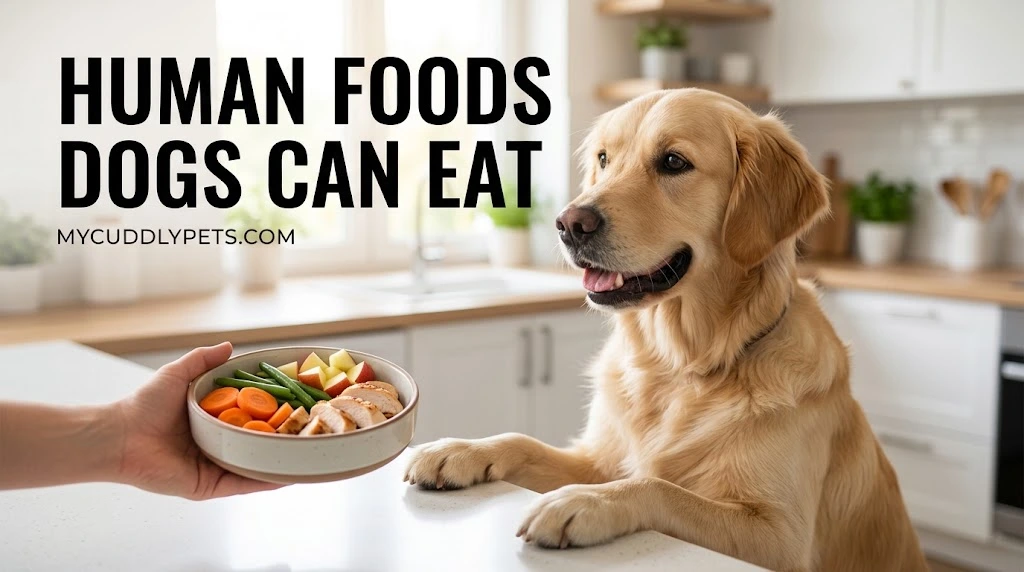
Quick Answer: You can share small amounts of plain, appropriately prepared human foods with most healthy dogs. Safe options include carrots, blueberries, apple slices without seeds or cores, plain cooked chicken, and green beans. Avoid toxic foods such as grapes, raisins, chocolate, onions, garlic, and anything containing xylitol.
Key Takeaways
- Share plain, dog-safe foods in small portions, not seasoned table scraps.
- Keep treats and extras within about 10% of daily calories; at least 90% should come from a complete and balanced diet.
- Remove seeds, pits, bones, tough skins, and choking hazards as appropriate.
- Never share known toxic foods, including grapes, raisins, chocolate, onions, garlic, or xylitol-containing products.
- Introduce unfamiliar foods gradually and ask your veterinarian about medical or dietary restrictions.
Sharing a snack can be a pleasant part of life with a dog, but not everything on a human plate belongs in a dog’s bowl. Some familiar foods make reasonable occasional treats, while others can cause digestive upset, choking, or poisoning. I’m James Walker, and this guide explains which foods you can share with your dog, how to prepare them, and how to keep treats from interfering with everyday nutrition.
This article is for general informational purposes and reflects publicly available nutrition guidance. It isn’t a substitute for personalized veterinary advice — always check with your vet about your dog’s specific needs.
What Foods Can You Share With Your Dog?
Many ordinary foods are safe for healthy dogs when they are plain, properly prepared, and offered in moderation. The key is to think of them as treats or small meal additions rather than replacements for a nutritionally complete dog food.
Common options include:
- Fruits: blueberries, seedless watermelon, banana slices, and apple flesh without seeds or core.
- Vegetables: carrots, green beans, cucumber, and small amounts of plain cooked pumpkin.
- Proteins: fully cooked, unseasoned chicken, turkey, lean beef, and eggs.
- Other foods: plain cooked rice, oatmeal, and small amounts of plain yogurt if tolerated.
“Safe” does not mean every dog will tolerate every food. A dog with a food allergy, digestive condition, or prescribed diet may need to avoid ingredients that are generally safe for other dogs.
Why Some Human Foods Are Safe and Others Are Not
Dogs can digest a variety of foods, but their bodies do not respond to every human ingredient in the same way ours do. Some foods contain substances that can be toxic to dogs. Others are not inherently poisonous but may cause problems because of their fat, salt, sugar, size, or preparation.
For example, plain cooked chicken can provide protein, while chicken cooked with onion, garlic, rich sauces, or excessive fat is a different proposition. A small piece of apple flesh is different from a whole apple core that could present a choking hazard.
Problems can also arise from feeding habits. Large portions, frequent table scraps, sudden dietary changes, or too many calorie-dense treats can contribute to digestive upset and unwanted weight gain. Spoiled leftovers and food contaminated during preparation create additional risks.
How Human Food Affects Your Dog’s Nutrition
A complete and balanced dog food is formulated to provide the nutrients a dog needs in appropriate proportions for its life stage. Human foods generally are not designed to meet those requirements when combined in arbitrary amounts.
Extra foods contribute calories, and some contribute protein, fat, carbohydrates, fiber, moisture, vitamins, or minerals. Those nutrients can be useful, but adding a variety of ingredients does not automatically make a diet balanced.
Protein from cooked meat and eggs supplies amino acids. Fruits and vegetables can contribute water and fiber. However, treats usually do not provide the carefully balanced nutrient profile of a complete dog food.
The Association of American Feed Control Officials (AAFCO) explains how pet-food nutritional adequacy and labeling help consumers understand whether a food is intended to provide complete nutrition for a particular life stage.
For most healthy dogs, a useful general guideline is to keep treats and extras to no more than 10% of daily calories, with at least 90% coming from a complete and balanced diet. This is a practical guideline, not a medical prescription; a veterinarian may recommend a different approach for a dog with specific needs.
Which Human Foods Can Dogs Eat?
Fruits dogs can eat
- Apples: Offer washed, bite-size pieces of apple flesh. Remove the core and seeds, and avoid sweetened apple desserts.
- Blueberries: Fresh or frozen blueberries can make convenient small treats. For tiny dogs, check that the pieces are an appropriate size.
- Bananas: A few small slices can be shared occasionally. Bananas contain natural sugars, so large portions are unnecessary.
- Watermelon: Offer seedless flesh with the rind removed. The rind is tough and may cause digestive problems or obstruction.
- Strawberries: Wash and cut into manageable pieces. Avoid syrup, chocolate coatings, and sweetened preparations.
Fruit can provide moisture, fiber, and various micronutrients, but it still contributes calories and natural sugar. It should remain a small snack rather than a major part of the diet.
Vegetables dogs can eat
- Carrots: Serve washed and cut into suitable pieces. Raw carrots are firm, so cooked carrots may be easier for some dogs to chew.
- Green beans: Plain fresh or cooked green beans can be a low-calorie snack. Avoid salty, buttery, or heavily seasoned preparations.
- Cucumber: Small pieces provide moisture and can be a light snack.
- Pumpkin: Plain cooked pumpkin or plain canned pumpkin can be offered in small amounts. Do not confuse it with pumpkin pie filling, which may contain sugar and spices.
- Sweet potatoes: Serve thoroughly cooked, cooled, and plain. Avoid raw chunks and preparations containing butter, sugar, or seasoning.
- Broccoli: Small portions may be tolerated, but too much can cause gas or digestive discomfort.
Wash produce, remove unsuitable seeds and pits, and cut it to match your dog’s size and chewing ability. Vegetables do not replace complete dog food, and a food that is gentle for one dog may upset another.
Meat, fish, and eggs
- Chicken and turkey: Fully cook, remove bones and excess skin or fat, and serve without seasoning. Avoid deli meat and heavily salted leftovers.
- Lean beef: Cook thoroughly, drain excess fat, and serve plain in small pieces.
- Eggs: Fully cooked eggs can be offered plain, without butter, oil, salt, or seasoning.
- Salmon: Fully cook, cool, and carefully remove bones. Never serve raw or undercooked fish.
These foods can provide protein and other nutrients, but they are not automatically complete meals. Raw meat and raw eggs can carry harmful bacteria or other hazards, so cooked preparations are the safer general choice for sharing.
Grains, dairy, and other snacks
- Rice: Plain, fully cooked rice can be shared in modest amounts. It should not become a substitute for a balanced diet.
- Oatmeal: Offer plain, cooked, cooled oatmeal without raisins, chocolate, sweeteners, or added sugar.
- Plain yogurt: A small amount may be tolerated by some dogs. Choose unsweetened yogurt without xylitol, and avoid it if dairy causes digestive symptoms.
- Peanut butter: Check the ingredient label carefully for xylitol, also called birch sugar. Choose a product without that ingredient and offer only a small amount because it is calorie-dense.
- Plain popcorn: A few fully popped, unseasoned pieces may be acceptable for some dogs. Avoid kernels, excess salt, butter, and flavorings.
How to Prepare and Serve Human Foods Safely
Preparation matters as much as the ingredient. A food that is suitable when plain may become unsuitable when combined with sauces, seasonings, sweeteners, or unsafe leftovers.
- Check the ingredient: Confirm that the food itself is dog-safe and contains no toxic additions.
- Wash and prepare: Clean produce and remove seeds, pits, cores, bones, tough rinds, or shells where relevant.
- Cook when needed: Fully cook meat, fish, eggs, and foods that should not be served raw. Let hot food cool before offering it.
- Keep it plain: Skip added salt, butter, oil, sauces, sugar, onion, garlic, and seasoning blends.
- Cut into manageable pieces: Match the size and texture to your dog’s mouth and chewing ability.
- Start small: Offer a small taste of one unfamiliar food and observe how your dog responds.
Do not feed spoiled food or scraps that may contain unknown ingredients. If you are unsure what went into a dish, set aside a plain portion before seasoning it or choose a different treat.
How Much Human Food Can You Give Your Dog?
There is no single portion that suits every dog. A tiny dog and a large, active dog have different calorie needs, and even dogs of the same weight may differ in activity, metabolism, and body condition.
Use your dog’s daily calorie allowance and the treat’s calorie content to guide portions. The following weight ranges are illustrative categories, not prescribed serving amounts:
| Dog weight | Practical approach to sharing |
|---|---|
| Under 10 lb | Start with tiny tastes; even a small snack can use a meaningful share of daily calories. |
| 10–20 lb | Offer small bite-size portions and account for every treat. |
| 21–50 lb | Use modest portions rather than unrestricted handfuls or plate scraps. |
| 51–90 lb | Portions may be larger, but calorie limits and individual needs still apply. |
| Over 90 lb | Use the dog’s actual calorie needs and body condition; size alone does not determine a safe amount. |
These categories intentionally do not assign cups, ounces, or fixed treat quantities. Human foods vary too widely in calories and composition for a reliable universal serving table. Use the dog food’s feeding guidelines as a starting point, consider treat calories, and ask your veterinarian to fine-tune the amount if weight management or a medical condition is involved.
Offer treats during the day in a way that fits your dog’s routine. Avoid repeatedly feeding from the table, which can make it difficult to track intake and encourage begging. Fresh drinking water should always be available.
Human Foods Dogs Should Avoid
Some foods should never be deliberately shared with dogs. If your dog eats a potentially toxic ingredient, contact a veterinarian or animal poison-control service promptly rather than waiting for symptoms.
- Grapes and raisins: Can cause serious kidney injury in dogs; a reliably safe amount cannot be assumed.
- Chocolate: Contains methylxanthines that can cause poisoning. Risk depends on the type, amount, and dog’s size.
- Onions, garlic, chives, and leeks: Members of the Allium family can damage red blood cells. Avoid them in raw, cooked, powdered, or seasoned forms.
- Xylitol: A sugar substitute found in some sugar-free products, gums, candies, and certain nut butters. It can cause dangerous low blood sugar and other serious effects.
- Macadamia nuts: Can cause illness, including weakness, vomiting, and difficulty walking.
- Alcohol and caffeine: Avoid alcoholic drinks, coffee, energy drinks, and caffeine-containing products.
- Raw yeast dough: Can expand in the stomach and produce alcohol as it ferments.
- Bones and corn cobs: Can cause choking, injury, or intestinal blockage. Cooked bones can splinter, and corn should be removed from the cob.
- Fatty, heavily salted, or spoiled foods: May cause digestive upset and can pose additional risks, particularly for dogs with medical conditions.
The U.S. Food and Drug Administration’s guidance on foods to avoid feeding pets provides further information about hazardous foods and why keeping them away from animals matters.
For suspected poisoning, save the packaging or ingredient list if available. Do not induce vomiting or try home remedies unless a veterinary professional specifically instructs you to do so.
Common Problems After Sharing Human Food
| Problem | Possible reason | Practical next step |
|---|---|---|
| Loose stool or diarrhea | New food, large portion, rich ingredients, or intolerance | Stop the new treat and contact a veterinarian if symptoms persist, worsen, or include warning signs. |
| Gas or mild stomach discomfort | Too much fiber, dairy, or an unfamiliar ingredient | Stop the suspected food and avoid repeatedly testing it. |
| Vomiting | Digestive irritation, excessive food, or another problem | Seek veterinary advice, especially if vomiting repeats or your dog seems unwell. |
| Weight gain | Extra calories from frequent snacks or table scraps | Track treats and adjust the feeding plan with veterinary guidance. |
| Refusing regular meals | Frequent snacks, learned begging, or an underlying issue | Reduce extras and seek advice if appetite changes persist. |
| Possible toxic-food ingestion | Access to chocolate, grapes, xylitol, or another hazard | Contact a veterinarian or poison-control service immediately. |
These are possibilities, not diagnoses. A dog’s symptoms cannot reliably identify which ingredient caused a problem. Repeatedly offering a suspected trigger to “test” tolerance is not a safe way to investigate a reaction.
Fresh Human Food vs. Commercial Dog Treats
| Consideration | Plain human food | Commercial dog treat |
|---|---|---|
| Convenience | May need washing, cooking, or cutting | Often ready to serve |
| Ingredients | Owner controls preparation, but recipes may contain hidden hazards | Ingredient list and feeding directions are provided on the package |
| Calories | Can be difficult to estimate for mixed dishes | May list calories per treat or serving |
| Nutritional role | Usually an extra, not a complete diet | Usually an extra, unless specifically formulated otherwise |
| Suitability | Depends on the food and the individual dog | Depends on ingredients, size, calories, and the individual dog |
Neither category is automatically better for every dog. A plain carrot may suit one situation, while a measured commercial treat may be easier to portion during training. Choose based on safety, tolerance, calories, and your dog’s dietary needs rather than marketing claims.
Special Considerations for Different Dogs
Puppies
Puppies need a diet formulated for growth. Keep extras small and avoid allowing human snacks to displace their complete puppy food. Choose pieces that are easy to chew and not a choking hazard.
Senior dogs
Older dogs may have different calorie needs, dental limitations, or medical diets. Soft, plain foods may be easier to chew, but check with your veterinarian if your dog has kidney disease, diabetes, or another condition requiring dietary management.
Small and large breeds
Small dogs can consume a significant share of their daily calories from a seemingly tiny snack. Large dogs still need portion control, and large pieces of food can be choking hazards for any dog. Adjust texture and piece size to the individual.
Overweight dogs and dogs with sensitive stomachs
For overweight dogs, account for every treat rather than adding snacks on top of the usual feeding plan. Dogs with sensitive stomachs may tolerate only a limited selection of foods. Introduce changes cautiously and follow any veterinary diet instructions.
When Should You Contact a Veterinarian?
Contact a veterinarian promptly if your dog has persistent vomiting or diarrhea, blood in the stool, a major change in appetite or weight, significant lethargy, repeated digestive problems, or signs of dehydration.
Seek urgent veterinary guidance if your dog may have eaten chocolate, grapes, raisins, xylitol, onions, garlic, macadamia nuts, raw yeast dough, or another potentially dangerous ingredient. Difficulty breathing, collapse, seizures, severe weakness, or marked distress require emergency veterinary attention.
For suspected poisoning, do not wait for symptoms to appear. The American Veterinary Medical Association’s pet safety resources can help owners understand the importance of prompt professional guidance.
Tell the veterinary team what your dog ate, approximately how much, and when. Keep the product packaging or ingredient list if possible. Do not give medication or attempt a home treatment without professional direction.
Frequently Asked Questions
1. Can dogs eat human food every day?
Dogs can have small portions of suitable human foods as treats, but these should not displace their complete and balanced diet. Keep extras within an appropriate calorie allowance and follow veterinary guidance for dogs with special dietary needs.
2. What is the safest human food to share with a dog?
There is no single safest food for every dog. Plain, bite-size carrot, cucumber, or a few blueberries may be reasonable options for many healthy dogs, provided the dog tolerates them and has no relevant dietary restriction.
3. Can dogs eat food straight from my plate?
It is safer to set aside a plain portion before adding seasoning, sauces, onion, garlic, or other ingredients. Mixed dishes and leftovers may contain ingredients that are unsuitable or difficult to identify.
4. Can dogs eat chicken every day?
Plain cooked chicken may be used as an occasional extra for many dogs, but feeding chicken alone does not provide a complete and balanced diet. Ask your veterinarian before making it a regular or substantial part of meals.
5. Can puppies eat fruits and vegetables?
Some dog-safe fruits and vegetables may be offered in tiny, appropriately prepared portions, but puppies need food formulated for growth. Treats should not replace their balanced puppy diet.
6. Can dogs eat peanut butter?
Some dogs can have a small amount of peanut butter if it contains no xylitol and no unsuitable ingredients. Check the label every time and remember that peanut butter is calorie-dense.
7. What should I do if my dog eats a grape or chocolate?
Contact your veterinarian or an animal poison-control service immediately. Provide your dog’s weight, the food involved, the estimated amount, and the time of ingestion. Do not wait for symptoms or attempt to induce vomiting unless instructed by a professional.
8. How do I introduce a new human food?
Choose one dog-safe food, offer a small amount, and observe your dog for digestive upset or other unusual reactions. Avoid introducing several new foods at once, because that makes it harder to identify a possible trigger.
9. Can human food replace commercial dog food?
Not simply by mixing ordinary ingredients together. A homemade diet intended to provide all daily nutrition needs careful formulation by a qualified veterinary nutrition professional. Ask your veterinarian before replacing a complete diet.
Final Takeaway
You can share selected human foods with your dog when they are safe, plain, appropriately prepared, and offered in modest portions. Fruits, vegetables, and fully cooked lean proteins can make occasional treats, but they do not automatically provide complete nutrition.
Check ingredients, account for calories, introduce unfamiliar foods carefully, and keep toxic foods out of reach. If your dog has a medical condition, persistent symptoms, or may have eaten something dangerous, contact your veterinarian rather than relying on a general food list.
