
Written by James Walker · Last updated: September 21, 2026
Quick Answer: Grain-free dog treats are snacks made without grain ingredients such as wheat, corn, rice, oats, or barley. They can suit some dogs’ ingredient preferences, but grain-free does not automatically mean healthier, hypoallergenic, lower-calorie, or more nutritious. Choose treats based on your dog’s individual needs, ingredient tolerance, calorie content, and overall diet.
Key Takeaways
- Grain-free means the treat is formulated without grain ingredients; it does not mean carbohydrate-free.
- Dogs do not automatically need grain-free treats simply because they have itchy skin or digestive problems.
- Read the full ingredient list, calorie information, and feeding directions rather than relying on front-of-package claims.
- Keep treats within about 10% of daily calories, with the remainder coming from a nutritionally complete diet unless your veterinarian advises otherwise.
- Dogs with suspected food allergies, medical conditions, or persistent symptoms may need individualized veterinary guidance.
I’m James Walker, and in this guide, I explain how I approach grain-free dog treats as an everyday feeding decision: what the label means, which ingredients deserve attention, how to manage portions, and when a dog’s dietary needs call for veterinary advice. My author credentials have not been provided, so I do not claim veterinary or professional nutrition qualifications.
Table of Contents
- What Are Grain-Free Dog Treats?
- Why Do Dog Owners Choose Grain-Free Treats?
- How Nutrition Affects Grain-Free Treats
- Which Ingredients Matter Most?
- How to Choose the Right Treats
- How Many Treats Can Dogs Eat?
- How to Introduce a New Treat
- Common Mistakes to Avoid
- Treat Problems and What to Do
- Grain-Free vs. Grain-Inclusive Treats
- Special Considerations
- When to Talk to a Veterinarian
- Frequently Asked Questions
- Related Reading
- Final Takeaway
This article is for general informational purposes and reflects publicly available nutrition guidance. It isn’t a substitute for personalized veterinary advice — always check with your vet about your dog’s specific needs.
What Are Grain-Free Dog Treats?
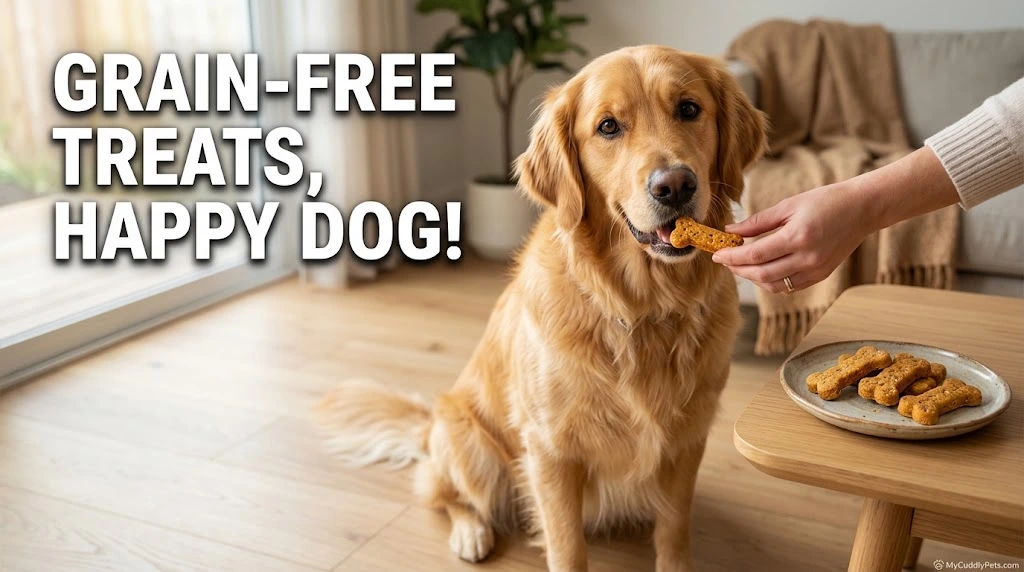
Grain-free dog treats are snacks formulated without cereal grains. Depending on the recipe, that may mean no wheat, corn, rice, oats, barley, rye, or other grain ingredients. Instead, manufacturers may use animal proteins, vegetables, legumes, fruits, or other carbohydrate sources.
These treats come in many forms, including crunchy biscuits, soft training bites, freeze-dried meat, dehydrated snacks, and single-ingredient treats. The phrase “grain-free” describes an ingredient choice, not a complete nutritional profile.
For example, a grain-free biscuit may contain sweet potato, chickpeas, peas, or potato starch. It can still contain carbohydrates, fat, calories, and multiple ingredients that matter to a dog’s individual tolerance.
Does grain-free mean gluten-free or carbohydrate-free?
Not exactly. Grain-free products omit grains, while gluten-free products avoid gluten. The terms overlap for many common grains, but they are not interchangeable in every formulation. Grain-free also does not mean carbohydrate-free: potatoes, sweet potatoes, peas, and other ingredients can provide carbohydrates.
A treat can be grain-free without being low-calorie, low-fat, limited-ingredient, or appropriate for every dog. Those are separate characteristics that need to be evaluated independently.
Why Do Dog Owners Choose Grain-Free Treats?
Owners choose grain-free treats for different reasons. Some prefer particular ingredients, some are trying to avoid a known dietary trigger, and others simply want a different snack texture or recipe. The reason matters because it determines what you should look for on the label.
Known ingredient sensitivities
A dog may need to avoid a specific ingredient because of an adverse food reaction. However, grain-free treats are not automatically allergy-friendly. A dog reacting to chicken, beef, or another ingredient can still react to a grain-free treat containing that ingredient.
Food allergy involves an immune response, while food intolerance is a broader term for an adverse reaction that may not involve the immune system. Owners cannot reliably distinguish these conditions from symptoms alone. A veterinarian can help assess whether a food-related problem is likely and how to investigate it.
Ingredient preferences and treat variety
Some owners prefer treats based on a particular animal protein or vegetable. Others want a crunchy biscuit for enrichment or a small soft bite for training. Grain-free options can provide variety, but variety itself is not a nutritional requirement.
My approach is to start with the dog’s actual needs. If a dog tolerates grain ingredients and has no specific reason to avoid them, grain-free labeling alone does not establish a meaningful health advantage.
When grain-free is not a solution
Itchy skin, recurring ear problems, vomiting, gas, and loose stools can have causes unrelated to grains. Switching treats repeatedly without identifying the underlying issue can make it harder to understand what a dog tolerates.
If symptoms persist, a veterinarian can help determine whether diet, parasites, infection, another illness, or a different factor needs attention. A grain-free label is not a diagnostic test or a treatment.
How Nutrition Affects Grain-Free Treats
Although treats are usually a small part of a dog’s diet, their calories and ingredients still matter. A snack can contribute useful protein or simply provide a rewarding bite, but it should not displace too much of the dog’s complete and balanced food.
Protein and fat
Animal ingredients such as chicken, beef, turkey, lamb, and salmon can supply protein. Protein provides amino acids, which the body uses for functions including tissue maintenance. The actual amount and quality depend on the recipe, processing, and overall formulation.
Fat contributes energy and can make treats appealing, but fat is calorie-dense. A small-looking treat can contribute more calories than expected, particularly when several are given during training. Check calories per treat or per serving rather than judging by size alone.
Carbohydrates and fiber
Grain-free recipes may use potatoes, sweet potatoes, peas, lentils, chickpeas, or other plant ingredients. These can contribute carbohydrates, and some also provide fiber. Carbohydrates are not inherently harmful to dogs, and grain-free does not mean a treat has fewer carbohydrates than a grain-inclusive alternative.
Fiber can influence stool consistency and digestion, but its effects depend on the type and quantity. A treat with pumpkin or another fiber-containing ingredient is not a guaranteed remedy for constipation or diarrhea.
Calories, moisture, and digestibility
Soft treats often contain more moisture than dry biscuits, while freeze-dried treats have had much of their moisture removed. Neither format is automatically lower in calories. Compare calorie information using the same basis, such as calories per piece or per ounce, and account for the actual amount fed.
Digestibility describes how well nutrients are broken down and absorbed. It cannot be established from a grain-free claim or a short ingredient list alone. A dog’s stool, appetite, and tolerance can provide practical observations, but persistent digestive changes deserve veterinary attention.
Are treats complete and balanced?
Most treats are intended for supplemental feeding rather than to serve as a dog’s main diet. The U.S. Food and Drug Administration explains that pet food labels may include nutritional adequacy statements indicating whether a food is complete and balanced for a particular life stage. See the FDA’s guidance on complete and balanced pet food.
Do not assume a grain-free treat meets all of a dog’s nutrient requirements. If a product is intended as a treat or intermittent feeding item, use it as directed and keep the main diet nutritionally appropriate.
Which Ingredients Matter Most?
The most useful way to assess a grain-free treat is to consider each ingredient in context: what it contributes, whether your dog tolerates it, and how it fits into the whole diet.
Animal proteins: chicken, beef, turkey, lamb, and salmon
These ingredients may provide protein and flavor. But a grain-free treat containing chicken is not suitable for a dog that must avoid chicken. The same principle applies to beef, turkey, lamb, fish, and other proteins.
For a dog with a suspected food allergy, selecting an unfamiliar protein based only on the package is not a reliable diagnostic strategy. Cross-contact during manufacturing and undeclared or complex ingredient sources can also complicate strict avoidance.
Potatoes and sweet potatoes
Potatoes and sweet potatoes are common grain alternatives. They can provide starch and, depending on the ingredient and processing, some fiber. Their presence does not make a treat automatically healthier or easier to digest.
Check the complete recipe and calorie information. A potato-based treat may still be unsuitable because of its fat content, portion size, or another ingredient.
Peas, lentils, and chickpeas
Legumes can contribute starch, fiber, and plant protein. They appear in some grain-free formulations, but their presence alone does not establish whether a product is nutritionally appropriate or harmful.
Grain-free diets have received veterinary and regulatory attention because of reports of diet-associated dilated cardiomyopathy (DCM), a heart muscle disease, in dogs. The concern has particularly involved certain diets with substantial use of peas, lentils, and other pulses among their main ingredients. The cause-and-effect relationship has not been fully established for every formulation.
The FDA’s questions and answers on canine DCM describe the investigation and its limitations. This concern should not be interpreted as proof that every grain-free treat, or every treat containing peas, causes heart disease. A treat also should not be equated automatically with a dog’s staple diet.
Pumpkin and other plant ingredients
Pumpkin may contribute fiber and moisture in some treat recipes. Other fruits and vegetables may add flavor or texture. The amount used matters, and a small ingredient listing does not establish a therapeutic effect.
Be cautious with products that make strong promises about fixing digestive problems, allergies, or other medical conditions. A treat is not a substitute for diagnosis or treatment.
Ingredients and allergens
Read the entire ingredient list, not just the named flavor on the front. Look for animal proteins, fats, starches, flavorings, and any ingredients your dog has been instructed to avoid. If strict avoidance is medically important, ask the manufacturer about cross-contact controls and discuss the product with your veterinarian.
How to Choose the Right Grain-Free Dog Treats
I recommend choosing a treat by working through a few practical questions rather than starting with the grain-free claim.
1. Identify the reason for choosing grain-free
Are you avoiding a confirmed ingredient, following a veterinarian’s plan, or simply looking for a different snack? If there is no specific need to exclude grains, compare grain-free and grain-inclusive options using the same criteria.
2. Match the treat to your dog’s life stage and size
Choose a texture and size your dog can safely manage. Puppies may need small, age-appropriate treats, while older dogs with dental limitations may find some crunchy biscuits difficult to chew. Small dogs can often use a broken or smaller treat, provided the pieces are safe and appropriate.
Large dogs may need larger pieces for practical handling, but size should never replace supervision or safe chewing. Avoid treats that are so hard or shaped that they create a choking or tooth-injury concern for your particular dog.
3. Review the full ingredient list
Check whether the treat contains proteins or other ingredients your dog needs to avoid. If a veterinarian has prescribed an elimination diet, do not add ordinary treats without approval: even a small extra ingredient can undermine the purpose of a strict trial.
4. Check calories and serving guidance
Look for calories per treat, per piece, or per serving. If the label provides only calories per ounce, weigh the portion or use the manufacturer’s serving information to estimate intake. Treats that are easy to break into smaller pieces can be convenient for training and portion control.
5. Evaluate the manufacturer and label
Look for clear ingredient and calorie information, feeding directions, contact details, and appropriate storage instructions. AAFCO provides information about pet food labeling and the role of nutritional adequacy statements; see its consumer guide to understanding pet food.
AAFCO does not approve, certify, or endorse individual pet food products. A statement referencing AAFCO nutrient profiles is not proof that a particular treat is suitable for every dog.
6. Consider format and purpose
- Crunchy biscuits: Convenient for routine rewards, but assess hardness and piece size.
- Soft treats: Easy to break into smaller rewards, though moisture and calorie density vary.
- Freeze-dried treats: Often made with animal ingredients; check handling directions and whether the product is raw or cooked.
- Single-ingredient treats: May simplify the ingredient list, but do not guarantee allergy safety or balanced nutrition.
- Homemade treats: Allow ingredient selection, but still require safe preparation, suitable portions, and appropriate storage.
How Many Grain-Free Treats Can Dogs Eat?
A commonly used general guideline is to keep treats and other extras to no more than about 10% of a dog’s daily calorie intake, with at least 90% coming from a complete and balanced diet. This is a practical starting point, not a prescription for every dog. A veterinarian may recommend a different approach for a dog with a medical condition or a therapeutic diet.
There is no reliable universal number of grain-free treats based only on body weight. Treat sizes and calorie contents differ substantially, and dogs of the same weight can have different energy needs.
Estimate a treat allowance by calories
| Dog’s daily calorie allowance | Approximate 10% treat budget |
|---|---|
| 300 calories | 30 calories |
| 500 calories | 50 calories |
| 800 calories | 80 calories |
| 1,000 calories | 100 calories |
| 1,500 calories | 150 calories |
These examples illustrate the arithmetic, not an estimate of what your dog should eat. Daily energy needs vary with body size, age, activity, neuter status, metabolism, and body condition. Use your dog’s established feeding plan or ask your veterinarian to determine an appropriate calorie target.
Calculate a practical portion
- Find your dog’s daily calorie target from an appropriate feeding plan.
- Calculate the treat allowance, using 10% as a general upper limit when appropriate.
- Check the treat’s calories per piece or serving.
- Divide the treat allowance by calories per piece to estimate a maximum number.
- Count all extras, including training rewards, chews, table scraps, and food used for medication.
For example, if an established daily calorie target is 500 calories, a 10% allowance is 50 calories. If a treat contains 5 calories per piece, that allowance corresponds to 10 pieces. This is only an arithmetic example; the dog’s individual plan and the product’s serving guidance still matter.
Meal frequency and training
Most treats are best used as small rewards between meals rather than as replacements for balanced food. During training, break larger treats into smaller pieces or reserve part of the dog’s regular daily food allowance if appropriate.
Monitor body condition and weight over time. If your dog is gaining excess weight, reassess all extras rather than assuming a grain-free treat is automatically a low-calorie choice.
How to Introduce a New Treat
Introducing one new treat at a time makes it easier to notice whether your dog tolerates it. A gradual introduction can be particularly helpful for dogs with sensitive digestion, although it cannot prevent every adverse reaction.
- Check the label: Confirm the ingredients, feeding instructions, storage guidance, and appropriate treat size.
- Start with a small amount: Offer a small, suitable piece rather than several treats at once.
- Observe your dog: Watch appetite, stool, vomiting, itching, and other unusual changes.
- Avoid simultaneous changes: If possible, do not introduce several new treats or foods at the same time.
- Stop if concerning symptoms appear: Do not keep feeding a treat that seems associated with an adverse reaction.
A short period of observation may reveal an immediate problem, but the absence of an immediate reaction does not prove that a food is safe for a dog with a suspected allergy. Follow a veterinarian’s instructions if you are investigating a food-related condition.
Common Mistakes Dog Owners Make
Assuming grain-free means healthier
Grain-free is an ingredient claim, not a complete assessment of nutritional quality. A suitable treat needs to fit the dog’s needs, calorie budget, and ingredient tolerance.
Ignoring calories because treats are small
Several small rewards can add up over a day. Measure or count treats, especially during training, and include other extras in the total.
Choosing by the front label alone
Words such as “natural,” “premium,” and “grain-free” do not replace the ingredient list, calorie information, and feeding instructions. Read the full label.
Changing several foods at once
Introducing multiple new snacks makes it harder to identify which item may be associated with a reaction. Keep changes simple when monitoring tolerance.
Using treats during a strict elimination diet
Ordinary treats can introduce ingredients that are not part of the veterinarian-directed diet. Confirm every reward, chew, and flavored medication with the veterinary team during a prescribed trial.
Assuming expensive means better
Price alone does not establish suitability, digestibility, safety, or nutritional adequacy. Compare the actual formulation, labeling, calories, and your dog’s response.
Grain-Free Treat Problems and What to Do
| Problem | Possible reason | Practical step | When to seek advice |
|---|---|---|---|
| Loose stool | New ingredients, excess treats, or another digestive issue | Stop the new treat and monitor; keep water available. | Persistent diarrhea, blood, weakness, or dehydration concerns |
| Vomiting | Food intolerance, eating too quickly, or an unrelated illness | Stop the treat and note the timing and amount. | Repeated vomiting, blood, pain, or inability to keep water down |
| Itching or ear irritation | Possible allergy or a non-food cause | Stop the suspected treat and document ingredients and symptoms. | Persistent symptoms, skin damage, or facial swelling |
| Weight gain | Extras exceed calorie needs | Review all treats and daily food portions. | Unexplained or substantial weight changes |
| Refusing the treat | Preference, texture, smell, or feeling unwell | Do not force-feed; offer the usual diet and observe. | Sudden appetite loss or other illness signs |
| Coughing or choking | Piece size, texture, or swallowing difficulty | Stop feeding and assess urgency. | Breathing difficulty is an emergency. |
These possibilities are not diagnoses. A symptom occurring after a treat does not prove that the treat caused it. The dog’s overall condition and the severity and duration of symptoms determine what to do next.
Grain-Free vs. Grain-Inclusive Dog Treats
| Feature | Grain-free treats | Grain-inclusive treats |
|---|---|---|
| Grain ingredients | Formulated without grains | May include wheat, corn, rice, oats, barley, or other grains |
| Carbohydrates | May come from potatoes, legumes, or other ingredients | May come from grains and other ingredients |
| Allergy suitability | Depends on the specific ingredients and the dog’s triggers | Also depends on the specific ingredients and the dog’s triggers |
| Calories | Varies by formulation and portion | Varies by formulation and portion |
| Best selection method | Evaluate the full label and individual suitability | Use the same label and suitability checks |
Neither category is automatically superior. Dogs can digest appropriately processed grains, and avoiding grains is not a general requirement for canine health. The useful comparison is between the actual products, their ingredients, calories, quality information, and suitability for the individual dog.
Special Considerations for Different Dogs
Puppies
Choose treats that are appropriate for a puppy’s size and chewing ability. Keep rewards small so they do not displace the balanced food needed for growth. Grain-free labeling does not establish that a treat is suitable as a puppy’s main food.
Adult dogs
For healthy adults, use treats as supplemental rewards and account for calories. There is no general need to avoid grains if the dog tolerates them and has no specific veterinary reason to do so.
Senior dogs
Consider chewing ability, appetite, body condition, and any medical diet. A softer treat may be easier for some older dogs, but texture alone does not make it medically appropriate.
Small and large breeds
Choose a piece size and texture suited to the individual dog’s mouth and chewing behavior. Adjust portions to calories rather than assuming that every small dog needs one treat size or every large dog needs another.
Overweight dogs
Use measured rewards and include all extras in the daily calorie budget. A veterinarian can help establish a safe weight-management plan, particularly if the dog has other health concerns.
Dogs with sensitive stomachs or suspected allergies
Keep ingredients consistent when monitoring tolerance, and avoid repeatedly switching treats in response to symptoms. A veterinarian can advise whether a diet trial or other evaluation is appropriate.
Dogs with heart disease or other medical conditions
Do not choose a grain-free diet or treat as a way to manage a medical condition without veterinary guidance. Dogs with diagnosed heart disease, kidney disease, diabetes, pancreatitis, urinary problems, or other conditions may need individualized dietary restrictions.
When Should You Talk to a Veterinarian?
Contact your veterinarian when your dog has persistent or recurring digestive symptoms, ongoing itching, unexplained weight or appetite changes, or suspected food allergies. A veterinary evaluation is also appropriate before changing a medically prescribed diet.
Seek prompt veterinary care for repeated vomiting, bloody stool, marked lethargy, significant pain, or signs of dehydration. Difficulty breathing, collapse, or severe facial swelling requires emergency attention.
If you suspect your dog has eaten a toxic ingredient or an unsafe object, contact a veterinarian or an appropriate animal poison-control service promptly. Do not wait for symptoms to develop if the exposure may be dangerous.
For a dog with a suspected food allergy, a veterinarian may recommend a structured elimination diet using an appropriate diet and carefully controlled rewards. Simply switching to a grain-free treat is not a reliable way to identify or treat an allergy.
Frequently Asked Questions
1. Are grain-free dog treats healthier than regular treats?
Not automatically. Grain-free describes the ingredients, not overall nutritional quality. Compare calories, ingredients, feeding directions, and your dog’s individual needs.
2. Do dogs need grain-free treats?
Most dogs do not need grain-free treats simply because they are dogs. Avoiding a particular grain may be appropriate for an individual dog, but that decision should be based on its needs rather than the label alone.
3. Can grain-free treats still contain carbohydrates?
Yes. Potatoes, sweet potatoes, peas, lentils, chickpeas, and other ingredients can provide carbohydrates. Grain-free does not mean carbohydrate-free.
4. Are grain-free treats good for dogs with allergies?
Only if their ingredients fit the dog’s specific dietary restrictions. A grain-free treat can still contain a protein or another ingredient that triggers a reaction. Discuss suspected allergies with a veterinarian.
5. Can grain-free treats cause diarrhea?
They can coincide with digestive upset, as can other treats. A new ingredient, excessive portions, or an unrelated health issue may be involved. Stop the suspected treat and contact your veterinarian if symptoms persist or are severe.
6. Are grain-free treats linked to heart disease?
There has been an FDA investigation into reports of diet-associated dilated cardiomyopathy in dogs, including reports involving some grain-free diets. The cause is not fully established for every formulation, and this does not prove that all grain-free treats cause heart disease. Ask your veterinarian about your dog’s overall diet and risk factors.
7. How many grain-free treats can I give my dog each day?
A common general guideline is to keep treats and extras to about 10% or less of daily calories. The number of pieces depends on the dog’s calorie needs and the calories in each treat. Your veterinarian can help set an appropriate target.
8. Are grain-free treats suitable for puppies?
Some may be suitable as occasional rewards if their ingredients, texture, and size are appropriate. Grain-free labeling alone does not establish suitability for growth or make a treat a complete puppy diet.
9. Can I give grain-free treats during an elimination diet?
Only if the veterinarian managing the diet approves them. An extra treat may introduce ingredients that interfere with a strict elimination trial, even if it is labeled grain-free.
Final Takeaway
Grain-free dog treats can be a reasonable option when their ingredients and format fit an individual dog’s needs, but the label alone does not make them healthier, allergy-safe, or nutritionally complete.
Read the full ingredient list, check calories, select a suitable texture and portion, and count treats as part of the overall diet. If your dog has suspected allergies, persistent digestive problems, heart disease, or another medical condition, ask your veterinarian before making a meaningful dietary change.
The practical goal is simple: choose a treat your dog can safely enjoy, use it in sensible portions, and make decisions based on the dog’s actual needs rather than a marketing claim.
