
Written by James Walker · Last updated: September 21, 2026
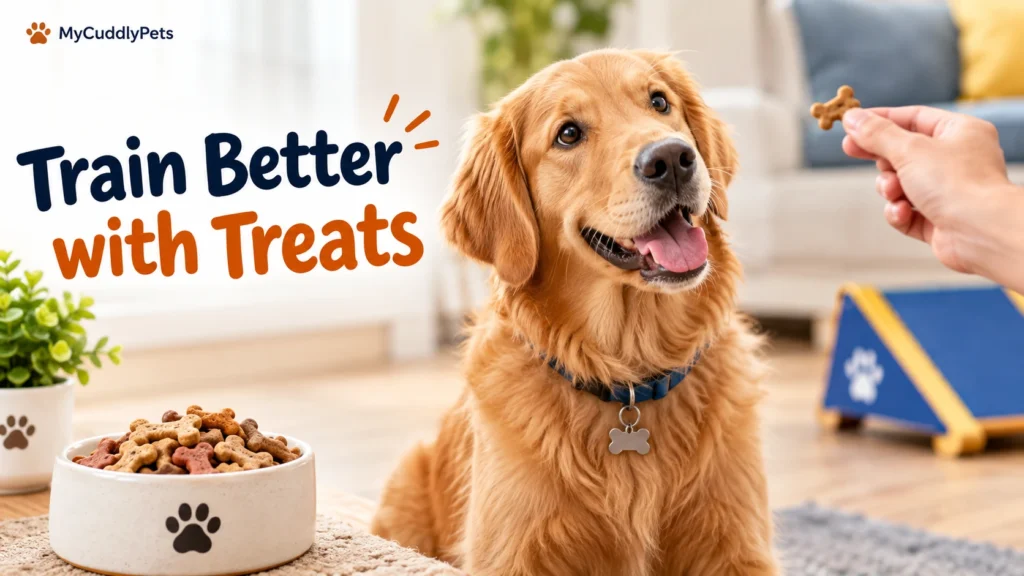
Quick Answer: The best dog treats for training are small, easy to eat, appealing to your dog, and appropriate for their age and health. Choose soft or easily broken rewards, keep portions tiny, and account for treat calories in your dog’s daily food allowance. Use rewards immediately after the behavior you want to reinforce.
Key Takeaways
- Choose treats that your dog can eat quickly without interrupting training.
- Keep individual rewards small, especially during frequent repetition.
- Use part of your dog’s regular kibble allowance when practical to help manage calories.
- Reserve especially appealing treats for difficult or distracting situations.
- Avoid toxic ingredients, choking hazards, and treats that conflict with your dog’s dietary needs.
Dog treats for training are more than occasional snacks. They are practical rewards that can help dogs learn cues, practice good manners, and build positive associations with everyday situations. The challenge is finding rewards that motivate your dog without creating unnecessary calories, digestive upset, or safety concerns.
I’m James Walker, and in this guide I’ll explain how to choose training treats, use them effectively, compare common options, and adjust your approach for different dogs. I’ll also cover what to do when your dog refuses treats or becomes too distracted to respond.
This article is for general informational purposes and reflects publicly available nutrition guidance. It isn’t a substitute for personalized veterinary advice — always check with your vet about your dog’s specific needs.
What Are Dog Treats for Training?
Dog training treats are small food rewards given after a dog performs a desired behavior. They can help reinforce actions such as sitting, coming when called, walking calmly on a leash, settling on a mat, or allowing gentle handling.
Training rewards do not have to come from a special bag labeled “training treats.” A dog’s regular kibble, tiny pieces of suitable cooked meat, or a portion of a familiar treat may work just as well, depending on the dog’s preferences and the training environment.
How training treats work
Reward-based training pairs a behavior with something the dog finds rewarding. When a dog sits and receives a treat immediately afterward, the consequence can make that behavior more likely to occur again.
Timing matters. Deliver the reward promptly after the desired action so your dog can more easily connect the behavior with the outcome. A marker word such as “yes” or a clicker can help identify the exact moment you want to reinforce.
What makes a treat high-value?
A high-value treat is one that a particular dog finds especially motivating in a particular situation. There is no single ingredient that makes a treat universally high-value.
Your dog might happily work for kibble in the kitchen but prefer a more appealing reward outdoors, where smells, people, and other dogs compete for attention. Value depends on the individual dog, the environment, and the difficulty of the task.
Why Do Dogs Respond to Training Treats?
Dogs learn through the consequences of their behavior. Food can be a convenient reinforcer because many dogs find it rewarding, it can be delivered quickly, and it is easy to divide into small portions.
However, treats are not the only possible reinforcers. Some dogs also enjoy a toy, a game of tug, sniffing, praise, or permission to explore. The most useful reward is one that matters to your dog and fits the situation.
Reward timing and repetition
During early learning, frequent reinforcement can help a dog understand what earns a reward. For example, when teaching “come,” reward your dog when they reach you rather than waiting until they have wandered away again.
As the behavior becomes more reliable, you can gradually vary how often you provide food while continuing to reinforce the behavior in other ways. Difficult or newly learned behaviors may still need frequent rewards.
Motivation and distractions
A dog who responds indoors may struggle in a busy park because the environment offers competing distractions. This does not automatically mean the dog is stubborn or that the treat is inadequate.
Make training easier by increasing distance from distractions, shortening the session, or practicing in a quieter place. If your dog is too overwhelmed to eat, reduce the difficulty instead of repeatedly presenting food.
How Nutrition Affects Training Treat Choices
Training treats contribute to a dog’s overall food intake. Their nutritional role is usually different from that of the main diet: treats are generally intended as rewards rather than as a complete source of daily nutrition.
Calories and portion control
Every treat contributes calories, even when it looks tiny. Frequent rewards can add up across a session, several training sessions, and other family members offering snacks.
A commonly used veterinary nutrition guideline is to keep treats and other foods that are not complete and balanced to no more than about 10% of a dog’s daily calories, with at least 90% coming from a complete and balanced diet. This is a general guideline, not a target that every dog should consume.
Dogs who need weight management or have medical dietary restrictions may require a different plan. Ask your veterinarian how to account for training rewards in those situations.
Protein, fat, and digestibility
Chicken, turkey, beef, and fish can provide protein, but a high protein percentage does not automatically make a treat better for training. Palatability, portion size, texture, and the dog’s tolerance matter too.
Fat contributes energy and can make some foods appealing. However, calorie-dense treats may use up a dog’s reward budget quickly. Dogs with a history of pancreatitis or other conditions requiring dietary fat restrictions need individualized veterinary guidance before receiving rich treats.
Digestibility also matters. A treat that causes loose stool or discomfort is not a useful training reward, even if the dog likes its taste. Introduce unfamiliar foods gradually and monitor how your dog responds.
Moisture and texture
Soft, moist treats are often easy to divide and may be quick for a dog to chew. Dry kibble is convenient and less messy, while some crunchy treats take longer to eat.
Neither moisture nor texture alone determines nutritional quality. Choose a format that your dog can safely manage and that allows training to continue without long pauses.
Which Ingredients Matter Most?
Start with ingredients your dog already tolerates. A familiar, simple reward can be easier to evaluate than a treat containing many unfamiliar ingredients.
Animal proteins
Chicken, turkey, beef, and fish are common protein sources in dog treats. A small piece of plain, fully cooked, boneless chicken or turkey may work for some dogs, provided it is prepared without unsafe seasonings or excess fat.
Dogs can have food allergies or intolerances to ingredients, including animal proteins. If your dog is on an elimination diet or prescription diet, do not add a new protein without checking with the veterinarian managing that diet.
Kibble and simple food rewards
Your dog’s regular kibble can be a practical training reward. It is already part of the daily diet, and using a measured portion can make calorie tracking easier.
Other foods, such as small pieces of appropriate cooked meat, may be useful for some dogs. They should be plain, safely prepared, and offered in modest amounts. Homemade does not automatically mean nutritionally complete or safe.
Ingredients and foods to avoid
Never use foods known to be toxic to dogs as training rewards. Important examples include chocolate, grapes, raisins, and products containing xylitol, a sweetener that can cause dangerous poisoning.
Also avoid cooked bones, heavily seasoned scraps, and foods containing ingredients such as onion or garlic. Check the ingredient list of packaged treats rather than assuming that a human snack is suitable for dogs.
The FDA provides information about xylitol and its danger to dogs. The ASPCA also maintains a resource on people foods to avoid feeding pets.
How to Choose the Right Dog Treats for Training
There is no universally best training treat. I recommend choosing according to your dog’s eating ability, preferences, daily diet, and the type of training you are doing.
1. Choose a manageable size
For repeated training, a reward should generally be small enough for your dog to eat quickly. Many treats can be broken into smaller pieces, and some commercial training treats are already designed as bite-sized rewards.
Small dogs do not necessarily need a different ingredient, but they often benefit from particularly small portions. Large dogs can also work for tiny rewards; a bigger dog does not need a large snack after every repetition.
2. Match the texture to your dog
- Soft treats: Convenient for quick rewards and easy to break apart.
- Crunchy treats: Useful when the dog can chew them comfortably, but may take longer to eat.
- Kibble: Convenient, familiar, and easy to measure as part of the regular food ration.
- Soft homemade pieces: May suit some dogs, provided the ingredients are safe and the food is prepared appropriately.
3. Consider your dog’s needs
Think about age, body condition, chewing ability, allergies, and digestive tolerance. Puppies need rewards that are appropriate for their developmental stage and small enough to eat safely. Senior dogs may need softer textures if chewing is uncomfortable.
For overweight dogs, calorie-conscious rewards or measured kibble may help keep training compatible with a weight-management plan. For dogs with sensitive stomachs, familiar foods and fewer ingredient changes can make it easier to identify what they tolerate.
4. Read the label
Check the ingredient list, calorie content, feeding directions, and any age or size guidance. If calorie information is not clear, contact the manufacturer rather than guessing.
Training treats are not necessarily intended to provide complete and balanced nutrition. The Association of American Feed Control Officials (AAFCO) explains how pet food labels communicate nutritional adequacy and other product information in its consumer guide to understanding pet food.
How Many Training Treats Can a Dog Have?
There is no universal number of treats that is appropriate for every dog. The amount depends on the dog’s daily calorie needs, the calorie content of each reward, the rest of the diet, and any veterinary restrictions.
Use a daily calorie budget
As a general starting point, many veterinary nutrition guidelines recommend keeping treats and other extras within approximately 10% of daily calories. This does not mean every dog should receive the full allowance, especially if they are overweight or have a medical condition.
For example, if your veterinarian has established a daily intake of 500 calories, 10% would be 50 calories for treats and other extras combined. That is an illustration of the calculation, not a feeding recommendation for an individual dog.
To estimate the number of treats, divide the calories available for treats by the calories in each treat. If a treat contains 5 calories and the illustrative allowance is 50 calories, that would equal 10 treats. Smaller pieces may contain fewer calories, but check the product information where available.
Can kibble count as training treats?
Yes. You can set aside part of your dog’s measured daily kibble portion and use it during training. This helps avoid unintentionally adding the same calories on top of the regular meal.
If you use higher-calorie rewards, account for them in the daily feeding plan. Do not make large or repeated reductions to a puppy’s or medically managed dog’s main diet without veterinary guidance.
How to Use Treats During Dog Training
Good reward delivery helps your dog understand which behavior earned the treat. Keep sessions short enough that your dog can remain engaged and successful.
A simple step-by-step method
- Choose one behavior. Start with a clear goal, such as sitting when asked or coming when called.
- Set up an easy environment. Begin somewhere with few distractions.
- Mark the desired action. Use a consistent word such as “yes” or a clicker at the moment the dog performs the behavior.
- Deliver the reward promptly. Give a small treat immediately after the marker.
- Repeat while the dog is engaged. Keep repetitions manageable and allow breaks.
- Increase difficulty gradually. Practice in new places or around distractions only when your dog is ready.
How often should you reward?
When teaching a new behavior, frequent rewards can help establish the connection between the action and its consequence. As the behavior becomes more reliable, you can vary food rewards and use other things your dog enjoys.
Do not rush to remove treats simply because your dog has learned a cue indoors. Practice in different settings and continue reinforcing the behavior, particularly when distractions or difficulty increase.
How to avoid bribing
A treat can become a bribe if the dog only performs the behavior when they see food first. To avoid this, gradually move the treat out of sight, give the cue, mark the correct behavior, and then produce the reward.
The food still reinforces the action, but the dog learns to respond to the cue rather than relying on seeing a treat beforehand. Keep rewarding during learning and practice instead of abruptly eliminating food rewards.
Common Training-Treat Mistakes
- Using oversized treats: Large rewards can slow down repetition and add unnecessary calories.
- Ignoring total food intake: Treats from multiple family members can add up quickly.
- Changing too many ingredients: Introducing several new treats at once makes it harder to identify what caused a reaction.
- Training in an environment that is too difficult: Reduce distractions and build up gradually.
- Showing the treat before every cue: Practice giving the cue before reaching for the reward.
- Assuming expensive means better: Price and marketing do not establish that a treat is more nutritious or motivating for your dog.
- Using food that is difficult to chew: Choose a texture that lets your dog eat comfortably and safely.
Training Treat Problems and What to Do
| Problem | Possible reason | Practical step |
|---|---|---|
| Dog ignores treats outdoors | Distractions, stress, or low food motivation in that setting | Move farther from distractions, shorten the session, or try a familiar reward in a quieter place. |
| Dog gets full quickly | Rewards are too large or sessions involve too much food | Use smaller pieces, shorter sessions, or part of the daily kibble ration. |
| Dog refuses a new treat | Preference, unfamiliar texture, stress, or feeling unwell | Return to a familiar reward. Do not force the dog to eat. |
| Loose stool after a new treat | Possible food intolerance, dietary change, or another cause | Stop the new treat and monitor. Contact a veterinarian if symptoms persist or are severe. |
| Dog only responds when food is visible | The dog may have learned to wait for a visible reward | Give the cue first, mark the behavior, and then deliver the treat. |
| Dog becomes distracted by food | The reward may be too exciting or the exercise too difficult | Use a less distracting reward or simplify the training task. |
These are practical possibilities, not diagnoses. A sudden change in appetite or behavior can have causes unrelated to training treats.
Soft vs. Crunchy and Homemade vs. Commercial Treats
The right format depends on how quickly your dog can eat it, how easily you can carry it, and how it fits into your dog’s diet.
| Option | Potential advantages | Considerations |
|---|---|---|
| Soft training treats | Easy to break apart; often quick to eat | Check calories, ingredients, and storage directions. |
| Crunchy treats | Can be convenient and appealing to some dogs | May take longer to chew; consider dental comfort and size. |
| Regular kibble | Familiar and easy to measure from the daily ration | May be less motivating in distracting settings. |
| Homemade rewards | Ingredients can be selected and portions controlled | Food safety and calorie content still matter; homemade treats are not automatically balanced. |
| Freeze-dried treats | Often lightweight and easy to carry | May be calorie-dense; check the label and texture. |
Commercial treats offer convenience and labeling information, while homemade rewards offer more control over ingredients. Neither category is automatically superior. The important questions are whether the treat is safe, tolerated, manageable in size, and appropriate for your dog’s overall diet.
Special Considerations for Puppies, Seniors, and Other Dogs
Puppies
Puppies can learn with food rewards, but their treats should be small, easy to eat, and suitable for their age. Their main diet must still support growth, so keep extras modest and avoid replacing substantial portions of balanced puppy food with treats.
Use reward-based training in short, age-appropriate sessions. If a puppy has a special diet or ongoing digestive problems, ask the veterinarian which rewards are suitable.
Small and toy breeds
Small dogs can receive very small reward pieces. Avoid oversized chunks that are difficult to chew or swallow, and consider how quickly calories accumulate relative to the dog’s daily needs.
Large and active dogs
Larger or more active dogs may have different energy needs, but they still benefit from appropriately sized rewards. Do not assume that a large dog needs a large treat after every repetition.
Senior dogs
Some senior dogs have dental discomfort or other age-related needs that affect treat selection. Softer options may be more comfortable, but persistent difficulty chewing or swallowing should be discussed with a veterinarian.
Overweight dogs and dogs with sensitive stomachs
For dogs managing their weight, use measured kibble or low-calorie rewards that fit the veterinarian’s plan. Avoid relying on treat packaging alone to determine whether a food is suitable.
For sensitive-stomach dogs, favor familiar, tolerated foods and introduce changes carefully. Dogs with diagnosed allergies, digestive disease, or prescription diets need individualized guidance before new treats are added.
When Should You Talk to a Veterinarian?
Stop offering a new treat and seek veterinary advice if your dog develops concerning symptoms after eating it. Contact a veterinarian promptly for repeated vomiting, persistent diarrhea, blood in the stool, significant appetite or weight changes, unusual lethargy, or signs of pain.
Choking, breathing difficulty, collapse, or suspected ingestion of a toxic ingredient requires urgent veterinary or animal poison-control guidance. Do not wait for symptoms after a suspected xylitol, chocolate, grape, or raisin ingestion.
Ask your veterinarian before introducing treats if your dog has pancreatitis, diabetes, kidney disease, urinary problems, a food allergy, or a medically prescribed diet. The appropriate reward may need to be selected around specific nutritional restrictions.
Frequently Asked Questions
1. What are the best dog treats for training?
The best treats are small, safe, appealing to your dog, easy to eat quickly, and compatible with their dietary needs. The right choice varies by dog and training environment.
2. Can I use my dog’s regular food as training treats?
Yes. You can set aside part of your dog’s measured kibble ration for training. This can make calorie tracking easier, although some dogs may need a more appealing reward in distracting settings.
3. How many training treats can I give my dog each day?
There is no universal number. Consider the calories in each treat and your dog’s daily energy needs. A commonly used general guideline is to keep treats and other extras to about 10% or less of daily calories, unless your veterinarian advises otherwise.
4. Are soft treats better than crunchy treats for training?
Soft treats can be convenient because many dogs eat them quickly, but crunchy treats can also work. Choose a safe texture and size that your dog can comfortably manage without interrupting the session.
5. Can puppies have training treats?
Yes, when treats are appropriate for the puppy’s age, size, and diet. Keep rewards small and modest so they do not displace the balanced food needed for growth.
6. Can I use chicken or other human food as a training reward?
Some plain, fully cooked, boneless foods such as chicken may be suitable for some dogs in small amounts. Avoid unsafe seasonings, toxic ingredients, and foods that conflict with your dog’s dietary restrictions.
7. Why does my dog stop taking treats during training?
Your dog may be distracted, stressed, full, uninterested in that reward, or not feeling well. Reduce the difficulty, try a familiar treat in a quieter setting, and seek veterinary advice if appetite changes persist or other symptoms appear.
8. How do I stop my dog from listening only when I show a treat?
Give the cue before showing the food, mark the desired behavior, and then deliver the reward. Gradually vary food rewards while continuing to reinforce successful behavior and practicing in different settings.
9. What ingredients should I never use as dog training treats?
Avoid chocolate, grapes, raisins, xylitol-containing products, and unsafe foods containing ingredients such as onion or garlic. Also avoid cooked bones and foods that pose choking or other safety risks.
10. Can too many training treats cause problems?
Yes. Excessive treats can add calories and may upset some dogs’ digestion. Keep portions modest, account for rewards in the daily diet, and contact a veterinarian about persistent or severe symptoms.
Final Takeaway
Dog treats for training should make learning easier without compromising your dog’s safety or nutritional needs. Choose small, appealing rewards that are easy to eat, use them promptly after the behavior you want to reinforce, and account for their calories throughout the day.
Regular kibble may be enough for familiar skills, while a more motivating but still appropriate reward can help in challenging settings. Keep sessions manageable, adjust the difficulty when your dog struggles, and consult your veterinarian when allergies, medical diets, digestive symptoms, or other health concerns affect treat selection.
The goal is not to feed the most treats. It is to use rewards thoughtfully so your dog can learn safely and successfully.
