
Written by James Walker · Last updated: September 21, 2026
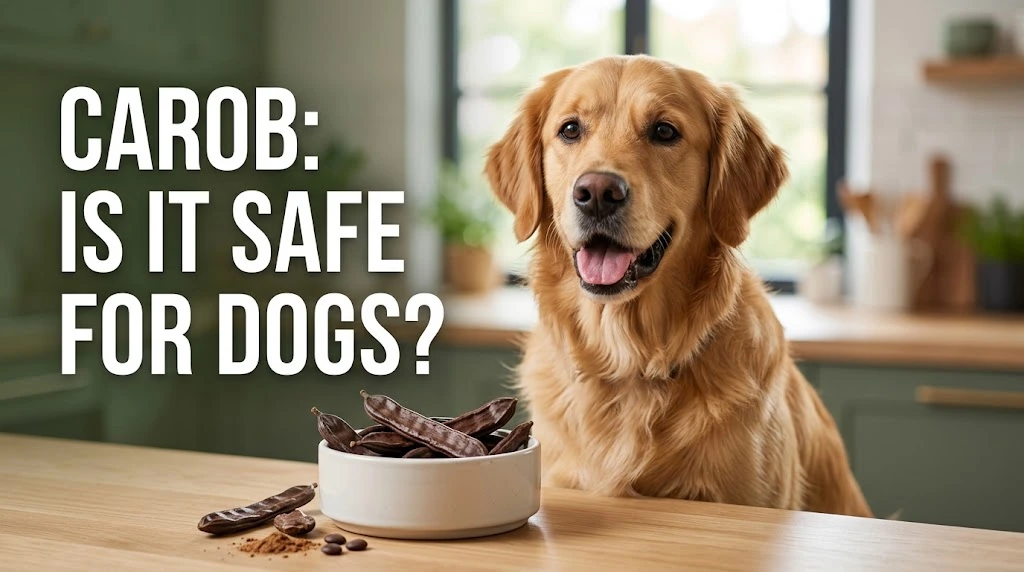
Quick Answer: Yes, plain carob is generally considered non-toxic to dogs and is commonly used as a chocolate substitute in dog treats. Unlike chocolate, carob does not contain theobromine or caffeine. However, the finished product still matters: check for unsafe additives, keep portions small, and treat carob as an occasional snack rather than a dietary necessity.
Key Takeaways
- Plain carob is different from cacao and does not contain chocolate’s theobromine.
- Carob powder, chips, and baked treats can differ considerably in sugar, fat, calories, and texture.
- Start with a small taste and monitor your dog’s response instead of assuming every dog tolerates it equally.
- Read the full ingredient list, especially for xylitol, chocolate, raisins, and other unsafe additions.
- Carob treats do not replace a complete and balanced dog food or veterinary nutrition advice.
Carob for dogs is a common topic among owners who want to share a chocolate-looking snack without exposing their pets to chocolate itself. The ingredient is used in biscuits, birthday treats, pupcakes, and some prepared pet foods. But a dog-safe ingredient does not automatically make every recipe or serving appropriate.
I’m James Walker, and in this guide I’ll explain what carob is, why it differs from chocolate, how to evaluate carob treats, and what to do if your dog eats a product that causes concern. The focus is practical feeding and ingredient safety, not claims that a treat can treat or prevent disease.
What Is Carob for Dogs?
Carob comes from the carob tree, Ceratonia siliqua, which produces long pods containing a sweet pulp and seeds. The pulp can be dried and ground into carob powder or flour. Manufacturers use it to add a naturally sweet, roasted flavor and a brown color to foods.
The ASPCA lists carob as non-toxic to dogs, cats, and horses. That classification supports the general safety of the plant itself, but it should not be interpreted as approval of every processed snack containing carob. See the ASPCA carob entry.
Carob powder, chips, syrup, and gum
- Carob powder or flour: Ground carob pulp, often used in baking. It can be easier to portion than a large, hard treat, but recipes may add other ingredients.
- Carob chips: Small pieces used in biscuits or baked treats. Check the label because chips may contain added fats, sweeteners, or other ingredients.
- Carob syrup: A sweet preparation that may be concentrated. Its sugar and calorie content depend on how it is made.
- Carob gum (locust bean gum): A thickener derived from the seed’s endosperm. It is functionally different from carob powder and is used to change texture in some foods.
Whole pods and large hard pieces are not the same as finely ground powder. Large pieces can be difficult for some dogs to chew and may create a choking or obstruction concern. Choose a texture that suits your dog’s size, chewing habits, and ability to swallow safely.
Why Is Carob Used Instead of Chocolate?
Carob resembles chocolate in color and can provide a sweet, roasted flavor, but it comes from a different plant. Chocolate is made from cacao, which contains methylxanthines—especially theobromine and caffeine—that can be toxic to dogs.
Carob does not naturally contain theobromine or caffeine, which is why it is commonly used in dog treats as a chocolate alternative. Veterinary guidance from VCA explains that chocolate toxicity depends in part on the amount of theobromine consumed and that chocolate should generally be avoided. Read VCA’s chocolate-poisoning guide.
Theobromine and caffeine
Dogs process chocolate’s methylxanthines differently from people. Depending on the type and amount of chocolate eaten and the dog’s size, exposure can lead to serious illness. Carob avoids those specific chocolate compounds, but that does not mean a carob-coated cookie is automatically healthy or suitable for every dog.
Why the complete product still matters
A carob treat might also contain chocolate, cocoa, xylitol, raisins, macadamia nuts, excessive fat, or other ingredients that change the safety picture. Never rely only on the words “carob” or “chocolate alternative” on the front of a package. Read the complete ingredient list and, if an ingredient is unclear, contact the manufacturer or your veterinarian.
How Carob Affects Dog Nutrition
Carob is a plant ingredient that contributes carbohydrates and dietary fiber. Its exact nutrient profile depends on the form, processing method, and recipe. Powder, syrup, chips, and baked products should not be treated as nutritionally interchangeable.
Fiber, carbohydrates, and calories
Fiber is the part of plant material that is not fully digested in the small intestine. Different fiber types behave differently: some hold water, while others are fermented by intestinal microbes. The amount and type of fiber can influence stool characteristics, but adding carob is not a reliable treatment for constipation or diarrhea.
Carob also contains carbohydrates and naturally occurring sugars. A sweet taste does not mean a product is calorie-free. Prepared chips and cookies may include additional sugar or fat, so the calorie contribution can be quite different from that of plain powder.
For dogs that need weight management, the relevant question is not whether carob sounds wholesome; it is how the treat fits into the dog’s total daily calorie intake. Even a treat made with a generally safe ingredient can contribute to unwanted weight gain when portions are too large or too frequent.
What carob does not provide
Carob is not a complete dog food. It does not, by itself, supply the balanced combination of protein, essential amino acids, fats, vitamins, and minerals required for a dog’s life stage. It should not displace a complete and balanced diet or be used to formulate a homemade diet without qualified veterinary nutrition guidance.
Claims that carob “boosts immunity,” cures digestive problems, or improves a medical condition should be treated cautiously. A food ingredient can contain nutrients without being proven to prevent or treat disease in dogs.
Which Carob Ingredients Matter Most?
Plain carob
Plain carob powder with no added sweeteners or flavorings is a straightforward option when a dog owner wants to prepare an occasional carob-flavored treat. Start with a very small amount, particularly if the dog has never eaten it before. A simple ingredient list makes it easier to identify what the dog has consumed if a reaction occurs.
Carob gum
Carob gum, also called locust bean gum, is used as a thickening or stabilizing ingredient. It is not the same thing as a spoonful of carob powder, and its presence in a formulated food does not mean the product is a chocolate substitute. Its function is largely related to texture.
Dogs with a history of digestive sensitivity may respond differently to changes in food formulation. If a food containing gums appears to coincide with recurring digestive signs, discuss the pattern with your veterinarian rather than assuming the additive is the cause.
Sweeteners and other additions
Check for added sugars, oils, dairy ingredients, and flavorings. These may affect calories or tolerance. Most importantly, avoid products containing xylitol, an artificial sweetener that can cause life-threatening poisoning in dogs. If your dog has eaten a product containing xylitol, contact a veterinarian or animal poison-control service immediately rather than waiting for symptoms.
Also watch for chocolate or cocoa, raisins, and macadamia nuts in mixed baked goods. A treat’s carob ingredient does not neutralize the risks from other ingredients.
How to Choose Carob Treats
When selecting a carob treat, look beyond the flavor and packaging. The goal is to choose a product whose ingredients, texture, and calorie contribution fit your individual dog.
Ingredient-label checklist
- Identify the carob form: Is it plain powder, chips, syrup, or a mixed preparation?
- Read every ingredient: Check for xylitol, chocolate, cocoa, raisins, macadamia nuts, and unfamiliar additives.
- Check calories: If calories are listed per treat, use that information to account for the snack in the daily diet.
- Consider fat and sugar: Carob itself does not tell you how rich the finished treat is.
- Check texture and size: Avoid pieces that your dog may swallow whole or struggle to chew.
- Consider the dog’s health: Ask your veterinarian about treats if your dog has diabetes, pancreatitis, food allergies, or another condition requiring dietary management.
Treats are not a substitute for complete food
For everyday feeding, look for a dog food with a nutritional adequacy statement appropriate for your dog’s life stage. The Association of American Feed Control Officials (AAFCO) explains how nutritional adequacy statements help consumers understand whether a pet food is formulated to meet a nutrient profile or has been substantiated through feeding tests. Read AAFCO’s pet-food guidance.
Carob treats are optional extras. They do not need to appear in a dog’s regular meals, and there is no general nutritional requirement to add carob to a healthy dog’s diet.
How Much Carob Can Dogs Eat?
There is no universally established carob serving size that is appropriate for every dog, every recipe, and every health condition. A tiny taste of plain carob is a sensible way to introduce it, but a teaspoon or a particular number of chips should not be presented as a guaranteed safe dose for all dogs.
Begin with a very small amount relative to your dog’s size. For a small dog, even a small treat can represent a substantial share of daily calories. For a large dog, a larger snack may still be excessive if it is rich in fat or sugar. The recipe and the dog’s overall diet matter as much as body weight.
Frequency and treat calories
Use carob as an occasional treat rather than a daily nutritional supplement. A commonly used general pet-feeding guideline is to keep treats and other extras to no more than about 10% of daily calories, with most calories coming from a complete and balanced food. This is a broad guideline, not a target that every dog should consume. Dogs with medical or weight-management needs may require a different plan.
Follow the treat’s calorie information when available, and adjust the rest of the day’s treats accordingly. If the package does not provide useful calorie information, keep portions particularly modest or choose a treat with clearer labeling.
Fresh drinking water should remain available. Do not use carob treats to replace meals, water, or a veterinarian-prescribed diet.
How to Introduce Carob to Your Dog
- Check the label first. Confirm that the product contains carob and does not include chocolate, xylitol, or another hazardous ingredient.
- Choose a simple form. Plain powder incorporated into a suitable dog treat can make portion control easier than offering a large, hard confection.
- Offer a tiny taste. Do not introduce several new foods or treats at the same time.
- Observe your dog. Watch for vomiting, diarrhea, gas, itching, swelling, appetite changes, or unusual behavior.
- Do not keep increasing the amount. If your dog tolerates a small taste, that does not establish that a large serving is appropriate.
- Stop if a reaction occurs. Avoid further carob until you have considered the ingredients and, when appropriate, discussed the reaction with your veterinarian.
What changes may be normal?
A new treat may change a dog’s interest in food or produce a temporary change in stool. However, repeated vomiting, persistent diarrhea, blood in the stool, marked discomfort, or other significant signs should not be dismissed as a normal adjustment. Contact your veterinarian for advice.
Common Carob Feeding Mistakes
- Assuming every carob product is safe: The other ingredients may be more concerning than the carob itself.
- Giving too much too quickly: Large amounts of a new food can upset digestion and add unnecessary calories.
- Ignoring the label: Front-of-package claims do not replace a full ingredient check.
- Using carob as medicine: It is not a proven treatment for constipation, diarrhea, or other disease.
- Offering hard pieces without considering chewing: Size, shape, and texture can create choking risks, particularly for dogs that gulp food.
- Replacing balanced food with treats: Carob snacks do not meet a dog’s complete nutritional requirements.
- Assuming “natural” means calorie-free: Natural sugars and added fats still contribute energy.
Carob Problems and What to Do
| Problem | Possible reason | Practical step | When to seek help |
|---|---|---|---|
| Loose stool or gas | A new treat, a large portion, or another ingredient | Stop the treat and provide the dog’s usual food and water. | Contact a vet if signs persist, worsen, or occur with other symptoms. |
| Vomiting | Digestive upset or an ingredient unrelated to carob | Stop feeding the product and check its full label. | Seek veterinary advice for repeated vomiting, weakness, pain, or inability to keep water down. |
| Itching or swelling | Possible sensitivity or allergic reaction | Do not offer more of the treat. | Urgent care is needed for facial swelling, breathing difficulty, collapse, or rapidly worsening symptoms. |
| Dog swallowed a large hard piece | Choking or obstruction risk | Do not force food or attempt risky home procedures. | Seek urgent veterinary help for choking, breathing trouble, repeated retching, or distress. |
| Product contains xylitol or chocolate | Potentially toxic ingredient exposure | Keep the package and note the amount and time eaten. | Contact a veterinarian or animal poison-control service immediately. |
Do not induce vomiting or give home remedies unless a veterinary professional specifically instructs you to do so. If you are uncertain about an ingredient or the amount eaten, provide the product packaging and your dog’s approximate weight when you call.
Carob vs. Chocolate and Other Treats
| Option | Key difference | What dog owners should consider |
|---|---|---|
| Plain carob | Does not naturally contain chocolate’s theobromine or caffeine | Check the portion and any added ingredients. |
| Chocolate or cocoa | Contains methylxanthines that can poison dogs | Do not offer intentionally; contact a vet promptly after ingestion. |
| Carob chips | Processed product that may include fats or sweeteners | Read the label and account for calories. |
| Plain dog biscuit | May have a simpler recipe and easier calorie labeling | Choose a suitable size and check ingredients. |
| Fruit or vegetable treat | Different nutrient profile and texture | Confirm that the specific food is dog-safe and serve appropriately. |
Carob is a useful chocolate-style flavor option, not a reason to feed sweets more often. If the goal is simply to reward your dog, a small portion of its regular kibble or a suitable dog treat may serve just as well.
Special Considerations
Puppies
Puppies have small calorie budgets and need food formulated for growth. Carob is not necessary for development. If offering a taste, keep it tiny, use a soft and appropriately sized treat, and make sure snacks do not displace balanced puppy food.
Small and toy dogs
Small dogs can receive a proportionally large calorie load from a small-looking snack. Avoid hard pieces that may be swallowed whole, and be especially conservative with portions.
Senior dogs
Older dogs may have dental problems, reduced activity, or medical conditions that affect their diet. Consider texture and calorie content, and check with your veterinarian if your senior dog has a prescribed diet or ongoing digestive symptoms.
Dogs with sensitive stomachs or food allergies
Introduce only one new ingredient at a time, and avoid experimenting during an active episode of vomiting or diarrhea. A dog with a diagnosed food allergy may need a controlled diet; do not assume carob or a mixed carob treat is appropriate without checking the full ingredient list with your vet.
Overweight dogs or dogs with medical conditions
Carob is not a weight-loss ingredient. Treat calories matter, and dogs with diabetes, pancreatitis, kidney disease, or other conditions may need individualized dietary restrictions. Ask the treating veterinarian which treats fit the plan.
When Should You Contact a Veterinarian?
Contact a veterinarian promptly if your dog has repeated vomiting, persistent or severe diarrhea, blood in the stool, significant abdominal discomfort, marked lethargy, a major appetite change, or signs of dehydration. Seek urgent veterinary care for breathing difficulty, collapse, choking, severe swelling, or other rapidly worsening symptoms.
If your dog ate a carob product containing chocolate, cocoa, xylitol, raisins, macadamia nuts, or an ingredient you cannot identify, do not wait for symptoms before seeking professional advice. Tell the veterinarian what was eaten, how much, when it happened, and your dog’s approximate weight.
For suspected chocolate poisoning, veterinary guidance emphasizes prompt assessment because risk depends on the type and amount consumed. VCA’s chocolate-poisoning resource explains the concern and the need for veterinary care.
Frequently Asked Questions
1. Can dogs eat carob?
Yes. Plain carob is generally considered non-toxic to dogs and is commonly used in dog treats. Offer only a small amount and check the complete product ingredients.
2. Is carob toxic to dogs like chocolate?
No. Carob does not naturally contain theobromine or caffeine, the methylxanthines responsible for chocolate toxicity. A mixed product can still contain unsafe ingredients, so check its label.
3. Can dogs eat carob powder?
Plain carob powder can be used in small amounts in an occasional dog treat. Start with a tiny taste and avoid recipes containing unsafe sweeteners or other hazardous ingredients.
4. Can dogs eat carob chips?
Some carob chips are used in dog treats, but formulations differ. Check for added sugar, fats, chocolate, and xylitol, and choose a texture your dog can chew safely.
5. Is carob healthy for dogs?
Carob contributes carbohydrates and fiber, but it is not a necessary supplement or a complete food. Its value depends on the whole recipe, serving size, and the dog’s overall diet.
6. Can carob help a dog with constipation?
Carob contains fiber, but it is not a proven treatment for constipation. Persistent straining, pain, vomiting, or difficulty passing stool warrants veterinary advice rather than home treatment with carob.
7. Can puppies eat carob?
Plain carob is generally considered non-toxic, but puppies need a balanced growth diet and have small calorie budgets. If you offer any, use a tiny amount and an age-appropriate texture.
8. What should I do if my dog eats a carob treat?
If it contains plain carob and your dog seems well, check the ingredients and monitor for digestive upset. If it contains chocolate, xylitol, or another hazardous ingredient—or your dog develops concerning symptoms—contact a veterinarian promptly.
9. Is carob gum the same as carob powder?
No. Carob powder is made from the pod’s pulp, while carob gum is derived from the seed’s endosperm and is used as a thickener. They have different functions in food.
Final Takeaway
Plain carob is generally considered non-toxic to dogs and can provide a chocolate-style flavor in occasional treats without chocolate’s theobromine and caffeine. That makes it a useful alternative ingredient, but not a nutritional requirement or a treatment for digestive problems.
Choose a simple product, read the entire ingredient list, offer a very small amount, and account for treat calories. Be especially cautious with puppies, small dogs, dogs with sensitive stomachs, and pets following a veterinary diet. If a product contains a hazardous ingredient or your dog develops serious symptoms, contact a veterinarian promptly.
