
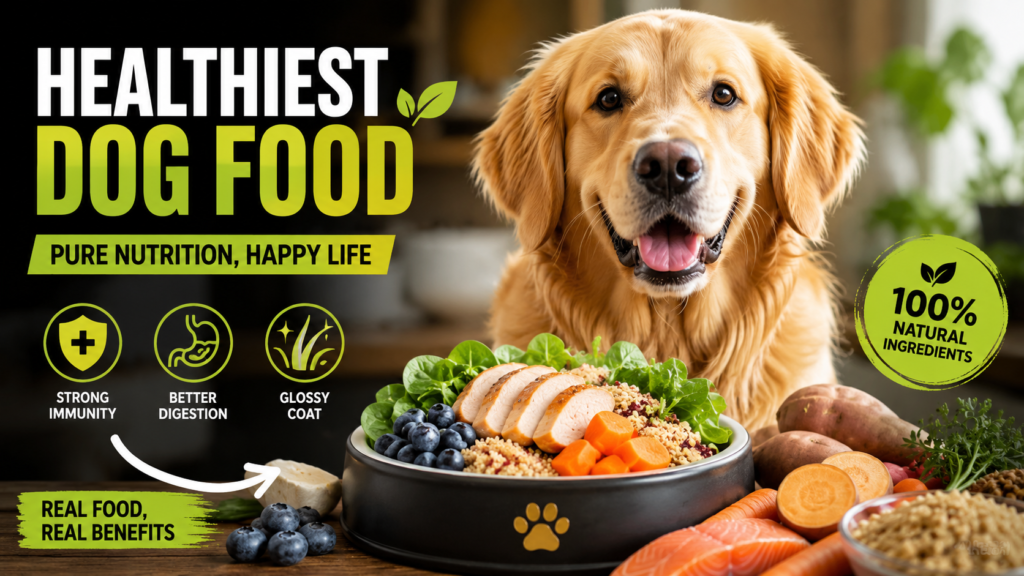
Quick Answer: The healthiest dog food has a named meat as the first ingredient, meets AAFCO nutrient standards for your dog’s life stage, avoids excess fillers, and fits your dog’s size, age, and activity level. There’s no single “best” brand — the right fit depends on your dog.
Dog food shopping shouldn’t feel this confusing. So many bags. So many claims. So little clarity.
I’m Michael Hayes, and I’ve spent years helping everyday dog owners sort real nutrition from clever marketing. I’ve watched dogs thrive after a simple diet change, and I’ve seen owners waste money on food that looked “premium” but wasn’t.
In this guide, I’ll walk you through exactly what makes dog food healthy, how to read a label like a pro, and how to avoid the mistakes most owners don’t even know they’re making.
What Does “Healthiest Dog Food” Actually Mean?
Healthy dog food isn’t about trendy packaging or a high price tag. It comes down to three things: real, identifiable ingredients, balanced nutrition for your dog’s life stage, and a formula your individual dog digests well.
A food can be “healthy” for one dog and wrong for another. Breed, size, age, and activity level all change what your dog actually needs.
Why Food Quality Matters for Your Dog
What goes into the bowl shows up everywhere else — coat condition, energy levels, digestion, weight, and even behavior. I’ve seen dogs go from dull-coated and sluggish to noticeably brighter within weeks of a better diet.
Poor-quality food isn’t always obviously “bad.” Sometimes it just under-delivers — enough protein to survive, but not enough to thrive.
How to Read a Dog Food Label (Step-by-Step)
Step 1: Check the First Ingredient
The first ingredient makes up the largest portion of the food by weight. Look for a named meat source — like chicken, beef, or salmon — rather than a vague “meat meal” or “animal by-product.”
Step 2: Look at the Guaranteed Analysis
This panel lists minimum protein and fat, and maximum fiber and moisture. It won’t tell you everything, but it’s a useful sanity check against the marketing on the front of the bag.
Step 3: Confirm an AAFCO Statement
Reputable foods include a statement confirming they meet Association of American Feed Control Officials nutrient profiles for a specific life stage. No statement is a red flag.
Step 4: Match the Food to Life Stage
Puppy, adult, and senior formulas aren’t interchangeable. Feeding an adult formula to a growing puppy — or vice versa — can leave real nutritional gaps.
Key Nutrients Every Healthy Dog Food Needs
- Protein: Supports muscle, coat, and immune health — ideally from named animal sources.
- Healthy fats: Support skin, coat shine, and energy.
- Digestible carbohydrates: Provide steady energy; quality matters more than “grain-free” status.
- Vitamins and minerals: Support immune function, bone health, and metabolism.
- Fiber: Supports healthy digestion and stool quality.
Dry vs. Wet Dog Food: What’s the Difference?
| Factor | Dry Food (Kibble) | Wet Food (Canned) |
|---|---|---|
| Convenience | Easy to store and portion | Shorter shelf life once opened |
| Dental benefit | Some texture benefit to chewing | Minimal dental benefit |
| Hydration | Lower moisture content | Higher moisture, helps hydration |
| Cost | Generally more budget-friendly | Typically more expensive per calorie |
| Best for | Most healthy adult dogs | Picky eaters, dogs needing more moisture |
Common Feeding Mistakes Owners Make
- Choosing a food based on packaging instead of the ingredient list.
- Free-feeding instead of portioning by weight and activity level.
- Switching foods too abruptly, upsetting digestion.
- Assuming “grain-free” automatically means healthier.
- Overdoing treats, which quietly unbalances a otherwise good diet.
Common Problems and Fixes
| Symptom | Likely Cause | What to Try |
|---|---|---|
| Dull or itchy coat | Low-quality fat sources or an allergy | Switch to food with named animal fat; consider a vet allergy check |
| Frequent loose stools | Poor-quality fillers or a sudden diet change | Transition foods gradually over 7–10 days |
| Low energy | Insufficient protein or calories for activity level | Reassess portion size and protein content |
| Excess weight gain | Overfeeding or too many treats | Measure portions and limit treats to under 10% of daily calories |
Choosing the Healthiest Dog Food by Life Stage
Puppies
Puppies need higher protein and calorie density to support growth. Look for a food labeled for “growth” or “all life stages.”
Adult Dogs
Adult formulas focus on maintenance — balanced protein, fat, and calories matched to activity level.
Senior Dogs
Senior dogs often need fewer calories but still need high-quality protein to maintain muscle mass, plus support for joints and digestion.
Pro Tips for Feeding a Healthier Diet
- Weigh food portions instead of eyeballing them.
- Introduce new food gradually, mixing it with the old over about a week.
- Recheck your dog’s body condition every few months and adjust portions.
- Keep treats simple and limited, no matter how healthy the base diet is.
For general nutrition guidelines, the American Kennel Club and ASPCA both publish reliable, owner-friendly resources. For questions about a specific health condition, AVMA guidance is a solid starting point before making major diet changes.
FAQ Section
What is the single most important thing to check on a dog food label?
The first ingredient. It should be a named meat source, not a vague “meat by-product” or filler.
Is grain-free dog food automatically healthier?
No. Grain-free simply means no grains — it isn’t automatically higher quality, and some dogs do fine with grains in their diet.
How often should I switch my dog’s food?
Only when there’s a reason to — a life-stage change, a health issue, or a quality upgrade. Frequent switching isn’t necessary and can upset digestion if done too fast.
How do I transition my dog to a new food safely?
Mix the new food with the old gradually over 7–10 days, increasing the new food’s ratio each day.
Can homemade food be healthier than store-bought?
It can be, but only if it’s nutritionally balanced. Unbalanced homemade diets are a common source of deficiencies, so it’s worth checking recipes with a vet or veterinary nutritionist.
Does a higher price always mean healthier dog food?
Not always. Price can reflect marketing as much as quality — the ingredient list and AAFCO statement matter more than the price tag.
When should I talk to a vet about my dog’s diet?
If your dog shows ongoing digestive issues, unexplained weight change, or a dull coat, it’s a good time to bring diet up at your next vet visit.
Conclusion
The healthiest dog food isn’t about chasing the fanciest label — it’s about real ingredients, the right nutrients for your dog’s life stage, and portions that match their needs. Start with the label, watch how your dog responds, and adjust from there. And if anything seems off, a quick chat with your vet is always worth it.
