
Website: MyCuddlyPets.com
Checking your dog’s poop may not be the most enjoyable part of pet ownership, but it can provide useful clues about digestive health. Changes in dog poop color, consistency, frequency, or appearance sometimes follow a dietary change. Other changes, particularly black, tar-like stool or visible blood, can signal a problem that needs prompt veterinary attention.
Understanding what different stool colors may indicate can help you recognize changes and describe them accurately to your veterinarian. However, dog poop color alone cannot diagnose a disease. A veterinarian considers your dog’s symptoms, diet, medical history, physical examination, and any necessary diagnostic tests.
This guide explains the normal color of healthy dog poop, what unusual colors may mean, how food affects stool appearance, and when to seek veterinary care.
What Is the Normal Color of Healthy Dog Poop?

Healthy dog poop is generally medium to dark brown, although individual dogs may naturally have slightly lighter or darker stools. Bile, a digestive fluid produced by the liver and released into the digestive tract, contributes to the normal brown color of feces.
Color is only one part of the picture. Healthy stool is usually formed, moist, and firm enough to hold its shape when picked up. It should not consistently resemble water, hard dry pellets, or greasy, pale-colored material.
Your dog’s usual stool provides the most useful comparison. A small, short-lived color variation after eating a different food may have a dietary explanation, while a persistent or dramatic change deserves more attention.
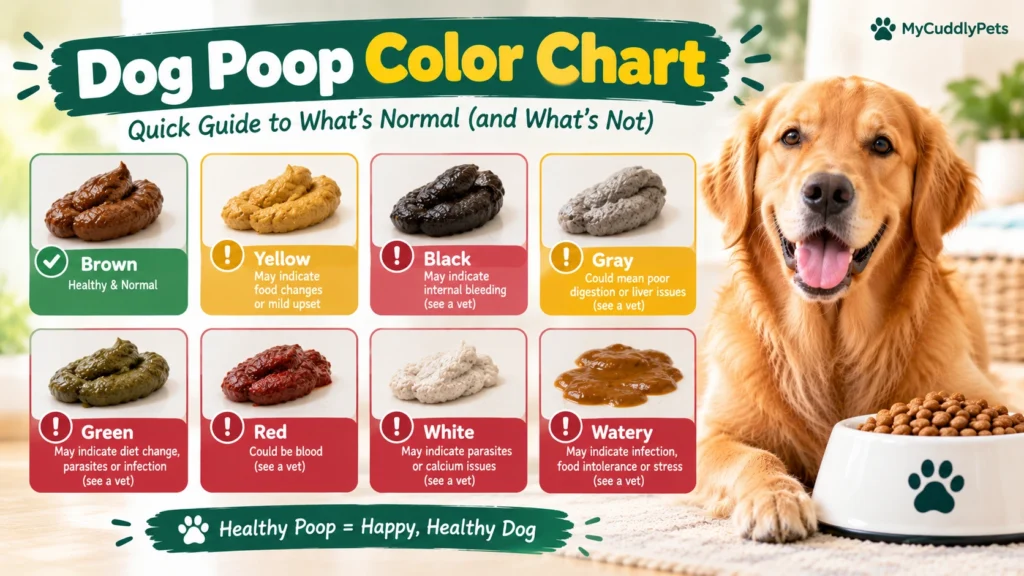
Dog Poop Color Chart: What Different Colors May Mean
The following dog poop color chart is an educational guide, not a diagnostic tool. Several different conditions can produce similar-looking stool, and some serious problems occur without an obvious color change.
| Stool color | Possible explanation | Recommended response |
|---|---|---|
| Brown | Usually normal digestion | Monitor the usual appearance and consistency. |
| Green | Grass, plant material, food pigments, or a digestive issue | Contact your veterinarian if persistent or accompanied by symptoms. |
| Yellow | Dietary changes or possible digestive, liver, or biliary problems | Seek veterinary advice if persistent or associated with illness. |
| Orange | Dietary pigments or possible bile-related digestive changes | Discuss unexplained or recurring changes with your vet. |
| Black and tar-like | Possible digested blood in the gastrointestinal tract | Seek urgent veterinary assessment. |
| Red or blood-streaked | Possible bleeding from the lower digestive tract or another source | Contact your veterinarian promptly. |
| Gray or pale | Possible digestive, pancreatic, liver, or bile-related problem | Arrange veterinary assessment, especially if recurring. |
Brown Dog Poop
Brown is generally the expected color of healthy dog stool. It can range from light brown to dark brown depending on your dog’s diet, digestive processes, and individual variation.
If your dog produces consistently brown, well-formed stools and otherwise eats, drinks, and behaves normally, that appearance is generally reassuring. Nevertheless, brown stool does not rule out every digestive or medical problem.
Green Dog Poop
Green dog poop sometimes occurs after a dog eats grass, leaves, or other plant material. Green food coloring or certain dietary ingredients may also affect stool color.
However, green stool can also accompany gastrointestinal upset or other health problems. A green appearance alone cannot establish the cause.
Contact your veterinarian if the color persists, the stool becomes watery, or your dog develops vomiting, reduced appetite, weakness, or abdominal discomfort. If you suspect your dog has eaten a toxic substance, such as rodent poison, seek immediate veterinary guidance rather than assuming the color is harmless.
Yellow Dog Poop
Yellow dog poop can sometimes follow a dietary change or an episode of digestive upset. Persistent yellow stool, particularly when it is greasy, unusually bulky, or accompanied by weight loss, may indicate a problem with digestion or nutrient absorption.
Possible explanations include disorders involving the pancreas, liver, gallbladder, or bile flow. These are possibilities rather than conclusions: stool color cannot tell you which organ, if any, is affected.
If your dog’s poop remains yellow across repeated bowel movements, contact your veterinarian. Seek care sooner if your dog is vomiting, appears uncomfortable, refuses food, or seems unusually tired.
Orange Dog Poop
Orange stool can occur when dietary ingredients or pigments change the appearance of feces. However, an orange or yellow-orange color may also accompany changes in digestion or bile processing.
Consider whether your dog recently started a new food, received different treats, or ate something unusual. Share these details with your veterinarian if the color is unexplained or continues.
Do not assume that orange stool is simply a food-related change when your dog also has vomiting, diarrhea, poor appetite, or other concerning symptoms.
Black Dog Poop
Black, tar-like dog poop is a warning sign that needs urgent veterinary assessment. It may represent melena, the medical term for stool containing digested blood. The blood can originate in the upper gastrointestinal tract, including the stomach or small intestine.
Possible causes include gastrointestinal ulcers, inflammation, injury, and other conditions. A dark stool can sometimes have a dietary explanation, including certain dark-colored foods, but true black, sticky, tar-like stool should never be dismissed on that basis alone.
Contact a veterinarian urgently if your dog’s stool is black and tarry, even if your dog initially appears normal. Go to an emergency veterinary hospital if this occurs with weakness, pale gums, vomiting, abdominal pain, collapse, or marked lethargy. Do not wait for another bowel movement to see whether it improves.
Red Dog Poop or Blood in Dog Stool
Bright red streaks, red smears, or visible blood mixed with feces may indicate bleeding in the lower digestive tract, including the colon, rectum, or anus. Veterinarians use the term hematochezia to describe fresh blood passed in the stool.
Possible explanations range from intestinal irritation and inflammation to infections and other more serious conditions. The amount of visible blood does not reliably identify the cause or determine how serious the problem is.
Contact your veterinarian promptly whenever you notice blood in your dog’s stool. Seek emergency care if there is a large amount of blood, bloody diarrhea, repeated vomiting, severe pain, weakness, pale gums, or collapse.
Do not give human medications or attempt to treat unexplained bloody stool with home remedies. Photograph the stool if possible and ask your veterinarian whether to bring a fresh sample.
Gray or Pale Dog Poop
Gray, clay-colored, or unusually pale stool can be associated with changes in bile delivery or digestion. Gray stool that also looks greasy may warrant investigation for pancreatic or other digestive disorders.
Very pale stool can sometimes indicate a problem affecting the flow of bile into the intestine. The liver produces bile, and the gallbladder stores and releases it to support digestion.
A single lighter-colored bowel movement does not prove that your dog has a liver or pancreatic condition. However, recurring gray or pale stools should be discussed with a veterinarian, particularly when accompanied by weight loss, appetite changes, vomiting, or yellowing of the eyes or gums.
Can Dog Food and Treats Change Poop Color?
Yes. Dog food, treats, table scraps, and swallowed materials can influence stool appearance. Ingredients, food pigments, protein sources, and the amount of fat or other nutrients in a diet may contribute to differences in color and consistency.
For example, a dog that eats grass or colored treats may produce stool that looks different from its usual brown. Eating bones or other indigestible materials can also change the stool’s appearance, while swallowed foreign objects may cause dangerous digestive complications.
A change in stool color after introducing a new food may be temporary, but timing alone does not prove that the food caused it. Persistent changes, blood, black tar-like stool, or accompanying illness should not be attributed to diet without veterinary advice.
How Food Transitions Affect Stool Appearance
Changing dog food too quickly can upset the digestive system and lead to softer stool, diarrhea, gas, or changes in bowel movement frequency. A new diet can also alter stool volume and appearance as the digestive tract adjusts to different ingredients.
When changing foods, follow the new food manufacturer’s transition guidance or your veterinarian’s instructions. A gradual transition over about seven to fourteen days is often used, with the proportions adjusted according to your dog’s tolerance.
If diarrhea begins during a food transition, contact your veterinarian for advice if symptoms are significant or persist. Do not continue experimenting with foods when warning signs are present, and do not use repeated diet changes as a substitute for investigating a recurring problem.
What Does Mucus in Dog Poop Mean?
Mucus is a slippery substance that helps lubricate the intestinal lining. A small amount may occasionally be visible, but frequent, heavy, or jelly-like mucus can accompany irritation or inflammation of the large intestine.
Mucus may appear as a clear, whitish, or shiny coating around stool. It can occur alongside frequent bowel movements, straining, loose stool, or fresh blood.
Mucus alone cannot identify a specific illness. Contact your veterinarian if it recurs, increases, or appears with diarrhea, blood, pain, reduced appetite, or changes in behavior.
Why Stool Consistency Matters Alongside Color
Color is only one feature to observe. Consistency, frequency, amount, and ease of passing stool can provide additional context for your veterinarian.
- Firm, formed stool: Often consistent with normal bowel function.
- Soft or unformed stool: May follow dietary changes or digestive upset.
- Watery diarrhea: Can contribute to dehydration, especially when frequent or accompanied by vomiting.
- Hard, dry stool: May occur with constipation or inadequate water intake, although other causes are possible.
- Greasy or unusually bulky stool: May warrant investigation of digestion or nutrient absorption.
Make sure fresh drinking water is available. If your dog has repeated diarrhea, straining, persistent constipation, or any significant change in behavior, seek veterinary advice rather than relying on stool appearance alone.
How to Observe and Describe Your Dog’s Stool
Useful observations can help your veterinarian decide which examinations or tests may be appropriate. You do not need to identify a disease yourself; simply describe what you see.
- Record the color: Describe it as brown, green, yellow, orange, red, black, gray, or pale. Note whether the stool is uniformly colored or has streaks or patches.
- Check the consistency: Record whether it is formed, soft, watery, hard, greasy, or covered with mucus.
- Note the frequency: Describe whether your dog is going more often, straining, or producing unusually small or large amounts.
- Review recent food changes: Include new kibble, canned food, treats, table scraps, supplements, and anything your dog may have swallowed.
- Watch for other symptoms: Note vomiting, reduced appetite, weakness, pain, weight loss, or changes in drinking and activity.
- Take a photograph: A clear photo can help document the color and texture. Ask the clinic whether it wants a fresh stool sample.
Keep suspected toxin ingestion, foreign-object swallowing, black tarry stool, and significant bleeding in a separate category from routine monitoring: these situations may require immediate care.
When Should You Call a Veterinarian About Dog Poop Color?
Contact your veterinarian promptly if your dog’s stool has an unexplained persistent color change, contains visible blood, repeatedly appears yellow or gray, or is accompanied by ongoing diarrhea or constipation.
Seek urgent veterinary assessment for black, tar-like stool or bloody stool. Go to an emergency veterinary hospital if your dog also has repeated vomiting, pronounced weakness, pale gums, severe abdominal pain, collapse, or large amounts of blood in the stool.
Suspected poisoning or swallowing a potentially dangerous foreign object also warrants immediate veterinary guidance, even if your dog has not developed symptoms yet.
Persistent diarrhea deserves attention. Cornell University College of Veterinary Medicine advises veterinary care when diarrhea lasts beyond approximately 48 to 72 hours, and sooner when warning signs such as lethargy, vomiting, loss of appetite, or black tarry stool occur. Do not wait for this time frame if your dog has any urgent warning sign.
Can You Monitor a Temporary Stool Color Change at Home?
Brief observation may be reasonable when the stool is only slightly different from normal, your dog is otherwise acting normally, and there are no warning signs or suspected toxin exposures. Review recent food and treat changes and document the next bowel movements.
However, monitoring is not a substitute for veterinary assessment when the stool is black and tarry, contains blood, or is accompanied by significant illness. If you are unsure whether the color represents blood, contact your veterinarian rather than trying to determine the cause at home.
Avoid giving human medications, leftover prescriptions, or unverified remedies. Your veterinarian can recommend an appropriate plan based on your dog’s symptoms, age, health history, and likely cause.
Frequently Asked Questions About Dog Poop Color
What color should healthy dog poop be?
Healthy dog poop is generally medium to dark brown and formed enough to hold its shape. Small variations can occur, but a persistent or dramatic change deserves attention.
Why is my dog’s poop suddenly yellow?
Possible explanations include dietary changes or digestive problems. Persistent yellow stool, especially with a greasy appearance, vomiting, poor appetite, or weight loss, should be assessed by a veterinarian.
Is green dog poop always a sign of illness?
No. Grass, plants, and food pigments can affect stool color. However, persistent green stool, diarrhea, or suspected exposure to a toxin warrants veterinary advice.
Does black dog poop always mean internal bleeding?
Not always, because some foods and substances can darken stool. Nevertheless, black, tar-like stool may contain digested blood and needs urgent veterinary assessment.
What should I do if my dog has blood in its poop?
Contact your veterinarian promptly. Seek emergency care for substantial bleeding, bloody diarrhea, weakness, pale gums, severe pain, collapse, or blood accompanied by repeated vomiting.
Can changing dog food change stool color?
Yes. New ingredients, pigments, and changes in digestion can affect color and consistency. Introduce new food gradually when appropriate, but do not assume that a concerning stool change is harmless simply because the diet recently changed.
What does mucus in dog poop mean?
Mucus can accompany intestinal irritation, particularly involving the colon. Recurring mucus or mucus combined with blood, diarrhea, straining, or other symptoms warrants veterinary advice.
When is a dog poop color change an emergency?
Black, tar-like stool, substantial visible bleeding, suspected toxin ingestion, or stool changes accompanied by collapse, marked weakness, severe pain, or repeated vomiting warrant urgent assessment. Contact an emergency veterinary hospital when serious signs are present.
Final Takeaway
Dog poop color can provide useful information about digestion, diet, and possible health changes, but it is only one part of assessing your dog’s well-being. Brown, formed stool is generally normal, while persistent yellow, orange, gray, or green changes deserve context and sometimes veterinary evaluation.
Most importantly, do not ignore black, tar-like stool or visible blood. Record what you observe, share recent dietary changes with your veterinarian, and seek prompt care when warning signs appear. When in doubt, veterinary advice is safer than attempting to diagnose a problem from color alone.