
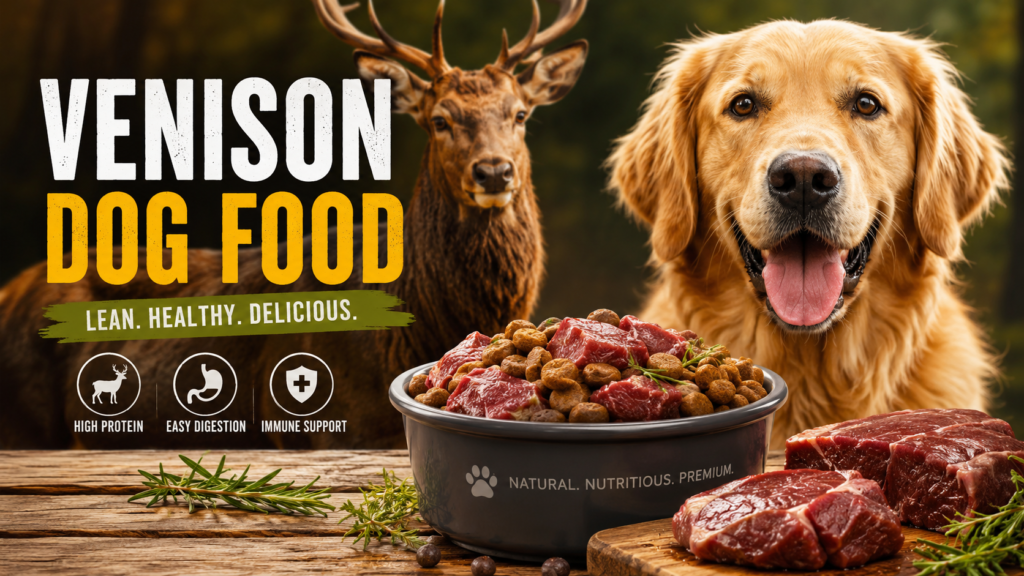
Quick Answer: Venison dog food is a diet made with deer meat instead of common proteins like chicken or beef. It’s often used for dogs with food allergies or sensitive stomachs because venison is a “novel protein” many dogs haven’t eaten before, making it easier to digest and less likely to trigger a reaction.
I still remember the first time a client’s dog showed up covered in hot spots. Chicken. Every time. It’s a story I’ve heard a hundred times since. Diets that seem “normal” can quietly wreck a dog’s skin and gut. That’s usually when venison dog food enters the conversation. I’m Michael Hayes, and I’ve spent years helping owners figure out feeding routines, ingredient labels, and weight management for dogs who just aren’t doing well on standard diets. Venison is one of the most useful tools in that toolbox, but it’s not automatically the right choice for every dog. Let’s walk through exactly when it helps, when it doesn’t, and how to switch without upsetting your dog’s stomach.
What Is Venison Dog Food?
Venison dog food uses deer meat as the primary protein source instead of chicken, beef, or fish. It comes in dry kibble, canned wet food, and limited-ingredient formulas.
Where the Venison Comes From
Most commercial venison used in dog food comes from farmed deer, not wild game. This keeps the protein source consistent and safe for regular feeding, unlike unregulated wild venison, which can carry parasites if not properly processed.
How It’s Different from Chicken or Beef Formulas
Venison is naturally leaner than beef and less commonly used in mainstream pet food than chicken. That’s exactly why it works well as a “novel protein” — a dog’s immune system hasn’t built up a reaction to it yet.
Why Owners Choose Venison Dog Food
Food Allergies and Sensitivities
Chicken and beef are two of the most common triggers for food allergies in dogs. When a dog shows itchy skin, ear infections, or chronic paw licking, an elimination diet using a novel protein like venison is often step one. According to the ASPCA, food allergies typically show up as skin and digestive symptoms rather than sudden reactions.
Novel Protein Benefits
Because fewer dogs have eaten venison before, it’s less likely to already be flagged by their immune system. This makes it a common first choice in diagnostic elimination diets recommended by veterinarians.
Nutritional Profile of Venison Dog Food
Venison is a lean, protein-dense meat with less fat than beef and a similar protein percentage to chicken.
| Protein Source | Typical Protein % | Fat Level | Common Allergen Risk |
|---|---|---|---|
| Venison | High | Low-Moderate | Low (novel protein) |
| Chicken | High | Moderate | High (common trigger) |
| Beef | High | Higher | High (common trigger) |
Who Benefits Most from Venison Dog Food
Dogs with Allergies
Dogs with chronic itching, recurring ear infections, or unexplained skin issues are the most common candidates for a venison-based diet.
Dogs with Sensitive Stomachs
Because venison is lean, it can be gentler on dogs prone to vomiting or loose stool after eating richer proteins.
Puppies, Adults, and Seniors
Venison formulas exist across life stages, but always check that the specific product is labeled complete and balanced for your dog’s age group — puppies and seniors have different calorie and nutrient needs.
How to Switch Your Dog to Venison Dog Food (Step-by-Step)
- Day 1–2: Mix 25% venison food with 75% current food.
- Day 3–4: Move to a 50/50 mix.
- Day 5–6: Shift to 75% venison, 25% old food.
- Day 7: Feed 100% venison dog food.
- Watch closely: Note any stool changes, itching, or energy shifts during the transition.
Common Problems and Fixes
| Symptom | Likely Cause | Fix |
|---|---|---|
| Loose stool after switching | Diet changed too fast | Slow the transition over 10–14 days instead of 7 |
| Dog refuses to eat it | Texture or smell difference | Warm the food slightly or mix with a small amount of broth |
| No improvement in allergy symptoms | Hidden allergen in treats or table scraps | Remove all other food sources during the trial period |
| Weight loss on venison diet | Lower fat content than previous food | Check calorie needs and adjust portion size |
Common Mistakes Owners Make
- Switching too quickly instead of over 7–10 days
- Continuing to feed chicken-based treats during an allergy trial
- Assuming “grain-free” automatically means hypoallergenic
- Not checking the ingredient list for hidden secondary proteins
- Giving up on the diet trial before the 8–12 week mark needed to see allergy results
Pro Tips for Feeding Venison Dog Food
- Read the full ingredient list — some “venison” formulas include chicken fat or other proteins.
- Keep a simple food and symptom journal during the first month.
- Stick to venison treats and chews during an elimination trial for accurate results.
- Reintroduce old proteins one at a time later if you want to confirm the exact allergen.
Venison vs Other Novel Proteins: What’s the Difference?
Venison is often compared with duck, rabbit, or kangaroo — all considered novel proteins. The main differences come down to availability, cost, and how “new” the protein is to your specific dog’s diet history. If your dog has never eaten venison, duck, or rabbit, any of them can work for an elimination trial. Venison tends to be more widely available and moderately priced compared to rabbit or kangaroo.
FAQ
Is venison dog food good for all dogs?
Not necessarily. It’s most useful for dogs with suspected food allergies or sensitivities. Dogs doing well on their current food don’t need to switch.
How long does it take to see allergy improvement on venison dog food?
Most veterinarians recommend an 8–12 week elimination trial to see a real change in skin or digestive symptoms.
Can puppies eat venison dog food?
Yes, as long as the specific formula is labeled complete and balanced for puppy growth stages.
Is venison dog food more expensive than chicken or beef formulas?
Generally yes, since venison costs more to source than mainstream proteins like chicken.
Does venison dog food contain grain?
It depends on the brand. Venison formulas come in both grain-free and grain-inclusive versions — check the label rather than assuming.
Can I feed venison dog food long-term, not just as a trial?
Yes, if it’s labeled complete and balanced, venison can be a permanent diet, not just a short-term elimination food.
What if my dog doesn’t improve on venison dog food?
If symptoms persist after a full trial, talk to your vet — the trigger may not be a protein at all, and could involve environmental allergies or another underlying condition.
Conclusion
Venison dog food isn’t a magic fix, but for dogs dealing with chronic itching or stomach issues tied to common proteins, it’s one of the most practical first steps I recommend. Make the switch slowly, stay consistent during the trial period, and loop in your vet if things aren’t improving after a few weeks. For more general health guidance, the AVMA and PetMD are solid places to double-check anything diet-related for your specific dog.
