
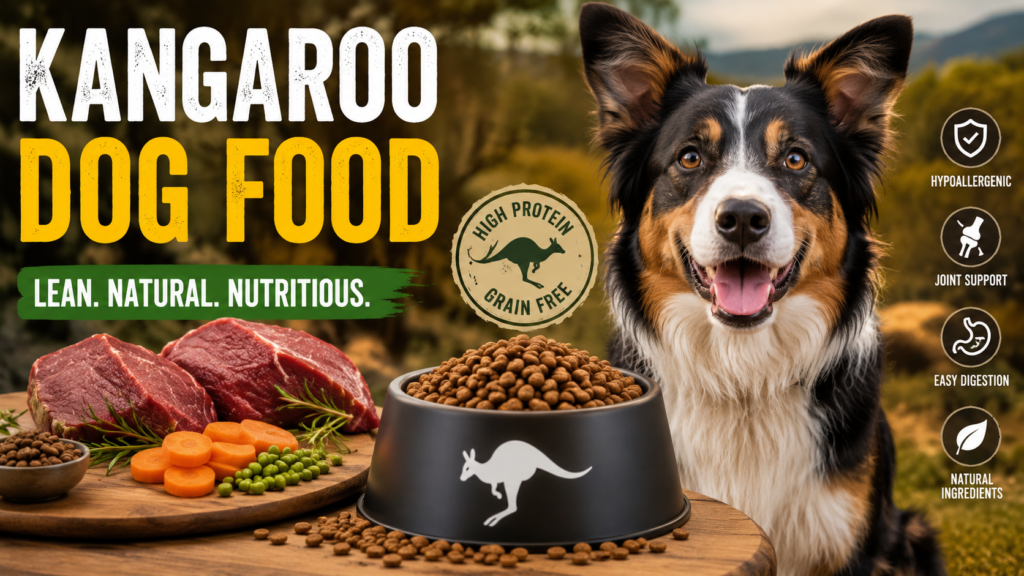
Quick Answer: Kangaroo dog food is a novel-protein diet made with kangaroo meat instead of common proteins like chicken or beef. It’s often used for dogs with food allergies or sensitive stomachs because most dogs have never eaten kangaroo before, making it easier to digest and less likely to trigger a reaction.
If your dog scratches constantly, has an upset stomach, or just can’t seem to tolerate regular kibble, you’re not alone. I’m Michael Hayes, and I’ve spent years helping dog owners figure out feeding issues that regular pet store advice doesn’t solve. Kangaroo dog food is one of those options that sounds unusual at first but makes a lot of sense once you understand why it works. Let’s break it down.
What Is Kangaroo Dog Food?
Kangaroo dog food is exactly what it sounds like: dog food made with kangaroo meat as the primary protein source. It comes in dry kibble, canned, and raw forms. Kangaroo is lean, high in protein, and low in fat compared to many traditional meats used in commercial dog food.
Because kangaroo isn’t a common ingredient in most everyday dog diets, it’s classified as a novel protein. That single detail is the whole reason it’s become popular with owners dealing with picky eaters or allergy-prone dogs.
Why Kangaroo Is Used as a Novel Protein
Most commercial dog foods rely on chicken, beef, or lamb. Dogs that eat these proteins for years can develop sensitivities or allergies over time. When that happens, switching to a protein the dog’s immune system has never encountered can calm things down.
How Novel Proteins Help With Allergies
Food allergies in dogs are usually an immune response to a specific protein, not the food in general. By removing the trigger protein and introducing something new, like kangaroo, many dogs show noticeably less itching, fewer digestive issues, and calmer skin within weeks. This approach is often part of what’s called an elimination diet, which vets use to identify food sensitivities.
Benefits of Kangaroo Dog Food
- Naturally lean and low in fat
- High in protein to support muscle maintenance
- Rarely triggers existing food allergies
- Good option for dogs with chronic digestive upset
- Often paired with limited-ingredient formulas, reducing exposure to common allergens
Kangaroo vs. Chicken/Beef Dog Food: What’s the Difference?
| Factor | Kangaroo Dog Food | Chicken/Beef Dog Food |
|---|---|---|
| Allergy risk | Low (novel protein) | Higher for dogs with existing sensitivities |
| Fat content | Naturally lower | Varies, often higher |
| Availability | Less common, pricier | Widely available, budget-friendly |
| Best for | Dogs with allergies or sensitive stomachs | Dogs with no known food sensitivities |
Is Kangaroo Dog Food Right for Your Dog?
Not every dog needs a novel protein diet. If your dog does well on regular food, there’s no need to switch just because it’s trending. Kangaroo dog food makes the most sense for dogs showing specific warning signs.
Signs Your Dog May Need a Novel Protein Diet
- Constant scratching or licking paws with no obvious cause
- Recurring ear infections
- Chronic loose stools or vomiting after meals
- Skin redness, hot spots, or hair loss
- No improvement after trying grain-free or limited-ingredient formulas with common proteins
If you’re seeing these signs, it’s worth talking to your vet before switching, since some symptoms overlap with other health conditions. The AVMA has good general guidance on identifying pet allergies.
How to Transition Your Dog to Kangaroo Dog Food
Switching foods too quickly is one of the biggest reasons dogs get an upset stomach during a diet change. Go slow, even if you’re eager to see results.
- Days 1–2: Mix 25% kangaroo food with 75% current food.
- Days 3–4: Move to a 50/50 mix.
- Days 5–6: Shift to 75% kangaroo food, 25% old food.
- Day 7+: Feed 100% kangaroo dog food.
- Watch closely: Track stool quality, energy, and skin condition for at least 6–8 weeks, since allergy improvements take time to show.
Common Mistakes Owners Make
- Switching too fast. This causes stomach upset that looks like an allergic reaction but isn’t.
- Mixing in old treats. If treats still contain chicken or beef, the elimination trial won’t be accurate.
- Giving up too early. Skin and coat improvements from a diet change can take 8–12 weeks to fully show.
- Assuming kangaroo food is automatically “healthier.” It’s a tool for specific issues, not a universal upgrade.
Pro Tips for Feeding Kangaroo Dog Food
- Check the ingredient label for hidden proteins or fillers that could undo the novel-protein benefit.
- Keep a simple food and symptom journal during the first two months.
- Pick a limited-ingredient formula if your dog has multiple sensitivities, not just one.
- Ask your vet about portion sizes, since kangaroo is leaner than beef or chicken and calorie needs can shift slightly.
For general nutrition guidelines by life stage and breed size, PetMD’s dog nutrition resources are a solid reference point.
FAQ
Is kangaroo dog food good for all dogs?
No. It’s most useful for dogs with food allergies, sensitive stomachs, or those who haven’t responded to other diets. Dogs with no food issues don’t need to switch.
Can puppies eat kangaroo dog food?
Yes, as long as the formula is labeled appropriate for puppies and meets their higher calorie and nutrient needs. Always check the life-stage label.
Does kangaroo dog food smell different?
Some owners notice a slightly gamier smell compared to chicken or beef formulas, but most dogs take to it well.
How long does it take to see allergy improvement?
Most owners see noticeable changes in skin and coat within 6–8 weeks, though full elimination-diet results can take up to 12 weeks.
Is kangaroo dog food more expensive?
Generally yes, since kangaroo meat is less common and often imported, which raises production costs compared to chicken or beef formulas.
Can I feed kangaroo dog food long-term?
Yes, as long as the formula is nutritionally complete and balanced for your dog’s life stage. It doesn’t need to be a short-term trial only.
Should I ask my vet before switching?
It’s a good idea, especially if your dog has ongoing symptoms. A vet can rule out other causes and confirm a novel protein diet is the right move.
Conclusion
Kangaroo dog food isn’t a trend for the sake of being different — it’s a practical option for dogs dealing with allergies or sensitivities that regular proteins can’t solve. If your dog is showing warning signs like itching, ear infections, or chronic stomach upset, a slow, careful switch to kangaroo dog food might be worth discussing with your vet. Every dog is different, so pay attention to how yours responds and adjust from there.
