
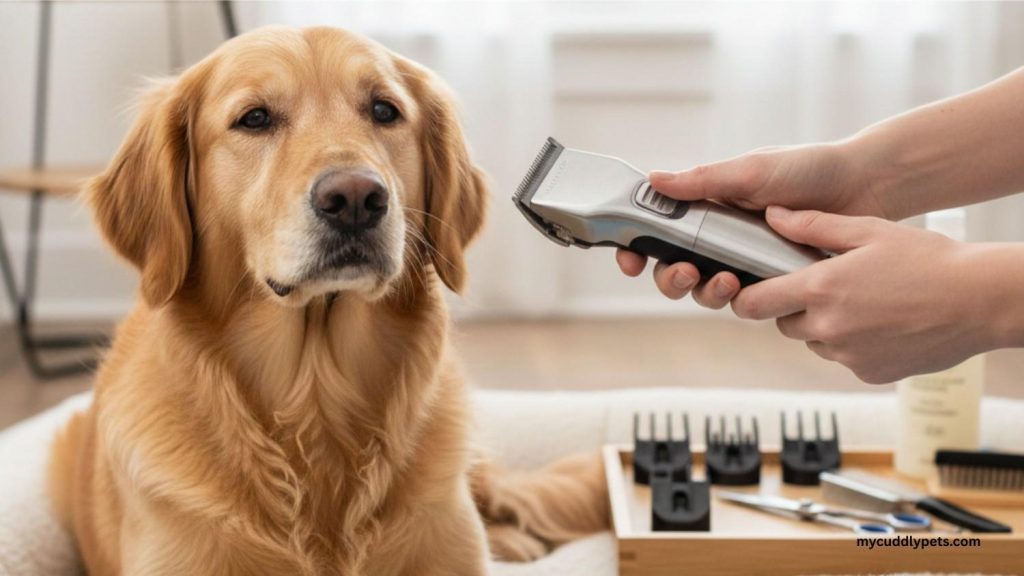
I remember the first time I tried to groom my Golden Retriever mix, Bailey. I bought a cheap pair of clippers online, thinking I’d save a few bucks. Halfway through, the motor overheated, Bailey was half-shaved and stressed, and I was in tears. That day, I learned a valuable lesson: having the best dog clippers for grooming makes all the difference between a nightmare and a bonding moment. If you’re ready to ditch the pricey salon visits and take control of your pup’s coat, you’re in the right place.
Grooming your dog at home isn’t just about saving money, though that’s a huge perk. It’s about health and comfort. Regular trims keep your dog’s skin breathing and prevent painful mats that tug at their fur. Plus, it’s a chance to check for lumps, bumps, or ticks you might miss otherwise. When you have reliable tools, grooming becomes a quiet, trust-building ritual rather than a wrestling match.
In this guide, I’m sharing the top-rated clippers I’ve tested and researched, from heavy-duty workhorses to quiet options for anxious pups. We’ll break down exactly what to look for based on your dog’s specific coat type. I’ll also walk you through the safety tips I wish I knew before that first disastrous haircut. Let’s find the perfect tool to help your furry best friend look sharp and feel great.
What to Look For in Dog Clippers
Choosing clippers can feel overwhelming with all the technical jargon out there. But really, it comes down to a few key features that match your dog’s needs. Here is what I look for when testing new gear.

Match the Clipper to the Coat
Not all fur is created equal. A Poodle’s curly, dense coat needs a different approach than a Yorkie’s silky hair. For thick or double coats, you need high torque—basically, the muscle behind the motor. If the clipper is too weak, it will snag and pull, which hurts your dog. For fine or thin hair, high speed (strokes per minute, or SPM) gives a smoother finish.
Corded vs. Cordless Freedom
This is a big debate. Corded clippers, like the Andis AGC2, offer unlimited power. You never have to worry about the battery dying halfway through a groom. However, the cord can get in the way, especially if your dog likes to dance around. Cordless options, like the Wahl Bravura, give you total freedom to reach tricky spots like paws and bellies without tangling.
Blade Types and Sharpness
Most pro clippers use “A5 style” detachable blades. This means you can swap them out easily. Ceramic blades stay cooler longer than steel ones, which is safer for your dog’s skin. You’ll often see numbers like #10 or #7F. A #10 blade leaves hair short (about 1/16 inch) and is safest for sanitary areas. Lower numbers like #4 or #5 leave the hair longer.
Noise and Vibration
If your dog is skittish, a loud buzz is a dealbreaker. Low noise and vibration are crucial for anxious pets. I always test how much a clipper vibrates in my hand. If it numbs my hand after five minutes, it’s going to annoy my dog even faster. Brushless motors tend to be quieter and last longer.
Best Overall: Andis AGC2 Super 2-Speed
If I could only recommend one clipper to a friend with a hairy dog, it would be the Andis AGC2 Super 2-Speed. It is the gold standard for a reason.
Why I Love It
This clipper is a beast. It has a two-speed rotary motor that runs cool and quiet. The lower speed (2,700 SPM) is great for precision work around the face, while the high speed (3,400 SPM) powers through thick body fur. It’s built to last, with a shatter-proof housing that can survive a drop or two.
Pros and Cons
Pros:
- Powerful: Cuts through mats and thick coats without stalling.
- Versatile: Compatible with all A5 detachable blades.
- Quiet: Low vibration keeps nervous dogs calm.
- Long Cord: The 14-foot cord gives you plenty of room to move.
Cons:
- Heavy: At nearly 18 ounces, your wrist might get tired after a long session.
- Price: It’s an investment, but it pays off in durability.
For Thick Coats: Oster Turbo A5 2-Speed
When you are dealing with a thick, matted mess, you need raw power. The Oster Turbo A5 is legendary among groomers for its ability to plough through anything.
Why It Works for Heavy Coats
This clipper runs at over 4,000 strokes per minute. That is high speed. It’s designed to handle coarse, matted, or thick hair that other clippers choke on. It includes a #10 CryogenX blade, which is treated to stay harder and sharper longer.
Pros and Cons
Pros:
- High Speed: Over 4,000 SPM means smoother cuts on tough coats.
- Durable: “Virtually unbreakable” housing.
- Proven: A favorite in vet clinics and salons for decades.
Cons:
- Hot: The blade can get hot quickly due to the high speed. You’ll need a cooling spray.
- Loud: It’s noisier than the Andis or Wahl options.
For Sensitive Skin: Wahl Bravura Lithium
For dogs that hate grooming or have sensitive skin, the Wahl Bravura Lithium is a game-changer. It is technically a “5-in-1” clipper, meaning the blade adjusts to 5 different lengths.
Why It’s Gentle
This clipper is incredibly quiet and lightweight. It’s perfect for trimming faces, ears, and paws where dogs are most ticklish. The 5-in-1 blade stays cool, reducing the risk of “clipper burn” on sensitive skin. Plus, it’s cordless, so you can groom your dog wherever they feel most safe.
Pros and Cons
Pros:
- Whisper Quiet: Ideal for fearful or anxious pets.
- Adjustable: No need to swap blades; just flip a lever on the blade.
- Lightweight: Weighs next to nothing, saving your wrists.
- Fast Charge: A 60-minute charge gives 90 minutes of runtime.
Cons:
- Not for Mates: It lacks the torque for full-body clips on thick, matted coats.
- Blade Care: The 5-in-1 blades are harder to sharpen and usually need replacing.
Budget-Friendly: Wahl KM10
Okay, the Wahl KM10 isn’t “cheap,” but for the professional tech you get, it is a fantastic value compared to buying multiple cheap sets that break.
Why It’s a Smart Buy
The KM10 features a brushless motor. This means it runs cooler, quieter, and lasts up to 10,000 hours. That is a lifetime of grooming for a pet owner. It has Constant Speed Control, so if it hits a tough patch of fur, it automatically adds power to get through without pulling.
Pros and Cons
Pros:
- Brushless Motor: Extends the life of the clipper significantly.
- Ergonomic: Rounded shape fits perfectly in the hand.
- Cool Running: You don’t have to stop as often to let blades cool down.
Cons:
- Cost: Higher upfront cost than drugstore kits, but cheaper than replacing them.
- Corded: You are tethered to the wall.
Getting Ready to Groom
Preparation is 90% of the battle. You can’t just grab a dirty dog and start clipping. That is a recipe for dull blades and a bad haircut.
Wash and Brush First
Always bathe and dry your dog before clipping. Dirt and grit act like sandpaper on your clipper blades, dulling them instantly. Once they are dry, brush them out thoroughly. The clippers are for cutting hair, not sawing through knots. If you find a tight mat, use a dematting tool or scissors to remove it first.
Set the Scene
Pick a spot with good lighting and non-slip footing. I use a rubber bath mat on a sturdy table. Have lots of treats ready. I smear a little peanut butter on a lick mat to keep my dog distracted while I work on the tricky spots.
Step-by-Step Clipping Guide
Start with a plan. Don’t just dive in.
- Test the Blade: Touch the flat side of the blade to your inner wrist. If it’s hot, spray it with coolant or swap it out.
- Start with the Body: Use a longer blade or guard comb. Go with the grain of the hair (from neck to tail). Keep the clipper flat against the skin. Do not dig in.
- Check Your Lines: Make long, smooth strokes. Overlap each stroke slightly, like mowing a lawn, to avoid “track marks.”
- Do the Sensitive Areas Last: Save the face, paws, and sanitary areas for last. Switch to a shorter blade (like a #10) or a smaller trimmer for safety.
- Take Breaks: If you or the dog gets frustrated, stop. Play a game, take a walk, and come back later.
Safety First
Safety is non-negotiable. The sharpest blades are also the most dangerous if used incorrectly.
Watch the Heat
Blades heat up quickly due to friction. Check your wrist temperature every few minutes. I keep a can of cooling spray (like Andis Cool Care Plus) next to me. It cools, lubes, and cleans the blade in one shot.
Mind the Skin Folds
Be super careful around armpits, tuck-ups (where the hind leg meets the belly), and necks. Skin is thin here and can catch easily. Pull the skin taut with your free hand to create a flat surface for the clipper.
Caring for Your Clippers
If you take care of your tools, they will take care of you. Neglect them, and they’ll pull hair and rust.
Clean and Oil Every Time
After every groom, brush the hair off the blade. Then, while the clipper is running, put a few drops of clipper oil on the blade teeth. Let it run for a few seconds to coat everything, then wipe off the excess. This prevents rust and keeps the motor running smoothly.
Proper Storage
Don’t just toss them in a drawer. Wrap the cord loosely (don’t wrap it tight around the clipper body, or the wires will break). Store them in a dry case to prevent moisture damage.
Common Issues
- Clipper is chewing the hair: The blade is dull or the blade drive is worn out. Replace the blade drive (a cheap plastic part) every few months if you groom often.
- Blade gets too hot: You need more oil, or you are forcing it through dirty hair.
- Clipper won’t cut: Check if the blade is snapped on all the way. On A5 clippers, the latch needs to lock the blade down tight.
Final Thoughts
Grooming your dog at home is a journey. My first attempt was messy, but now it’s our quiet time together. Investing in the best dog clippers for grooming, like the Andis AGC2 or the Wahl Bravura, pays for itself after just a few skipped salon visits. Plus, there is nothing better than the pride of seeing your pup looking fresh and knowing you did it yourself—with love and plenty of treats.
FAQs
Can I use human clippers on my dog?
No, please don’t. Human hair is much thinner than dog fur. Human clippers have weaker motors and different blade gaps. They will likely overheat, pull your dog’s hair, and burn out the motor halfway through the job. Stick to tools made for pets.
How often should I sharpen my blades?
It depends on how often you groom and how clean the coats are. For a single-dog home, you might only need to sharpen or replace blades once a year. If the blade starts “chewing” or folding the hair instead of cutting crisp lines, it’s time for a sharpener or a new blade.
What does “SPM” mean?
SPM stands for “Strokes Per Minute.” It measures how fast the blade moves back and forth. Higher SPM (like 4,000+) gives a smoother finish but creates more heat. Lower SPM (around 2,500) runs cooler and has more torque for powering through thick mats.
Is it safe to groom a matted dog at home?
If the mats are tight against the skin, it is risky. It is very easy to cut the skin because it gets pulled up into the mat. For severe matting, I always recommend seeing a pro vet or groomer first to get a “reset” shave safely.