
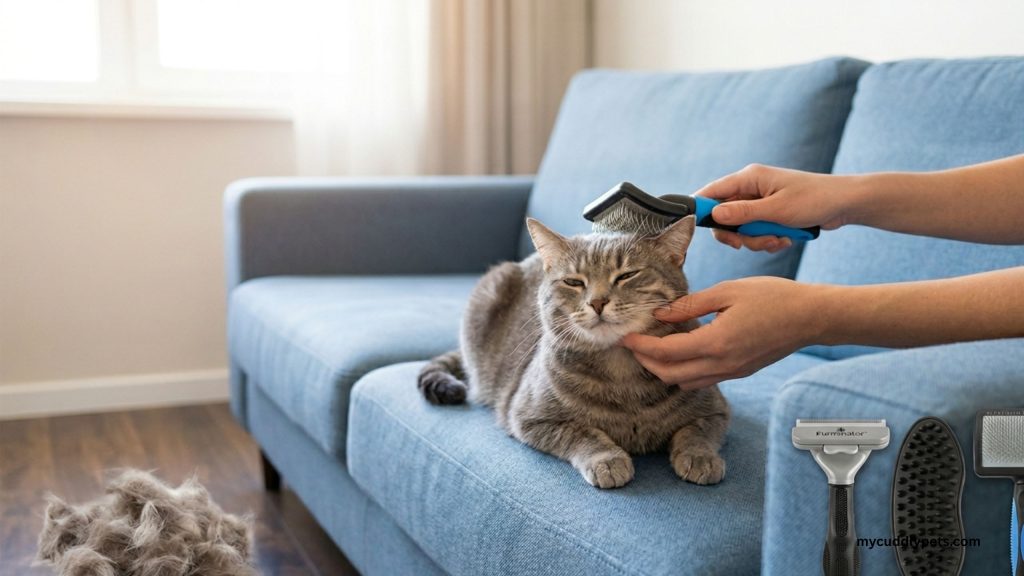
If you are like me, you love your cat but hate the hair. Tumbleweeds of fur rolling across the floor are part of life, but they don’t have to take over. Finding the best cat brush for shedding changed my life and saved my black leggings from permanent gray fuzz. I’ve tested dozens of tools on my own furballs, and today I’m sharing the ones that actually work. Let’s reclaim your couch and keep your kitty happy.
Why Brushing Matters (It’s Not Just About the Mess)
We often think of brushing as a chore to keep our homes clean. But for our cats, it is a vital health habit. When cats groom themselves, they swallow loose hair. Their tongues are like little Velcro strips that catch everything.
Usually, this hair passes through them fine. But sometimes, it builds up in their stomach. This leads to those dreaded hairballs. You know the sound—that hacking noise at 3 AM that wakes you up instantly.
Regular brushing removes that dead undercoat before your cat can swallow it. The experts at the Animal Medical Center note that hairballs can signal over-grooming or digestive issues, but often, it’s just too much hair. By brushing a few times a week, you cut down on what they ingest. Plus, it spreads natural oils across their skin, keeping their coat shiny and healthy.
Factors to Consider When Choosing a Cat Brush
Not all brushes do the same job. My short-haired tabby needs a different tool than my friend’s fluffy Maine Coon. Picking the wrong one can scratch their skin or just slide over the top of the fur without grabbing anything. Here is what you need to look for.
Type of Coat
This is the big one. Short coats need tools that grab loose surface hair. Long coats need pins that reach deep down to the skin to prevent mats. If you use a short-bristle brush on a long-haired cat, you are only brushing the top layer. The nasty tangles underneath will stay there and get worse.
Skin Sensitivity
Cats have thin, sensitive skin. If a brush feels sharp on your own arm, it will hurt them. I always test a new brush on the back of my hand first. If it scratches me, it goes in the trash. You want tools with coated tips or smooth edges, especially for older cats with bony spines.
Types of Brushes
- Slicker Brushes: These have fine wire bristles. They are the gold standard for removing tangles and loose mats.
- Bristle Brushes: These look like human hairbrushes. They are soft and great for finishing a grooming session to make the coat shine.
- Rubber Brushes: These are gentle and massage the skin. They work well for short-haired cats who hate metal tools.
- Deshedding Tools: These are heavy-duty blades designed to pull out the thick undercoat. They are powerful but need to be used with care.
Top Cat Brushes for Shedding
I have tried the cheap ones and the fancy ones. After years of testing, three tools stand out as the best options on Amazon. Here is the truth about how they work in real life.
Furminator Undercoat Deshedding Tool
The Furminator is legendary for a reason. It is a heavy-duty tool designed specifically for the undercoat. It has a stainless steel edge that reaches through the topcoat to safely remove loose hair.

My Experience:
The first time I used this on my thick-coated mix, I could not believe my eyes. I brushed him for ten minutes and ended up with a pile of hair the size of a kitten. It grabs the deep fluff that other brushes miss. The “FURejector” button is a nice touch—you push it, and the hair slides right off the blade.
Pros:
- Removes more loose hair than any other tool I’ve used.
- The Skin Guard glides over skin so the edges don’t dig in.
- Significantly reduces the amount of hair on my furniture.
Cons:
- It is aggressive. You can’t use it every day. The company suggests 1-2 times a week for 10-20 minutes.
- It is pricier than standard brushes.
- You must be gentle. If you press too hard, you can irritate their skin.
Hertzko Self-Cleaning Slicker Brush
This brush is a fan favorite on Amazon with over 90,000 ratings. It uses fine bent wires designed to penetrate deep into the coat without scratching the skin.
My Experience:
I love the retraction feature. With normal slicker brushes, you have to pick the hair out of the bristles with your fingers, and it gets stuck under your nails. With the Hertzko, you click a button, the bristles pull back, and the hair creates a neat little pad you just wipe away. It’s incredibly satisfying.
Pros:
- Super easy to clean thanks to the one-click button.
- Gentle enough for sensitive cats but tough on tangles.
- Great for massaging the skin to increase blood circulation.
Cons:
- The bristles are fine, but sharp. If you brush too hard in one spot, your cat might get annoyed.
- The click mechanism can get stiff over time if you don’t keep it clean.
Safari Cat Self-Cleaning Slicker Brush
This is a solid, budget-friendly option that gets the job done. It is similar to the Hertzko but often comes in at a lower price point. It has stainless steel pins that gently remove debris and loose hair.
My Experience:
I keep this one in my travel bag. It is lightweight and effective. The pins are coated, making it a safe choice for cats who are nervous about grooming. It helps with hairballs when used regularly, just like the more expensive options.
Pros:
- Very affordable and durable.
- The self-cleaning button works well to drop hair into the trash.
- Soft, gentle pins are great for daily maintenance.
Cons:
- The bristles are a bit shorter. It might struggle with extremely thick or matted long hair.
- The handle isn’t as ergonomic as the Hertzko or Furminator.
How to Brush Your Cat Properly
Even the best tool can fail if you use it incorrectly. Grooming should be a bonding time, not a battle. Here is how I got my shy rescue cat to love brush time.
Start Slowly and Gently
Don’t just grab the cat and start scrubbing. Let them sniff the brush first. Pet them with your hand, then do one stroke with the brush. If they stay calm, give them a treat. Build up the time slowly.
Brush in the Direction of Hair Growth
Always go with the grain. Brushing backwards can pull the hair and hurt their skin. Use long, smooth strokes. If you hit a snag or a mat, stop. Don’t yank on it. Use your fingers or a mat-splitter to work it out gently.
Pay Attention to Sensitive Areas
The belly and the tail are danger zones for many cats. The skin is very thin there. I usually stick to a soft bristle brush for the belly and save the slicker brush for the back and sides. Watch their tail—if it starts twitching, stop immediately. That is cat language for “I am done.”
Reward Your Cat
Food is love. Keep a jar of their favorite treats next to the grooming station. Give them a treat at the start and one at the end. Eventually, they will hear the drawer open and come running for their grooming session.
Additional Tips for Managing Shedding
Brushing is the main defence, but it’s not the only one. You can tackle shedding from the inside out.
Diet
Healthy skin holds onto hair better. If your cat’s coat is dry and brittle, they will shed more. Look for foods rich in Omega-3 and Omega-6 fatty acids. I added a bit of fish oil to my dog’s food, and his coat transformed. The same logic applies to cats.
Regular Bathing
I know, cats hate water. But a bath once a month can wash away dead hair before it falls on your carpet. If your cat won’t tolerate a tub, try grooming wipes. They aren’t as good as a full bath, but they help pick up surface dust and dander.
Consulting with a Vet
If your cat is shedding clumps of hair or has bald spots, put down the brush and call the vet. Excessive shedding can be a sign of stress, thyroid issues, or allergies. It’s always better to be safe.
Taming the Fur Storm
Dealing with shedding is a small price to pay for the love of a cat. By investing in the best cat brush for shedding, you are making life better for both of you. Your home stays cleaner, and your cat stays healthier.
If you are dealing with deep undercoat issues, the Furminator is your best bet. For daily maintenance and easy cleaning, the Hertzko or Safari slicker brushes are fantastic choices. Start a routine this week. Your black clothes (and your cat’s tummy) will thank you.
Frequently Asked Questions
Can I over-brush my cat?
Yes, you can. Over-brushing can cause “brush burn,” which is red, irritated skin. Stick to short sessions a few times a week rather than one long marathon.
Do short-haired cats need brushing?
Absolutely. Short-haired cats shed just as much as long-haired ones; the hair is just smaller. Regular brushing helps reduce the amount of dander and hair floating in the air.
How do I clean my cat brush?
For self-cleaning brushes, just retract the pins and wipe. For others, soak them in warm soapy water and use an old toothbrush to scrub the base. Dry them thoroughly to prevent rust.
What if my cat hates being brushed?
Try a grooming glove. It fits over your hand and feels like petting. It removes less hair than a slicker brush, but it’s a great starting point for fearful cats.