
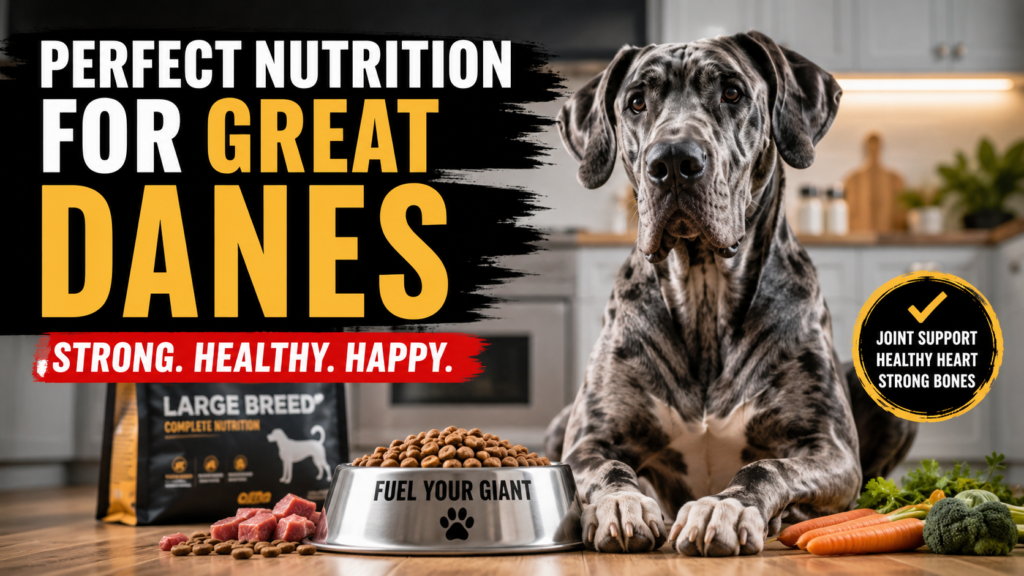
Quick Answer: Great Danes need large-breed formulated food with controlled calcium, phosphorus, and calories to support slow, steady bone growth. Puppies should stay on large-breed puppy formula until 18-24 months, and adults need moderate-protein, joint-supporting food split into 2-3 meals a day to reduce bloat risk.
Great Danes grow fast. Really fast. One month they’re wobbly and small, the next they’re taller than your coffee table. That growth speed is exactly why feeding one of these gentle giants is different from feeding almost any other breed.
I’m Milo Hartwell, and I’ve spent years working hands-on with large and giant breed dogs, helping owners figure out feeding routines that actually match how these dogs grow. Great Danes aren’t just “big dogs” – their bodies have specific nutritional needs, and getting it wrong early on can cause problems that last a lifetime.
In this guide, I’ll walk you through exactly what to feed, how much, how often, and the mistakes I see most often with new Great Dane owners.
What Makes Great Dane Nutrition Different?
Great Danes are classified as a giant breed, meaning they can take up to two years to reach full physical maturity. During that time, their skeletal system is under enormous pressure to support rapid weight gain. Food formulated for small or medium breeds simply isn’t built for that.
The two biggest differences are calorie density and calcium-phosphorus balance. Giant breed puppies need fewer calories per cup than people expect, and calcium levels need to stay controlled so bones grow at a steady, even rate instead of too quickly.
Why It Matters: Why Great Danes Need Special Feeding Care
Feeding a Great Dane the wrong way doesn’t just cause weight problems. It’s directly linked to serious skeletal issues like hip dysplasia and other developmental bone conditions. Overfeeding, or feeding calcium-heavy regular puppy food, pushes bone growth faster than the joints and cartilage can safely keep up with.
There’s also a well-known digestive risk in deep-chested giant breeds called bloat (gastric dilatation-volvulus), which can become life-threatening quickly. Feeding habits play a real role in reducing that risk, which is why how you feed matters just as much as what you feed.
How Growth Rate Affects Food Choice
Because Great Danes grow so quickly, their food needs to slow that growth down slightly, not speed it up. This is the opposite of what many new owners assume. A lean, steady growth curve is healthier long-term than a puppy that “bulks up” fast.
This is why large-breed puppy formulas are formulated with lower calcium percentages and controlled fat and calorie content compared to regular puppy food. It’s not about giving less nutrition – it’s about giving the right ratio of nutrients for a slower, joint-friendly growth rate.
How to Choose and Transition Great Dane Food (Step-by-Step)
- Step 1: Confirm the life stage formula. Puppies need large-breed puppy food specifically, not regular puppy or all-life-stage formulas.
- Step 2: Check the calcium level. Look for large-breed puppy formulas with controlled calcium (generally lower than standard puppy food) and a balanced calcium-to-phosphorus ratio.
- Step 3: Match calories to body condition, not age alone. Feed to keep ribs easily felt but not visible – lean is the goal for growing giant breeds.
- Step 4: Split meals throughout the day. Feed 2-3 smaller meals instead of one large one to reduce bloat risk.
- Step 5: Transition foods gradually. Mix old and new food over 7-10 days to avoid stomach upset.
- Step 6: Switch to adult food around 18-24 months, once growth has fully leveled off.
Great Dane Life-Stage Feeding Guide
| Life Stage | Age Range | Meals Per Day | Food Type |
|---|---|---|---|
| Puppy | 2-6 months | 3-4 meals | Large-breed puppy formula, calcium-controlled |
| Juvenile | 6-18 months | 2-3 meals | Large-breed puppy formula continued |
| Adult | 18 months – 6 years | 2 meals | Large-breed adult formula, moderate protein/fat |
| Senior | 6+ years | 2 meals | Large-breed senior or joint-support formula |
Common Feeding Problems and Fixes
| Problem | Likely Cause | Fix |
|---|---|---|
| Puppy growing too fast | Regular puppy food or overfeeding | Switch to large-breed puppy formula, feed to lean body condition |
| Bloating or discomfort after meals | One large meal, fast eating, exercise right after eating | Split into smaller meals, use a slow-feeder bowl, rest after meals |
| Picky eating | Free-feeding, too many treats | Set feeding times, remove food after 15-20 minutes if uneaten |
| Weight loss or ribs too visible | Underfeeding for size and activity level | Gradually increase portion, monitor body condition weekly |
Common Mistakes Owners Make
- Feeding a regular puppy formula instead of a large-breed specific one
- Overfeeding because the puppy “looks hungry” during a growth spurt
- Feeding one big meal a day instead of splitting meals
- Allowing vigorous play or exercise right before or after meals
- Switching foods abruptly instead of transitioning gradually
- Ignoring body condition and relying only on age-based feeding charts
Pro Tips and Best Practices
- Feel for the ribs weekly – you should feel them easily without a thick layer of fat over them
- Use a raised feeding stand only if your vet recommends it, since it isn’t universally advised for bloat prevention
- Keep fresh water available at all times, but avoid large gulps of water right before or after meals
- Stick to one consistent food brand and formula during the growth period to avoid unnecessary digestive stress
- Schedule regular vet check-ins during the puppy and juvenile stages to monitor growth rate
Large-Breed Puppy Formula vs Regular Puppy Formula: What’s the Difference?
| Factor | Large-Breed Puppy Formula | Regular Puppy Formula |
|---|---|---|
| Calcium Level | Lower, controlled | Higher, not growth-controlled |
| Calorie Density | Moderate, for slower growth | Higher, for faster growth |
| Kibble Size | Larger, suited to bigger jaws | Smaller, general purpose |
| Best For | Giant and large breed puppies | Small to medium breed puppies |
For general guidance on nutrition standards, the American Kennel Club outlines how large-breed puppies benefit from growth-controlled formulas. The ASPCA also offers general nutrition guidance applicable to giant breeds. For questions about diet-related heart health concerns, the AVMA has published information on grain-free diets and canine heart health worth reviewing with your vet.
Frequently Asked Questions
How much should I feed my Great Dane puppy?
Portions depend on the specific food’s calorie content and your puppy’s current weight, so follow the feeding chart on your chosen large-breed formula and adjust based on body condition rather than age alone.
Why do Great Danes need low-calcium food?
Excess calcium during the growth period can cause bones to grow too fast for the joints and cartilage to keep up, increasing the risk of skeletal problems.
When should I switch my Great Dane to adult food?
Most Great Danes should stay on large-breed puppy formula until around 18-24 months, once their growth has leveled off.
Can Great Danes eat grain-free food?
Grain-free diets have raised concerns around heart health in some dogs, so it’s worth discussing any grain-free option with your vet before choosing one.
Should I free-feed my Great Dane?
Scheduled meals are generally recommended over free-feeding, since set meal times make it easier to monitor appetite, weight, and reduce bloat risk.
Is it normal for a Great Dane to eat a lot?
Yes, giant breeds naturally require more food than smaller dogs, but portions should still match their specific formula’s calorie guidelines and current body condition.
What are signs my Great Dane’s food isn’t working for them?
Watch for dull coat, low energy, visible ribs or excess weight gain, digestive upset, or growth that seems unusually fast – these are good reasons to check in with your vet.
Conclusion
Feeding a Great Dane isn’t complicated once you understand the basics: choose a large-breed formula matched to their life stage, feed to body condition rather than a fixed chart, split meals throughout the day, and keep a close eye on growth during the puppy and juvenile stages. Get those fundamentals right, and you’re giving your Great Dane the best possible start for a long, healthy life. When in doubt, your vet is always the best resource for fine-tuning their specific diet.
