
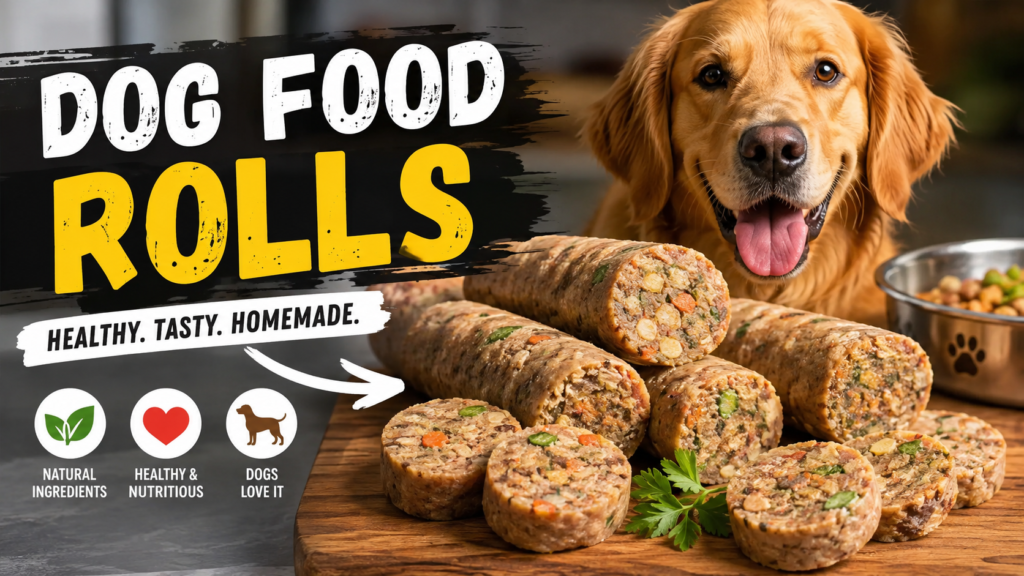
Quick Answer: Dog food rolls are semi-moist, sausage-shaped dog food you slice and serve fresh from the fridge. They’re made from meat, grains or vegetables, and binders, then cooked and vacuum-sealed. Most dogs love the texture and smell, and rolls work well as a full meal, a kibble topper, or a training treat.
New to dog food rolls? You’re not alone. A lot of owners find them in the fridge section of the pet store and aren’t sure what to do with them. I’m Michael Hayes, and I’ve spent years helping dogs — including my own picky eaters — transition onto fresh and semi-moist diets. Dog food rolls look simple, but there are a few things worth knowing before you slice into one. Let’s get into it.
What Does “Dog Food Roll” Mean?
A dog food roll is a log-shaped, semi-moist dog food. It looks a bit like a large sausage or salami. You cut off slices or cubes and serve them as-is, no cooking needed. Most rolls are refrigerated or frozen and have a shorter shelf life than dry kibble once opened.
How Dog Food Rolls Are Made
Manufacturers blend meat (or meat meal), grains or vegetables, vitamins, and minerals into a paste. This mixture is cooked, then stuffed into a casing and sealed. The result is a dense, moist texture that holds its shape when sliced, unlike canned food.
What’s Usually Inside a Dog Food Roll
Ingredients vary by brand, but you’ll typically see a named meat source first, followed by cereals or vegetables, minerals, vitamins, and a preservative system. Always check the label for the exact protein percentage and any fillers, since quality differs a lot between brands.
Why Dog Owners Choose Dog Food Rolls
Rolls sit in a nice middle ground between dry kibble and fully raw or fresh diets. They’re convenient, don’t require prep, and have a strong smell and taste that many dogs find hard to resist.
Benefits for Picky Eaters
If your dog turns their nose up at kibble, a roll’s stronger aroma and softer texture can help. Many owners use a small amount of roll mixed into kibble to make mealtime more appealing without switching diets entirely.
Benefits for Puppies and Senior Dogs
Puppies with small mouths and seniors with worn or missing teeth often find rolls easier to chew than hard kibble. The moisture content also makes each bite easier to swallow.
How to Feed Dog Food Rolls Step by Step
Slicing and Portioning
Use a clean knife to cut off the amount needed for one meal. Slice thin rounds for small dogs or thicker cubes for larger dogs. Portion by your dog’s weight and the feeding chart on the packaging, not by eye.
Storing After Opening
Wrap the cut end tightly in plastic wrap or a sealed container and refrigerate. Most opened rolls stay fresh for about five to seven days in the fridge. If you won’t use it in that time, slice and freeze individual portions instead.
Mixing With Kibble or Feeding Alone
Rolls can be fed as a complete meal if the label says “complete and balanced,” or as a topper mixed into kibble. If you’re transitioning from another food, blend in a small amount over five to seven days to avoid stomach upset.
Dog Food Rolls vs. Kibble vs. Canned Food: What’s the Difference?
| Feature | Dog Food Roll | Kibble | Canned Food |
|---|---|---|---|
| Moisture content | Medium | Low | High |
| Shelf life (opened) | 5–7 days (fridge) | 4–6 weeks | 2–3 days (fridge) |
| Ease of storage | Needs fridge/freezer | Room temperature | Needs fridge after opening |
| Best for | Picky eaters, toppers | Everyday convenience | Hydration, seniors |
Common Dog Food Roll Problems and Fixes
| Symptom | Likely Cause | Fix |
|---|---|---|
| Dog refuses to eat it | Sudden diet change, unfamiliar texture | Mix small amounts into kibble gradually |
| Loose stool after eating | Introduced too fast, or too rich for the dog’s system | Slow the transition, reduce portion size |
| Roll smells sour or off | Past its opened shelf life or stored improperly | Discard and check the “use by” date going forward |
| Roll is slimy or discolored | Spoilage or improper sealing after cutting | Discard immediately, don’t feed |
Common Mistakes Owners Make With Dog Food Rolls
- Leaving it unrefrigerated too long. Rolls are perishable — don’t leave them out at room temperature for more than an hour or two.
- Guessing portion sizes. Overfeeding is easy since rolls are calorie-dense. Always check the feeding chart.
- Switching too fast. A sudden full switch can upset a dog’s stomach. Transition gradually.
- Not checking if it’s “complete and balanced.” Some rolls are meant as treats or toppers only, not full meals.
- Reusing the same knife or cutting board without cleaning. Raw or semi-moist food needs the same hygiene care as raw meat.
Feeding Guide by Dog Size and Life Stage
| Dog Size / Stage | General Feeding Guidance |
|---|---|
| Small dogs (under 20 lbs) | Thin slices, split into 2–3 small meals a day |
| Medium dogs (20–50 lbs) | Follow package chart, adjust for treats/activity level |
| Large dogs (50+ lbs) | Thicker portions, may need roll combined with kibble for full calories |
| Puppies | Smaller, more frequent meals; confirm the roll suits growth needs |
| Senior dogs | Softer texture is helpful; watch total calories if activity has dropped |
This is general guidance only. Always check the specific feeding chart on your roll’s packaging, since calorie density varies by brand.
Pro Tips for Feeding Dog Food Rolls
- Slice only what you need for the next meal or two — don’t cut the whole roll open at once.
- Freeze portions in small batches if you won’t finish the roll within a week.
- Use a dedicated cutting board for pet food to avoid cross-contamination in your kitchen.
- Watch your dog’s weight over the first few weeks and adjust portions if needed.
- If your dog has known food sensitivities, check the ingredient list closely before switching.
FAQ Section
Do dog food rolls need to be refrigerated?
Yes, once opened, most dog food rolls should be refrigerated and used within about five to seven days.
Can puppies eat dog food rolls?
Many rolls are suitable for puppies, but check that the label says it’s formulated for growth or “all life stages” before feeding.
Can I feed dog food rolls every day?
If the roll is labeled “complete and balanced,” it can be fed daily as a full diet. If it’s a topper or treat product, it should only make up a small part of the daily diet.
Why is my dog food roll slimy or smelly?
This usually means it has spoiled, either past its use-by date or stored incorrectly. Discard it and don’t feed it to your dog.
Is dog food roll better than kibble?
Neither is automatically “better” — it depends on your dog’s needs. Rolls offer more moisture and aroma, while kibble is more convenient to store and often more affordable long-term.
How much dog food roll should I feed?
Follow the feeding chart on the packaging based on your dog’s weight, and adjust based on body condition and activity level.
Can dog food rolls cause an upset stomach?
They can, usually if introduced too quickly or fed in place of your dog’s usual diet without a transition period. If symptoms persist, consult your veterinarian.
Conclusion
Dog food rolls are a practical option for picky eaters, puppies, and senior dogs who need a softer, more appealing meal. The keys are simple: portion carefully, store properly, and transition slowly. If your dog shows ongoing digestive issues or refuses to eat, it’s worth checking in with your veterinarian to rule out anything more serious.
For more on general canine nutrition guidelines, see AKC’s nutrition resources, PetMD’s dog nutrition section, and the AVMA’s pet nutrition guidance.
About the author: Michael Hayes has spent years working hands-on with dogs of all ages on feeding routines, diet transitions, and everyday nutrition challenges — from picky eaters to seniors needing softer food. He shares practical, real-world feeding advice for everyday dog owners.
