
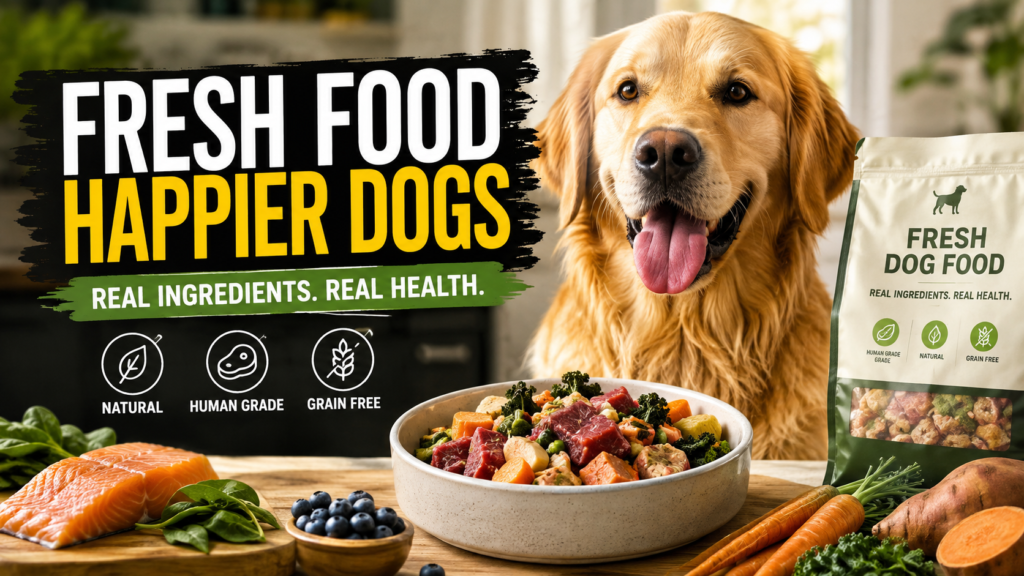
Quick Answer: Fresh dog food brands make meals from real, human-grade ingredients that are lightly cooked and shipped refrigerated or frozen, instead of dried and preserved like kibble. Look for AAFCO-compliant nutrition, clear ingredient sourcing, and life-stage-appropriate formulas before choosing one.
Standing in front of a wall of dog food bags used to be simple. Now there’s fresh food too. It’s confusing at first. I get that a lot from readers.
My name is Michael Hayes, and I’ve spent years helping dog owners sort through feeding options, ingredient labels, and portion questions. I’ve watched dogs thrive on fresh food, and I’ve watched owners waste money on brands that weren’t the right fit. This guide breaks down exactly what fresh dog food brands are, how they work, and what to actually check before you buy.
What Does “Fresh Dog Food” Actually Mean?
Fresh dog food refers to meals made with whole, minimally processed ingredients — usually meat, vegetables, and grains or legumes — that are gently cooked rather than extruded and dried. It’s typically sold refrigerated or frozen instead of shelf-stable.
How Fresh Food Differs From Kibble and Canned Food
Kibble is cooked at high heat and dried for a long shelf life. Canned food is heavily processed and sterilized. Fresh food is cooked at lower temperatures, which preserves more of the natural texture and nutrients, but it also means it spoils faster and needs cold storage.
Why Fresh Dog Food Brands Have Become So Popular
More owners are treating dogs like family members, and that shows up in feeding choices. Fresh food appeals to people who want to recognize the ingredients on the label, avoid heavy preservatives, and feed something closer to a home-cooked meal — without actually cooking it themselves every day.
How Fresh Dog Food Brands Work
Ingredients and Cooking Methods
Most fresh dog food brands use USDA-inspected meats, vegetables, and grains or legumes, cooked in small batches at controlled temperatures. This is different from raw feeding, which uses uncooked ingredients.
Portioning and Delivery
Many fresh food brands ship pre-portioned meals based on your dog’s weight, age, and activity level. That takes the guesswork out of measuring, which is genuinely useful for new owners.
Storage: Fridge vs. Freezer
Fresh meals are typically refrigerated and used within about a week of opening, or kept frozen for longer storage and thawed before serving. Always follow the specific brand’s storage guidance on the packaging.
What to Look for in a Trustworthy Fresh Dog Food Brand
AAFCO Compliance and Nutrient Standards
A reliable brand should state that its formulas meet AAFCO nutrient profiles for the dog’s life stage — growth, adult maintenance, or all life stages. This tells you the recipe is nutritionally complete, not just fresh-sounding.
Human-Grade vs. Feed-Grade Labeling
“Human-grade” is a specific labeling claim meaning every ingredient and the facility meet standards for human consumption. Not every fresh brand qualifies, so check the label rather than assuming.
Life-Stage Appropriate Formulas
Puppies, adults, and senior dogs have different calorie and nutrient needs. A trustworthy brand offers formulas matched to life stage rather than one generic recipe for every dog.
Fresh Dog Food vs. Kibble: What’s the Difference?
| Factor | Fresh Dog Food | Kibble |
|---|---|---|
| Processing | Gently cooked, minimally processed | High-heat extruded and dried |
| Storage | Refrigerated or frozen | Shelf-stable at room temperature |
| Shelf Life | Days to a few weeks (opened) | Months (opened) |
| Cost | Generally higher | Generally lower |
| Portioning | Often pre-measured by the brand | Owner measures by cup |
Step-by-Step: How to Transition Your Dog to Fresh Food
- Day 1–2: Mix about 25% fresh food with 75% current food.
- Day 3–4: Move to a 50/50 mix.
- Day 5–6: Shift to about 75% fresh food, 25% current food.
- Day 7 onward: Serve 100% fresh food if your dog is tolerating it well.
Go slower for dogs with sensitive stomachs, and always keep fresh water available during the switch.
Common Problems and Fixes
Loose Stool or Stomach Upset
This is the most common issue during a fast switch. Slow the transition down and give the gut a few extra days at each stage. If symptoms persist beyond a few days, check with your vet.
Picky Eaters Refusing New Food
Some dogs are hesitant about a new texture or smell. Warming the food slightly or hand-feeding the first bite or two can help ease the transition.
Storage and Spoilage Issues
Fresh food spoils faster than kibble. Set a reminder for use-by dates, and never leave a served portion out for more than the brand’s recommended time.
Common Mistakes Owners Make When Choosing Fresh Food
| Do | Don’t |
|---|---|
| Check for AAFCO life-stage compliance | Assume “fresh” automatically means complete nutrition |
| Transition gradually over 7+ days | Switch a dog’s entire diet overnight |
| Follow the brand’s storage instructions exactly | Leave fresh food unrefrigerated for hours |
| Match portions to your dog’s actual weight and activity | Guess portion sizes without checking the feeding guide |
Pro Tips for Feeding Fresh Dog Food
- Rotate storage between fridge and freezer based on how quickly you’ll use the food.
- Recheck portions every few months as your dog’s weight or activity level changes.
- If mixing fresh food with kibble long-term, keep portions balanced so your dog isn’t overfed.
- Ask your vet about fresh food if your dog has a medical condition requiring a specific diet.
Frequently Asked Questions
Is fresh dog food better than kibble?
Neither is automatically “better.” Fresh food offers minimally processed ingredients, while kibble offers convenience and shelf stability. The right choice depends on your budget, storage space, and your dog’s needs.
How long does fresh dog food last in the fridge?
Most opened fresh meals last about 5–7 days refrigerated, though this varies by brand. Always check the specific packaging guidance.
Can I mix fresh food with kibble?
Yes, many owners combine both. Just make sure total daily calories match your dog’s needs so you’re not overfeeding.
Is fresh dog food safe for puppies?
Look specifically for formulas labeled for growth or all life stages, since puppies have different nutrient needs than adult dogs.
Why is fresh dog food more expensive than kibble?
Fresh food uses higher-quality, perishable ingredients, smaller batch cooking, and cold-chain shipping, all of which raise production and delivery costs compared to shelf-stable kibble.
How do I know if a fresh dog food brand is nutritionally complete?
Check the label or website for an AAFCO nutrient adequacy statement matching your dog’s life stage, not just marketing claims about freshness.
Should I consult a vet before switching to fresh food?
It’s a good idea, especially if your dog has allergies, a medical condition, or a sensitive stomach. A vet can help you choose an appropriate formula and transition pace.
Conclusion
Fresh dog food brands can be a great option when you know what to check: AAFCO compliance, life-stage formulas, and a transition plan that respects your dog’s stomach. There’s no single “best” brand for every dog — the best one is the one that fits your dog’s needs and your routine. If you’re ever unsure, a quick check-in with your vet takes the guesswork out of it.
For more general guidance on canine nutrition, the AVMA’s pet nutrition resources and PetMD’s nutrition section are solid places to learn more.
