
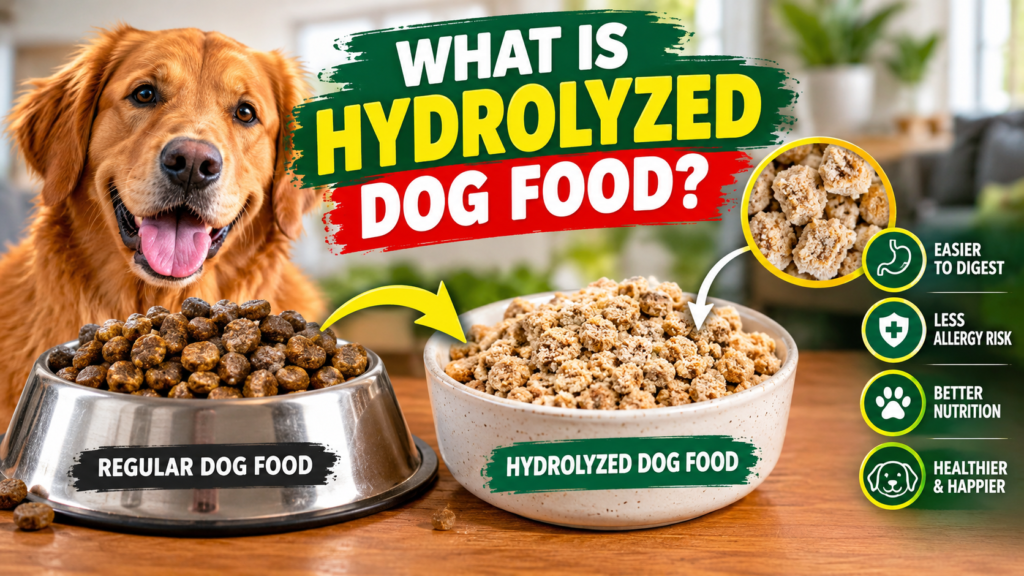
Quick Answer: Hydrolyzed dog food is a specially processed diet where proteins are broken down into tiny fragments so a dog’s immune system no longer recognizes them as allergens. Vets often recommend it for dogs with food allergies, chronic itching, or unexplained digestive issues.
If your dog keeps scratching, has an upset stomach, or just isn’t responding to regular food, you’ve probably heard your vet mention “hydrolyzed” diets. It sounds technical, but the idea behind it is actually pretty simple. I’m Milo Hartwell, and I’ve spent years helping dog owners navigate confusing ingredient labels and food-related allergy issues. In this guide, I’ll break down exactly what hydrolyzed dog food is, how it works, and whether it’s the right next step for your pup.
What Does “Hydrolyzed” Mean in Dog Food?
“Hydrolyzed” refers to a manufacturing process, not an ingredient. During production, proteins (usually from chicken, soy, or fish) are broken down into much smaller pieces called peptides. These pieces are so small that a dog’s immune system typically can’t identify them as a threat.
How Protein Hydrolysis Works
Normally, when a dog is allergic to a protein, their immune system reacts to its shape and size. Hydrolysis chops that protein into fragments below the size threshold the immune system uses to trigger a reaction. In simple terms: same source ingredient, but broken down small enough to fly under the radar.
Why Hydrolyzed Dog Food Matters
Food allergies and intolerances in dogs are notoriously hard to diagnose. Symptoms overlap with environmental allergies, skin infections, and even behavioral issues. Hydrolyzed food gives vets a reliable way to test whether food is actually the culprit.
Common Reasons Vets Recommend It
- Diagnosing a suspected food allergy through an elimination diet
- Managing chronic ear infections tied to food sensitivity
- Reducing gastrointestinal upset when the cause is unclear
- Supporting dogs with inflammatory bowel disease (IBD)
Signs Your Dog Might Need Hydrolyzed Dog Food
Not every itchy dog needs a hydrolyzed diet, but certain patterns are worth mentioning to your vet:
- Year-round itching that doesn’t follow a seasonal pattern
- Recurring ear infections
- Soft stool or vomiting that isn’t tied to a specific event
- No improvement after switching between regular “sensitive skin” formulas
- Paw licking or face rubbing with no obvious external cause
How to Switch Your Dog to Hydrolyzed Food (Step-by-Step)
Switching diets isn’t just about buying a new bag of food. For hydrolyzed diets to work as an allergy test, they need to be introduced carefully and followed strictly.
- Step 1: Talk to your vet before starting — most hydrolyzed diets are prescription-only.
- Step 2: Stop all other treats, table scraps, and flavored medications during the trial.
- Step 3: Transition gradually over 5–7 days to avoid stomach upset.
- Step 4: Stay on the diet exclusively for 8–12 weeks, since allergy trials need time to show results.
- Step 5: Track symptoms weekly so you and your vet can spot real improvement.
Common Problems & Fixes
Here’s a quick reference for what owners often run into during a hydrolyzed food trial:
| Symptom | Possible Cause | What To Do |
|---|---|---|
| Dog refuses to eat | Different smell/texture than usual food | Mix gradually with old food over several days |
| Loose stool in first week | Normal diet-transition adjustment | Continue slow transition; contact vet if it persists past 7–10 days |
| No improvement after weeks | Hidden treats or exposure during trial | Confirm strict compliance; discuss trial extension with vet |
| Itching continues | Environmental allergy, not food-related | Ask vet about parallel environmental allergy testing |
Common Mistakes Owners Make
- Giving flavored treats or chews “just once” during the trial period
- Switching foods too abruptly, causing digestive upset unrelated to allergies
- Ending the trial too early before the 8–12 week mark
- Assuming any “limited ingredient” label is the same as hydrolyzed
Hydrolyzed vs. Novel Protein Dog Food: What’s the Difference?
Owners often confuse these two approaches. Both are used for allergy management, but they work differently.
| Feature | Hydrolyzed Dog Food | Novel Protein Dog Food |
|---|---|---|
| How it works | Breaks protein into tiny fragments the immune system won’t recognize | Uses a protein source the dog has never eaten before |
| Best for | Confirmed or suspected food allergies | Dogs with no prior exposure history to that protein |
| Prescription needed | Usually yes | Sometimes, depending on formula |
| Reliability for elimination trials | Very high | Can be less reliable if exposure history is uncertain |
Pro Tips for Feeding Hydrolyzed Dog Food
- Keep a written log of symptoms during the trial — memory alone is unreliable over 8–12 weeks
- Ask your vet if any current medications are flavored, since this can affect trial accuracy
- Store food properly and check expiration dates, as some hydrolyzed formulas have shorter shelf lives
- Don’t rotate back to old food “to test” without your vet’s guidance
FAQ Section
Is hydrolyzed dog food safe for long-term use?
Yes, many dogs stay on hydrolyzed diets long-term if it resolves their symptoms, though your vet should monitor overall nutrition along the way.
Do I need a prescription for hydrolyzed dog food?
Most hydrolyzed formulas are sold as prescription diets and require vet approval before purchase.
How long does it take to see results?
Most elimination trials take 8–12 weeks to show a clear pattern, so patience and strict compliance matter.
Can I mix hydrolyzed food with regular food?
Not during an elimination trial — mixing in other proteins can make results unreliable. Ask your vet about the right transition approach.
Is hydrolyzed dog food the same as limited ingredient food?
No. Limited ingredient diets simply reduce the number of ingredients, while hydrolyzed diets chemically break down the protein itself.
Will my dog’s itching stop immediately?
Not usually. Skin symptoms often take several weeks to improve even after the food allergy is addressed.
What if my dog doesn’t improve on hydrolyzed food?
This may indicate the issue isn’t food-related. Your vet may suggest environmental allergy testing as a next step.
Conclusion
Hydrolyzed dog food isn’t a fad diet — it’s a practical tool vets use to figure out whether food allergies are behind your dog’s symptoms. The key is patience: strict compliance and a full trial period make all the difference. If your dog is still struggling with itching, ear infections, or stomach issues, it’s worth a conversation with your vet about whether a hydrolyzed diet trial makes sense for your pup.
Learn more from trusted sources:
