
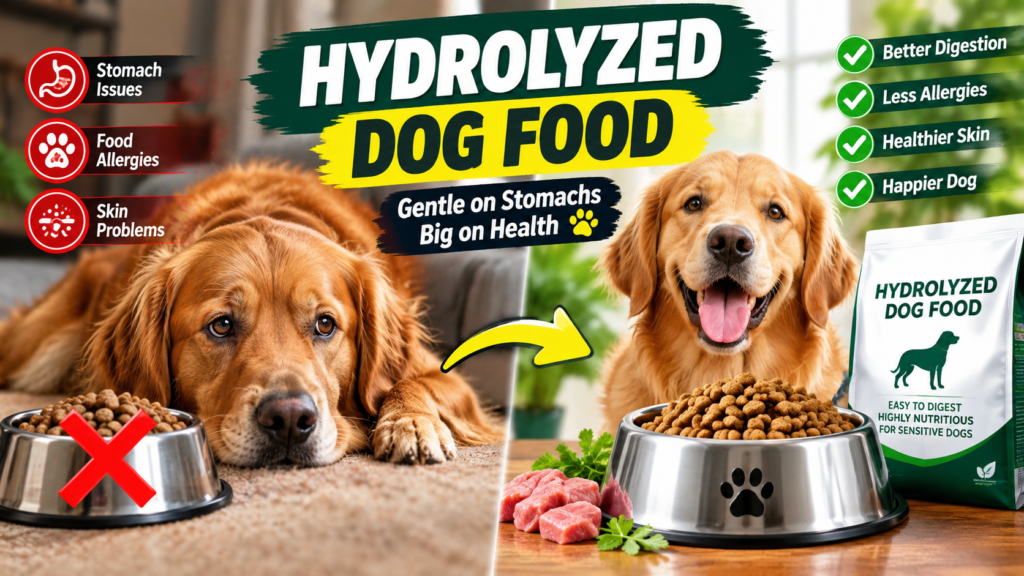
Quick Answer: Hydrolyzed dog food is a specialized diet where proteins are broken down into tiny fragments so a dog’s immune system doesn’t recognize them as allergens. Vets prescribe it mainly for food allergies, chronic itching, and digestive disease, usually during an elimination diet trial lasting 8–12 weeks.
If your dog won’t stop scratching, has recurring ear infections, or their stomach seems permanently upset, you’ve probably heard your vet mention “hydrolyzed” food. It sounds technical. It isn’t, once you break it down. I’m Milo Hartwell, and I’ve spent years helping owners navigate feeding challenges—from picky eaters to dogs with real food sensitivities. I’ve watched plenty of frustrated pet parents try food after food before landing on the right answer. Let’s walk through what hydrolyzed dog food actually is, how it works, and whether it’s the right move for your dog.
What Is Hydrolyzed Dog Food?
Hydrolyzed dog food is made through a process called hydrolysis, where whole proteins—like chicken or soy—are chemically broken down into much smaller pieces called peptides. These pieces are so small that a dog’s immune system typically can’t identify them as a threat, so it doesn’t trigger the allergic response that whole proteins might.
In plain terms: it’s the same protein, just cut into pieces too small for the immune system to “recognize.”
How Hydrolysis Works (Why It Happens)
Your dog’s immune system reacts to proteins based on their shape and size. Large, intact protein molecules have structures the immune system can latch onto, which is how food allergies develop in the first place. Hydrolysis uses enzymes and water to snip those large proteins into fragments so small that the immune system essentially can’t “see” them anymore.
This matters because true food allergies aren’t caused by low-quality ingredients—they’re an immune response to a specific protein, no matter how good the food otherwise is.
Signs Your Dog Might Need a Hydrolyzed Diet
- Chronic itching or skin irritation that doesn’t clear up with flea or environmental treatment
- Recurring ear infections with no obvious cause
- Ongoing diarrhea, vomiting, or gas that isn’t tied to a stomach bug
- Paw licking or chewing that seems constant
- Symptoms that show up year-round rather than seasonally
None of these symptoms confirm a food allergy on their own—plenty of other conditions cause similar signs. That’s exactly why an elimination trial exists: it’s a process of ruling things out, not guessing.
Why Vets Recommend It: Allergies, IBD & Elimination Trials
Hydrolyzed diets show up in two main situations. First, food allergy diagnosis: because there’s no reliable blood or saliva test for food allergies in dogs, an elimination diet trial is still considered the gold standard for identifying one, as the AKC explains. Second, dogs with inflammatory bowel disease or other chronic GI conditions sometimes do better on hydrolyzed formulas because the smaller protein fragments are gentler on an already-inflamed gut.
Because these diets serve a specific medical purpose, most hydrolyzed dog foods are only available through a veterinarian rather than off a regular pet store shelf.
Step-by-Step: Starting a Hydrolyzed Diet Trial
- Talk to your vet first. A proper diagnosis rules out fleas, mites, and environmental allergies before blaming food.
- Cut out everything else. No treats, flavored medications, table scraps, or other pets’ food during the trial.
- Feed only the hydrolyzed diet for the full recommended period—typically 8 to 12 weeks.
- Track symptoms weekly. Note changes in itching, stool quality, and energy level.
- Reintroduce the old diet carefully if your vet recommends a food challenge to confirm the allergy.
- Settle on a long-term plan based on what the trial reveals—some dogs stay on the hydrolyzed formula, others transition to a novel protein diet.
Hydrolyzed vs. Limited Ingredient vs. Novel Protein: What’s the Difference?
| Diet Type | How It Works | Best For |
|---|---|---|
| Hydrolyzed Protein | Protein is broken into tiny fragments the immune system can’t recognize | Confirmed or suspected food allergies, IBD, elimination trials |
| Limited Ingredient | Fewer overall ingredients, but proteins remain whole | Mild sensitivities or as a starting point before a full trial |
| Novel Protein | Uses a protein source (like venison or duck) the dog has never eaten | Dogs who haven’t responded to common proteins like chicken or beef |
Common Problems Owners Run Into (and Fixes)
My dog won’t eat it
Hydrolyzed formulas have a different smell and taste than regular food. Try warming it slightly or transitioning gradually over 5–7 days by mixing it with the old food in increasing amounts.
My dog’s stomach got worse at first
A short adjustment period with looser stool is common. If it continues past a week, check in with your vet—don’t stop the trial early without guidance, since restarting resets the clock.
It’s expensive
Hydrolyzed diets do cost more than standard food because of the manufacturing process. Ask your vet about the smallest trial-size bag before committing to a large one.
Common Mistakes to Avoid
- Ending the trial early because symptoms haven’t improved by week two or three—full results can take 8+ weeks
- Sneaking in “just one” regular treat during the trial
- Using flavored heartworm or flea medication without checking with your vet
- Assuming a hydrolyzed diet is needed without ruling out fleas or environmental allergies first
- Switching foods again too soon out of impatience
Pro Tips for Success
- Keep a simple daily log of itching, stool, and appetite—patterns are easier to spot in writing
- Ask your vet whether wet or dry hydrolyzed formulas suit your dog better; some dogs tolerate the texture change more easily one way
- If you have multiple pets, feed them separately during the trial so your dog can’t sneak bites of another animal’s food
- Set a calendar reminder for the trial end date so you don’t lose track of progress
FAQ
Does hydrolyzed dog food need a prescription?
Most hydrolyzed formulas are therapeutic diets available only through a veterinarian, since they’re meant to be used under medical guidance.
How long does a hydrolyzed diet trial take?
Typically 8 to 12 weeks, since it can take that long for symptoms tied to a food allergy to fully resolve.
Can I feed hydrolyzed dog food long-term?
Yes, many dogs stay on it indefinitely if it controls their symptoms well, though some transition to a novel protein diet afterward based on their vet’s recommendation.
Will hydrolyzed food fix my dog’s itching right away?
No. Symptoms usually improve gradually over the trial period, not overnight, since allergens can continue affecting the immune system for weeks after removal.
Is hydrolyzed dog food the same as limited ingredient food?
No. Limited ingredient diets simply reduce the number of ingredients, while hydrolyzed diets chemically break down the protein itself.
What if my dog refuses to eat the new food?
Try a gradual transition over about a week, mixing it with the previous diet in increasing amounts, and ask your vet about warming the food slightly to boost aroma.
Can puppies eat hydrolyzed dog food?
Only under veterinary guidance—puppies have different nutritional needs, so any therapeutic diet should be confirmed as appropriate for their life stage.
Conclusion
Hydrolyzed dog food isn’t a trend—it’s a targeted tool for dogs whose immune systems overreact to protein. The process sounds technical, but the idea is simple: break the protein down small enough that the body stops treating it like a threat. If your dog’s symptoms point toward a food allergy, talk to your vet about whether a trial makes sense, and give it the full time it needs to work.
