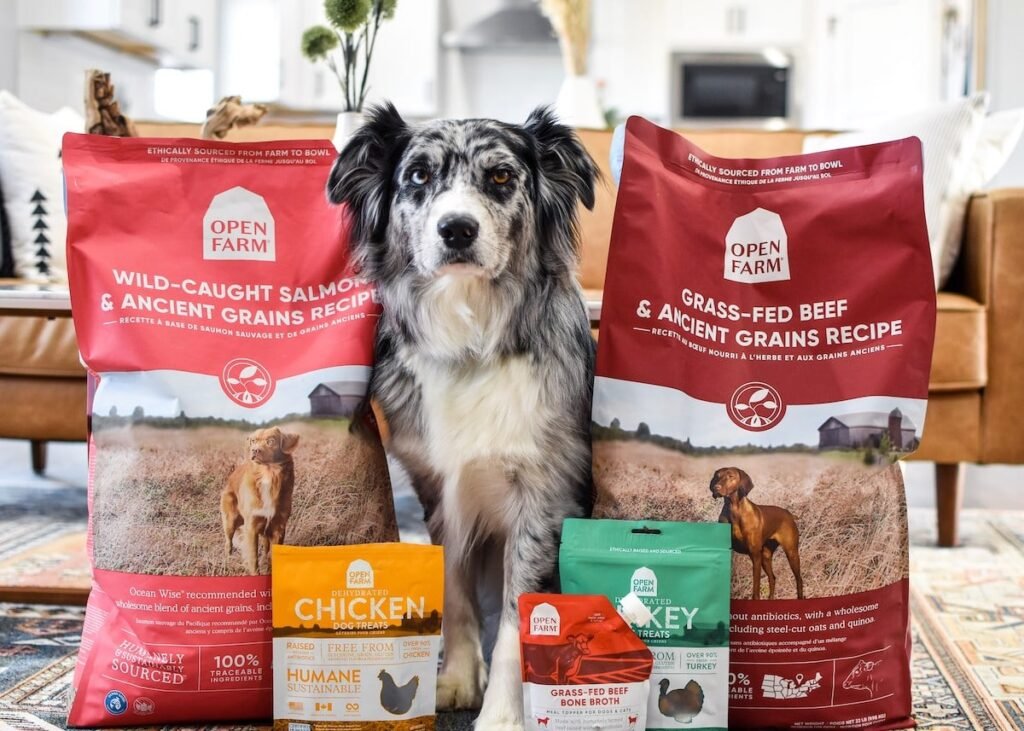
Open Farm Dog Food Review: Ingredients, Nutrition, Prices, Pros and Cons
Open Farm is a premium dog food brand that stands out for traceable ingredients, animal-welfare sourcing, multiple food formats, and complete-and-balanced recipes, but its higher price and wide product range mean the best recipe depends on your dog’s age, health needs, protein tolerance, and your budget.
For dog owners in the United States, choosing between premium kibble, fresh food, freeze-dried raw food, and conventional dog food can be confusing. Open Farm offers several of those formats under one brand, including dry kibble, RawMix, gently cooked fresh food, freeze-dried raw recipes, wet food, and specialized formulas. That variety makes Open Farm worth examining, but the brand name alone does not tell you whether a particular recipe is appropriate for your dog.
This Open Farm dog food review focuses on documented product information, nutritional labeling, ingredient and sourcing policies, current product pricing, and practical feeding considerations. Open Farm states that its diets are formulated with veterinary nutrition expertise and designed to provide complete and balanced nutrition for their stated life-stage claims. Some recipes have specific limitations, such as excluding growth of large-size dogs, so the nutritional adequacy statement on the individual package matters.
The biggest strengths are transparency and ingredient sourcing. Open Farm provides lot-based ingredient traceability and publishes information about ingredient origins and safety testing. The trade-offs are cost, recipe complexity, and the fact that premium ingredients do not automatically make every formula the right choice for every dog.
Open Farm is a North American pet food company that markets dog and cat foods around ingredient transparency, animal welfare, sustainability, and nutrition. Its current dog-food range is much broader than a traditional kibble-only brand.
The product range includes conventional dry kibble, ancient-grain recipes, grain-free recipes, RawMix kibble with freeze-dried raw pieces, gently cooked fresh food, freeze-dried raw food, air-dried options, wet food, and specialized diets. Because these formats differ in processing, moisture, calories, ingredients, and feeding instructions, a review of Open Farm should consider the individual product rather than treating every formula as nutritionally identical.
Open Farm says its diets are formulated with veterinary nutrition expertise and that its complete diets are designed to meet applicable AAFCO nutritional requirements stated on the individual product. That distinction matters because AAFCO nutritional adequacy is determined at the recipe level and life-stage level.
Source: puppysimply.com
Dry kibble
The simplest everyday format, with recipes using proteins such as chicken, turkey, beef, salmon, lamb, venison, and whitefish.
RawMix
A kibble-based format combined with freeze-dried raw pieces and other ingredients, intended to add different textures and animal-protein sources.
Freshly Crafted
Gently cooked meals made with human-grade ingredients and sold in formats designed for refrigerated or frozen storage.
Freeze-dried raw
Shelf-stable raw-style food that can be fed as directed or used in certain circumstances as a topper, depending on the product.
Open Farm Dog Food Ingredients: What Stands Out?
Open Farm’s ingredient lists generally emphasize named animal proteins and recognizable plant ingredients. Depending on the recipe, you may see beef, chicken, turkey, salmon, lamb, pork, venison, whitefish, ancient grains, potatoes, legumes, fruits, vegetables, seeds, oils, and other functional ingredients.
One useful feature is that Open Farm provides information intended to let customers trace ingredients to their geographic origin using product lot information. The company also states that its incoming ingredients are inspected and that finished products are tested by third-party laboratories for selected contaminants before packaging.
These practices are useful evidence of a transparency system, but they should not be confused with independent proof that every Open Farm recipe is nutritionally superior to every competing dog food. Ingredient quality, nutrient balance, digestibility, calorie density, and suitability for an individual dog all matter.
Source: k9ofmine.com
Named animal proteins
Many recipes identify specific proteins rather than relying on vague descriptions such as meat or animal derivatives.
Traceability
Open Farm provides lot-based information that can show ingredient origins and selected safety-testing information for applicable products.
No artificial preservatives claimed
Open Farm states that its recipes avoid artificial preservatives and flavors such as ethoxyquin and use natural antioxidant systems instead.
Non-GMO produce
The company states that its fruits and vegetables are non-GMO, although the presence and amount of individual produce ingredients vary by recipe.
Are Open Farm Ingredients Human-Grade?
Open Farm describes several of its products and ingredients as human-grade, but consumers should distinguish between a marketing description and the regulatory meaning of a human-food production process. The company says its animal proteins are sourced through USDA-approved, human-grade facilities and that its fresh products use human-grade ingredients.
For a specific product, the most useful check is still the actual ingredient list, guaranteed analysis, feeding directions, calorie information, and nutritional adequacy statement. Those details tell you much more about whether the food fits your dog than the human-grade label by itself.
Open Farm Nutrition: Is It a Healthy Dog Food?
Open Farm can provide complete and balanced nutrition when you select a recipe whose nutritional adequacy statement matches your dog’s life stage and size requirements. However, there is no single Open Farm nutrient profile because the brand sells many different formulas.
For example, third-party analysis of several Open Farm dry foods has found relatively high protein levels on a dry-matter basis, but the exact protein, fat, and estimated carbohydrate values vary by product. This is why comparing the actual formula is more meaningful than assigning one protein or carbohydrate percentage to the entire brand.
A healthy diet for an individual dog is not simply the recipe with the highest protein or the longest ingredient list. Body condition, activity level, age, reproductive status, existing medical conditions, food sensitivities, calorie requirements, and the dog’s response to the food all matter.
Source: dogster.com
Protein
Many Open Farm recipes emphasize animal proteins, but protein percentages vary considerably between formats and recipes.
Fat
Fat content also varies, so dogs that need a restricted-fat diet should be evaluated against the exact guaranteed analysis rather than the brand average.
Carbohydrates
Some recipes contain grains while others use potatoes or legumes, meaning carbohydrate sources differ substantially across the range.
Omega-3 fats
Fish-based recipes can provide omega-3 fatty acids, but the amount and nutritional contribution depend on the exact formulation.
Grain-Free Versus Ancient-Grain Open Farm Recipes
Open Farm offers both grain-free and grain-inclusive recipes. Grain-free is not automatically healthier, and grains are not inherently harmful to most dogs. If your veterinarian has identified a specific dietary reason to avoid an ingredient, choose a recipe based on that requirement rather than assuming grain-free is universally better.
The FDA has investigated a potential association between certain diets and canine dilated cardiomyopathy, particularly diets containing substantial proportions of peas, lentils, other pulses, or potatoes. The scientific picture is complex and has not established that every grain-free diet causes heart disease. If you are concerned about a grain-free diet, discuss the specific food with your veterinarian rather than relying on marketing claims.
Open Farm RawMix and Freeze-Dried Raw Food
Open Farm’s raw-style products are among the most distinctive parts of the brand, but they also deserve extra attention because raw feeding introduces food-safety considerations that do not apply in exactly the same way to conventional cooked kibble.
RawMix combines kibble with freeze-dried raw components, while the company also sells freeze-dried raw recipes. Some of these formulas contain substantial proportions of meat, organs, and bone. Open Farm states that its raw products are formulated to provide complete and balanced nutrition when the applicable recipe’s feeding directions and nutritional adequacy statement are followed.
The fact that a product is freeze-dried does not mean that consumers should ignore safe food handling. Raw animal ingredients can present bacterial contamination concerns, and households with young children, older adults, pregnant people, or immunocompromised individuals should be particularly careful about hygiene. Dogs with compromised immune systems may also be poor candidates for raw diets.
Source: articles.hepper.com
Potential advantage
Raw-style formats can provide concentrated animal ingredients and may appeal to owners seeking a less conventional feeding format.
Potential drawback
Freeze-dried raw products are substantially more expensive than many standard kibbles and require careful handling according to the product instructions.
Do not assume raw is automatically better
There is not enough evidence to conclude that every commercially prepared raw diet provides better long-term health outcomes than a properly formulated cooked diet.
Ask your veterinarian when appropriate
Dogs with medical conditions, immune compromise, or special nutritional requirements should not be switched to a raw-style diet without appropriate professional guidance.
How Should You Transition to Open Farm?
Open Farm recommends a gradual transition rather than changing foods suddenly. Its general guidance uses approximately 25 percent new food during days 1 through 3, 50 percent during days 4 through 6, 75 percent during days 7 through 9, and 100 percent new food around day 10.
Dogs with sensitive stomachs may need a slower transition. If vomiting, persistent diarrhea, refusal to eat, marked lethargy, or other concerning symptoms develop, stop treating the problem as a routine food transition and contact a veterinarian.
Open Farm Dog Food Prices and Value
Open Farm is generally positioned above many mainstream grocery-store dog foods in price. Current direct-to-consumer pricing varies by recipe and package size, but several standard dry-food recipes are listed around $24 for 4 pounds, $55 for 11 pounds, and $83 to $94 for 22 pounds at regular pricing, depending on the formula.
For example, one current turkey-and-ancient-grains recipe is listed at $23.99 for 4 pounds, $54.99 for 11 pounds, and $82.99 for 22 pounds. A grain-free chicken-and-turkey recipe is listed at higher regular prices. These prices can change, and subscriptions or introductory promotions can lower the initial purchase price.
The practical question is not simply whether Open Farm is expensive. It is whether the additional cost buys features that matter to your household, such as ingredient traceability, sourcing standards, a particular protein, or a format your dog tolerates well.
Source: dogendorsed.com
Standard dry food
Usually the most economical Open Farm format on a per-pound basis and the easiest option for routine storage and feeding.
RawMix
Generally costs more than ordinary kibble because it incorporates freeze-dried raw components and more specialized ingredients.
Freeze-dried raw
Usually among the most expensive formats when compared by package weight, although feeding amounts differ because the product is concentrated.
Fresh food
Typically carries a higher ongoing cost than kibble and requires additional freezer or refrigerator space depending on the format.
Is Open Farm Worth the Higher Price?
Open Farm can be worth the premium for owners who place substantial value on sourcing transparency, animal-welfare standards, and a broad range of food formats. It may be less compelling for owners whose primary goal is obtaining nutritionally adequate dog food at the lowest possible cost.
A useful way to compare value is to calculate the daily feeding cost rather than comparing bag prices. A smaller bag can look inexpensive while producing a higher cost per day, and a larger bag can have a lower price per pound but still be inappropriate for a dog with a particular dietary requirement.
Open Farm Dog Food Pros and Cons
The strongest case for Open Farm is its combination of product variety and transparency. The main disadvantages are price and the need to evaluate individual formulas carefully instead of assuming that every product is equally suitable for every dog.
Source: k9ofmine.com
Pros
Strong ingredient traceability, a wide range of proteins and formats, emphasis on animal-welfare sourcing, complete-and-balanced recipes for stated life stages, and detailed product information.
Pros
The brand offers both grain-inclusive and grain-free options, plus dry, fresh, wet, freeze-dried, and raw-style formats.
Pros
Open Farm states that its finished products undergo third-party testing for selected contaminants and that ingredients can be traced through lot information.
Cons
The food is more expensive than many mainstream alternatives, particularly fresh and freeze-dried raw formats.
Cons
Some recipes contain multiple animal proteins, which can make ingredient elimination more difficult for dogs with suspected food allergies.
Cons
The large number of recipes and formats can make it difficult to choose without checking the exact nutritional adequacy statement and guaranteed analysis.
Who May Like Open Farm?
Open Farm is particularly relevant to U.S. dog owners who want more information about where ingredients come from and who are willing to pay more for sourcing and product-format choices. It can also be useful for households looking for a specific protein or an alternative to conventional kibble.
Ingredient-conscious owners
A good fit for people who value named ingredients, sourcing information, and traceability.
Dogs with ordinary nutritional needs
A complete-and-balanced recipe appropriate for the dog’s stated life stage can be considered when there is no medical diet requirement.
Owners seeking different formats
The brand’s range makes it possible to compare kibble, fresh, wet, freeze-dried, and raw-style options within one product ecosystem.
Who Should Be More Cautious?
Owners of dogs with diagnosed kidney disease, pancreatitis, severe food allergies, urinary disease, obesity, or other medical conditions should not choose a food solely because it has premium ingredients. Nutrient restrictions and therapeutic diets can matter more than sourcing preferences.
If your dog needs a veterinary therapeutic diet or has experienced repeated digestive reactions to commercial foods, discuss the exact recipe with your veterinarian or a board-certified veterinary nutritionist.
Open Farm Dog Food Recall and Safety Considerations
As of the research date for this review, no Open Farm dog food recall was identified in the recall databases and review sources examined. Recall status can change, however, so this should be treated as a point-in-time finding rather than a permanent guarantee of future safety.
Open Farm states that incoming ingredients are inspected and that finished products are tested by third-party laboratories for selected contaminants, including salmonella, E. coli, and mycotoxins. The company also provides lot-based traceability information for applicable products.
These quality-control measures are useful, but consumers should still follow package storage instructions, observe expiration or best-by information, wash food bowls regularly, and handle raw or freeze-dried raw products carefully.
Source: mydoglikes.com
Check the exact product
Different Open Farm recipes have different ingredients, nutritional profiles, storage requirements, and life-stage statements.
Follow storage instructions
Fresh and raw-style products may require refrigeration or freezer storage, while dry products generally need a cool, dry environment.
Monitor your dog
Changes in stool, vomiting, appetite, body weight, skin condition, or energy level can indicate that a diet change needs reassessment.
Seek veterinary help for persistent problems
Repeated gastrointestinal symptoms, significant weight changes, blood in stool, persistent itching, or refusal to eat should not be dismissed as ordinary food adjustment.
How to Choose the Best Open Farm Recipe for Your Dog
The best Open Farm recipe depends on the dog rather than the brand’s most popular product. Start with life stage, then consider body condition, activity level, known allergies, protein tolerance, grain preference, and your household’s storage and budget constraints.
If your dog is healthy and simply needs an everyday food, a complete-and-balanced dry recipe may provide the simplest combination of nutrition, storage convenience, and cost. If you want a different texture or feeding experience, RawMix or fresh food may be alternatives. If your veterinarian has recommended a specific nutrient profile, that recommendation should take priority over general ingredient preferences.
Source: articles.hepper.com
Step 1: Confirm life stage
Check whether the recipe is formulated for puppies, adults, seniors, or all life stages and whether any large-breed growth restriction applies.
Step 2: Check the protein
Look at every major animal protein in the ingredient list, especially if your dog has a suspected food allergy.
Step 3: Compare guaranteed analysis
Compare protein, fat, fiber, moisture, and calories with your dog’s nutritional needs rather than choosing based only on ingredient order.
Step 4: Calculate daily cost
Use the feeding guide and package price to estimate the actual cost per day instead of relying on the bag price.
Step 5: Transition gradually
Introduce the new recipe over roughly 7 to 10 days unless your veterinarian recommends a different approach.
A Simple Decision Guide
For a healthy adult dog where convenience and value matter most, start by comparing Open Farm’s standard dry recipes. For owners prioritizing sourcing transparency and wanting additional texture or protein variety, RawMix can be considered. For owners who prefer cooked food and can manage higher cost and storage requirements, Freshly Crafted may be more appropriate.
Do not select a recipe simply because it says grain-free, raw, human-grade, high-protein, or sustainably sourced. Those characteristics may matter, but they do not replace the need for a nutritionally appropriate diet.
Frequently Asked Questions
Q
Is Open Farm dog food good?
Open Farm is a credible premium dog food option with a strong emphasis on ingredient traceability, sourcing standards, and recipe variety. Whether it is a good choice for your dog depends on the individual formula and your dog’s nutritional requirements. A premium ingredient list does not automatically make a food appropriate for every dog.
Q
Is Open Farm dog food expensive?
Yes, Open Farm generally costs more than many mainstream dog foods. Current direct prices vary by recipe and size, with several dry formulas costing roughly $3 to $6 per pound at larger package sizes. Fresh and freeze-dried raw products can cost substantially more. Promotions and subscriptions can change the effective price.
Q
Does Open Farm dog food meet AAFCO standards?
Open Farm states that its complete diets are formulated to meet applicable AAFCO nutritional profiles for the life stages identified on individual products. Because life-stage claims can differ by recipe, always read the nutritional adequacy statement on the exact product you are considering.
Q
Does Open Farm use grain-free ingredients?
Open Farm sells both grain-free and grain-inclusive dog foods. Grain-free recipes may use ingredients such as potatoes or legumes instead of grains, while ancient-grain formulas can include ingredients such as oats, quinoa, millet, or sorghum. Grain-free should not be assumed to be healthier for every dog.
Q
Is Open Farm RawMix safe for dogs?
Open Farm’s RawMix products are commercially formulated and include freeze-dried raw components, but raw-style diets still require careful handling. Raw animal ingredients can carry bacterial risks. Dogs with compromised immune systems and households with vulnerable people should discuss raw feeding with a veterinarian before use.
Q
How long should it take to switch my dog to Open Farm?
Open Farm generally recommends transitioning over about 7 to 10 days. A common approach is 25 percent new food for the first few days, 50 percent during the middle of the transition, 75 percent near the end, and then 100 percent new food. Dogs with sensitive stomachs may need a slower change.
✦ Wrapping Up
Conclusion
Open Farm earns attention because it combines a broad range of dog food formats with unusually detailed sourcing and traceability information. Its dry, fresh, wet, RawMix, and freeze-dried products give U.S. dog owners many ways to approach feeding, while the company’s ingredient and quality-control policies provide useful information for people who care about where their dog’s food comes from.
The main limitation is that there is no single answer to whether Open Farm is right for every dog. Recipes differ in protein sources, grains or legumes, fat levels, calories, processing, and life-stage suitability. The higher price also makes value an important consideration.
For a healthy dog without special dietary restrictions, Open Farm is a reasonable premium brand to consider, particularly if ingredient transparency and sourcing standards are priorities. For a dog with a medical condition, food allergy, or therapeutic nutritional requirement, the exact recipe should be evaluated with a veterinarian rather than selected from brand reputation alone.
💡 Key Takeaway
Before buying Open Farm, choose the exact recipe first, verify its AAFCO nutritional adequacy statement and guaranteed analysis, calculate the daily feeding cost, check all major protein sources, and transition gradually. If your dog has a medical or specialized dietary need, ask your veterinarian to review the specific formula.
James Walker is a dog care and nutrition expert with over 10 years of hands-on experience in canine care, nutrition, grooming, and everyday pet wellness. He researches and reviews dog food, treats, supplements, grooming products, and essential pet-care solutions to help dog owners make informed decisions. At MyCuddlyPets.com, James shares practical, honest, and easy-to-follow advice to help dog owners better understand their pets’ needs and provide them with a happy, healthy, and comfortable life.