
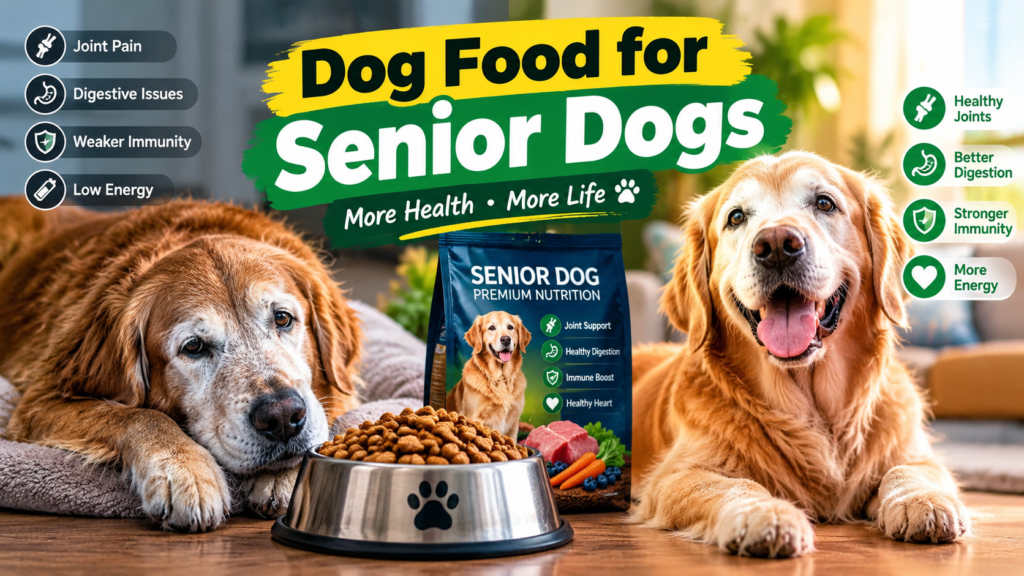
Quick Answer: Senior dogs generally need food that’s lower in calories, higher in fiber, and includes joint-support nutrients like glucosamine and omega-3s. Most dogs are considered “senior” between 7–10 years old, depending on size. Always transition gradually and check with your vet before changing your dog’s diet.
Watching your dog slow down is hard. One day they’re sprinting after the ball, and the next they’re taking the stairs a little slower. I’m Milo Hartwell, and I’ve spent years helping dog owners figure out what actually changes in a dog’s body as they age — and what that means for the food bowl. This guide breaks down exactly what senior dogs need, the mistakes owners commonly make, and how to make the switch without stress.
What Does “Senior Dog Food” Actually Mean?
Senior dog food isn’t a strict regulated category — it’s a formula built around the common needs of older dogs. That usually means fewer calories per cup, more fiber, added joint-support ingredients, and easier-to-digest protein sources. It’s less about a magic formula and more about matching the food to a slower metabolism and changing body.
Why Senior Dogs Need a Different Diet
As dogs age, their metabolism slows, muscle mass can decrease, and joints take more wear. A diet built for an active adult dog can lead to unwanted weight gain in a senior who naturally moves less. On the flip side, some senior dogs lose muscle and need more digestible protein, not less. That’s why “senior food” adjusts the balance rather than just cutting calories across the board.
What Age Is Considered “Senior” for a Dog?
This varies quite a bit by size. Larger breeds age faster than small breeds, so the “senior” label kicks in earlier for them.
| Dog Size | Typical Senior Age |
|---|---|
| Small (under 20 lbs) | 10–12 years |
| Medium (20–50 lbs) | 8–10 years |
| Large (50–90 lbs) | 7–8 years |
| Giant (90+ lbs) | 5–7 years |
According to the American Veterinary Medical Association, age alone isn’t the only factor — overall health and breed history matter too.
Key Nutrients Senior Dogs Need
Protein
Older dogs still need quality protein — sometimes more, not less, to help preserve muscle mass. The key is digestibility, not just percentage on the label.
Fiber & Digestion
Senior digestive systems can slow down. Added fiber helps keep things moving comfortably and supports a healthy gut.
Joint-Support Nutrients
Ingredients like glucosamine, chondroitin, and omega-3 fatty acids are common in senior formulas because they support joint comfort and mobility as cartilage naturally wears down.
Fat & Calorie Needs
Since most senior dogs are less active, calorie-dense food can lead to weight gain. Senior formulas are usually slightly lower in fat and total calories per serving.
Signs Your Dog Needs to Switch to Senior Food
- Noticeable weight gain despite the same activity level
- Slower movement, stiffness after resting, or trouble with stairs
- Duller coat or more shedding than usual
- Less interest in meals or slower eating
- More frequent digestive upset
If you notice several of these at once, it’s worth a vet visit before changing food — some of these signs overlap with medical issues that need diagnosis, not just a diet swap.
How to Transition Your Dog to Senior Food (Step-by-Step)
- Day 1–2: Mix 25% new senior food with 75% current food.
- Day 3–4: Move to a 50/50 mix.
- Day 5–6: Shift to 75% new food, 25% old food.
- Day 7: Fully switch to senior food.
Go slower — over 2 weeks instead of 1 — if your dog has a sensitive stomach or you notice loose stools during the switch.
Wet vs Dry Food for Senior Dogs: What’s the Difference?
| Factor | Wet Food | Dry Food |
|---|---|---|
| Hydration | Higher moisture content | Lower moisture |
| Dental wear | Softer, easier on sore teeth/gums | Can help reduce tartar buildup |
| Appetite appeal | Often more aromatic, tempting for picky eaters | Less appealing to dogs with reduced smell/appetite |
| Cost | Generally more expensive | Generally more affordable |
Many owners find a mix of both — a scoop of wet food stirred into dry kibble — works well for senior dogs who are becoming pickier eaters or have dental discomfort.
Common Feeding Mistakes Owners Make with Senior Dogs
- Not adjusting portions as activity level drops, leading to slow weight gain.
- Switching food too fast, causing stomach upset.
- Ignoring appetite changes instead of checking for an underlying issue.
- Overdoing treats, which can undo the calorie balance of a senior formula.
- Assuming all “senior” labels are the same without checking the actual nutrient profile.
Common Senior Dog Feeding Problems and Fixes
| Problem | Possible Cause | What to Try |
|---|---|---|
| Weight gain | Lower activity, same calorie intake | Switch to a lower-calorie senior formula, reduce treats |
| Weight loss / muscle loss | Reduced protein absorption, dental pain, or illness | Ask your vet about a higher-protein senior formula and a dental check |
| Refusing food | Reduced smell/taste, nausea, dental discomfort | Warm the food slightly, try wet food, consult your vet if it continues |
| Loose stools after switching food | Too-fast transition | Slow the transition down over 10–14 days |
Pro Tips for Feeding Senior Dogs
- Feed smaller, more frequent meals if your dog’s appetite has dropped.
- Keep water easily accessible — senior dogs can be less likely to walk far for it.
- Track weight monthly so small changes don’t go unnoticed.
- Choose a raised bowl if your dog has joint stiffness in the neck or shoulders.
- Recheck your dog’s diet needs at every annual vet visit — needs can shift year to year.
For general nutrition benchmarks, the American Animal Hospital Association and PetMD are solid resources for life-stage nutrition guidance.
FAQ
What age should I switch my dog to senior food?
Most dogs transition between 7–10 years old, but it depends on size — larger breeds age faster and may need the switch earlier.
Can senior dogs eat regular adult dog food?
Yes, some can, especially if they’re still active and at a healthy weight. But many benefit from the adjusted calorie and nutrient balance in senior formulas.
Is senior dog food necessary?
It’s not mandatory, but it’s often helpful — especially for weight management and joint support as dogs slow down.
Why is my senior dog not eating as much?
This can be due to reduced smell/taste, dental pain, or an underlying health issue. If it lasts more than a day or two, check with your vet.
Should senior dogs eat wet or dry food?
Both can work. Wet food is often easier on sore teeth and more appealing to picky eaters; dry food can help with dental tartar. Many owners mix the two.
How do I know if my dog needs a diet change?
Watch for weight changes, stiffness, coat changes, or appetite shifts. A combination of these is a good reason to talk to your vet about adjusting the diet.
Can I give my senior dog joint supplements separately from food?
Yes, many owners add supplements on top of senior food, but check with your vet to avoid overlapping doses if the food already contains joint-support ingredients.
Conclusion
Feeding a senior dog well comes down to watching for changes and adjusting gradually — not overhauling everything overnight. Keep an eye on weight, appetite, and mobility, transition food slowly, and lean on your vet when something feels off. Small, steady adjustments go a long way in keeping your dog comfortable in their senior years.
