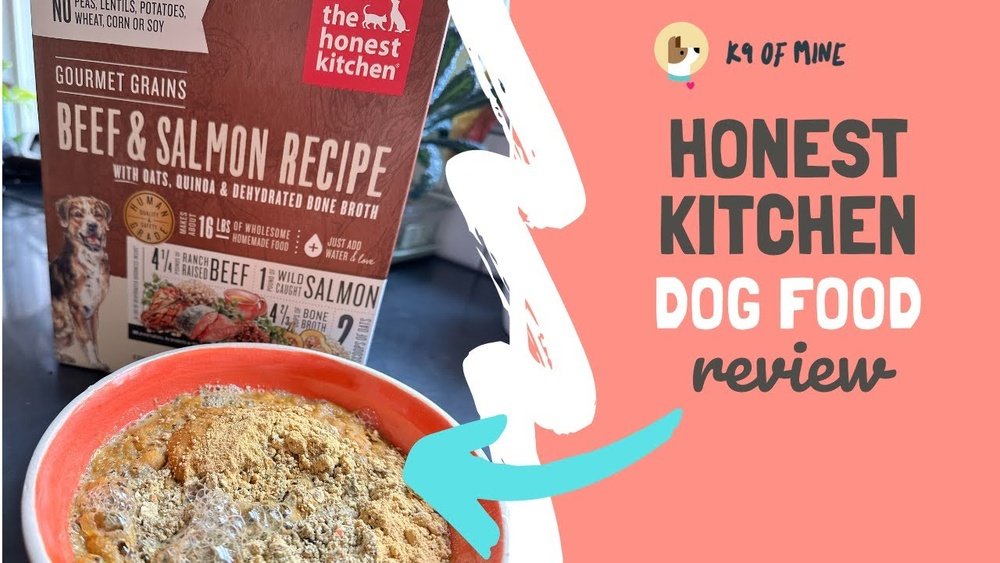
Honest Kitchen Review: Is This Human-Grade Dog Food Worth It?
The Honest Kitchen is a premium dog food brand that stands out for human-grade ingredients, multiple food formats, and recipes formulated to meet AAFCO nutritional requirements. Its biggest advantages are ingredient transparency and convenient dehydrated options, while its higher cost, preparation requirements for some recipes, and recipe-specific nutritional differences are worth considering before buying.
For dog owners in the United States who are comparing premium foods at stores such as Petco, PetSmart, independent pet retailers, or online, The Honest Kitchen is likely to appear because of its human-grade positioning. The brand offers dehydrated foods, dry clusters, wet foods, toppers, and other products rather than relying on one type of dog food.
Our review focuses on what the available evidence actually establishes rather than treating the brand’s marketing claims as proof that every recipe is automatically better for every dog. The Honest Kitchen says its complete and balanced recipes are formulated to meet AAFCO nutrient requirements and that its recipes are developed with veterinarians, including veterinary nutritionists. The company has also reported completing third-party AAFCO feeding trials on selected recipes. Those facts are useful, but they do not mean every formula is appropriate for every individual dog.
The most important distinction is between the brand as a whole and the specific recipe you choose. A dehydrated chicken recipe, a grain-free cluster recipe, a wet food, and a topper can have very different ingredients, calories, preparation instructions, and nutritional profiles. For that reason, checking the exact product label and its intended feeding status is more useful than relying on the brand name alone.
The Honest Kitchen is a U.S. pet food company known for producing human-grade dog and cat food. Its product range has expanded beyond the dehydrated foods for which the brand became well known and now includes dry clusters, wet food, toppers, treats, and other pet products.
The brand’s defining feature is its human-grade production standard. The Honest Kitchen states that human-grade means its ingredients come from the human food supply chain and that its finished food is produced in a human food facility under applicable human-food standards. This is different from simply saying that a dog food contains a few ingredients that humans could eat.
For shoppers, that distinction matters because ingredient quality and manufacturing standards are separate from nutritional adequacy. A food can use recognizable ingredients but still need to be evaluated for protein, fat, vitamins, minerals, calories, and whether it is intended to be fed as a complete diet.
The Honest Kitchen also states that its recipes are developed with veterinarians, including veterinary nutritionists, and that complete and balanced formulas are formulated to meet AAFCO nutrient requirements. The company reports using independent laboratory testing during product development and production.
Source: honestbrandreviews.com
Primary food formats
The brand offers dehydrated food, dry clusters, wet food, toppers, and base mixes.
Human-grade positioning
The brand says its ingredients and finished products meet human-food standards applicable to its human-grade designation.
Nutritional formulation
The company states that its complete and balanced recipes are formulated to meet AAFCO nutrient requirements.
Recipe differences
Ingredients, calories, preparation, and feeding status vary by individual product, so the label should be checked before purchasing.
What Does Human Grade Mean in Dog Food?
Human grade is a specific production and ingredient concept rather than a guarantee that a food will improve a dog’s health. In practical terms, The Honest Kitchen describes the designation as requiring human-edible ingredients and production in a human food facility. That is a meaningful distinction from conventional feed-grade manufacturing, but it should be considered alongside the complete nutritional profile of the recipe.
Pet owners should therefore avoid the assumption that human grade automatically means higher protein, fewer carbohydrates, better digestibility, or superior results for every dog. Those questions require evaluation of the individual formula and the dog’s nutritional requirements.
Quality standard
Human-grade status primarily addresses ingredient and manufacturing standards.
Not a universal health guarantee
The designation does not establish that one particular recipe is ideal for every dog.
Honest Kitchen Dog Food Ingredients and Nutrition
The Honest Kitchen’s ingredient lists generally emphasize recognizable animal proteins, grains or other carbohydrate sources, fruits and vegetables, fats, vitamins, minerals, and functional ingredients such as fish oil or taurine in selected recipes. However, the exact ingredient profile changes substantially between formulas.
For example, a representative whole-grain dehydrated chicken recipe uses dehydrated chicken as its primary ingredient and includes ingredients such as barley, potatoes, flaxseed, oats, peas, carrots, parsley, bananas, celery, minerals, vitamins, taurine, and fish oil. A different recipe can use another protein source or omit particular ingredients, so this example should not be treated as representative of every Honest Kitchen product.
Nutritionally, dehydrated foods can appear very different from their guaranteed analysis before preparation because water is added when the food is rehydrated. Comparing products therefore works best when you use the manufacturer’s feeding directions and consider calories per prepared serving rather than looking only at the percentage printed on the package.
Another important distinction is complete and balanced food versus supplemental products. A complete and balanced recipe is intended to provide the nutritional requirements specified for the applicable life stage when fed according to directions. A base mix or topper may have a different purpose and may require additional ingredients or food to create a complete diet.
Source: hellobark.com
Animal protein
Many recipes use recognizable animal proteins such as chicken, beef, turkey, fish, duck, or other proteins depending on the formula.
Carbohydrate sources
Recipes can include grains such as barley and oats or alternative carbohydrate sources in grain-free formulas.
Added nutrients
Vitamins and minerals are included in complete recipes to help meet nutritional requirements.
Recipe-specific analysis
Do not assume the nutrition of one Honest Kitchen recipe applies to the entire product range.
Is The Honest Kitchen High in Protein?
Protein levels vary by recipe and product format. Some formulas provide a substantial amount of animal-derived protein, but the percentage on the label should be interpreted in context with moisture, calories, and the rest of the ingredient list.
A dog that needs a particularly high-protein diet should not be placed on a formula solely because it is marketed as premium or human grade. The dog’s age, activity level, body condition, health status, and total calorie intake all influence whether a particular recipe is appropriate.
Check the exact recipe
Protein content is not identical across the brand’s dehydrated, cluster, and wet foods.
Consider calories
Protein percentage alone does not tell you how much protein your dog receives per day.
Dehydrated vs. Clusters vs. Wet Food: Which Honest Kitchen Format Is Best?
There is no single best Honest Kitchen format for every dog. The better choice depends on whether you prioritize convenience, moisture, storage, preparation time, texture, or feeding flexibility.
Dehydrated food is the format most closely associated with the brand. It is lightweight and shelf stable before preparation, but it needs water and a short preparation step before serving. That can make it useful for owners who want a food that takes less storage space than an equivalent amount of prepared fresh food.
Clusters are designed to provide a dry-food experience while using the brand’s human-grade approach. They are closer to conventional kibble in day-to-day handling because they can be served dry according to the product directions.
Wet foods provide additional moisture and may appeal to dogs that prefer softer textures. They can also be used as a complete diet when the specific product is labeled accordingly or as a topper when the product is intended for supplemental feeding.
Source: myfirstshiba.com
Dehydrated
Best suited to owners who value shelf-stable storage and are comfortable adding water before feeding.
Clusters
A practical option for owners who prefer a dry food that can be handled more like traditional kibble.
Wet food
Useful when moisture and softer texture are priorities.
Toppers
Designed to add flavor, texture, or supplemental nutrition rather than necessarily replacing a complete diet.
How Do You Prepare Honest Kitchen Dehydrated Food?
Preparation depends on the exact product, so follow the package directions rather than using a generic water-to-food ratio. In general, dehydrated food is combined with the recommended amount of water, mixed thoroughly, and allowed to hydrate as directed before serving.
Use clean utensils and containers, and handle prepared food as you would other moist pet food. Follow the package instructions for refrigeration, storage time, and disposal. If your dog has never eaten dehydrated food, a gradual dietary transition can also help reduce the chance of digestive upset.
Follow the label
Water amounts and preparation instructions can differ among recipes.
Transition gradually
Changing foods abruptly can cause digestive problems in some dogs.
Store prepared food correctly
Once water is added, follow the product’s storage and refrigeration instructions.
Pros and Cons of The Honest Kitchen
The Honest Kitchen has several meaningful strengths, but it is not automatically the right choice for every household. The strongest positives relate to ingredient and manufacturing standards, product variety, and the availability of shelf-stable food formats. The main drawbacks are cost, preparation requirements for dehydrated products, and the need to distinguish complete diets from supplemental products.
The brand’s human-grade positioning is a legitimate differentiating feature, but shoppers should not confuse manufacturing quality with a universal nutritional advantage. A conventional complete and balanced food can also meet a dog’s nutritional requirements, so the practical question is whether the additional qualities of The Honest Kitchen justify its price and feeding routine for your household.
The brand states that its human-grade foods use human-edible ingredients and are made in a human food facility.
Pro: Variety
Owners can choose among dehydrated foods, clusters, wet foods, toppers, and different protein options.
Pro: Shelf-stable dehydrated format
Unprepared dehydrated food is convenient to store and can be useful when traveling.
Pro: AAFCO formulation
The brand states that its complete and balanced recipes are formulated to meet AAFCO nutrient requirements.
Con: Higher cost
Premium ingredients and human-grade production can make these products more expensive than many conventional dog foods.
Con: Preparation
Dehydrated recipes require additional preparation compared with ready-to-serve dry food.
Con: Recipe differences
The brand contains many formulas, so a positive assessment of one product should not automatically be applied to another.
Who May Benefit Most From The Honest Kitchen?
The Honest Kitchen may appeal most to U.S. dog owners who prioritize human-grade production standards, recognizable ingredients, and alternatives to conventional kibble. Dehydrated products may be particularly attractive to people who want a shelf-stable format but prefer something other than standard dry food.
It can also make sense for owners who want to rotate between food formats or use a topper while keeping the primary diet complete and balanced. The right product still depends on the individual dog’s nutritional requirements.
Ingredient-conscious owners
A strong fit for people who place substantial value on ingredient sourcing and human-grade manufacturing.
Traveling dog owners
Dehydrated food can be practical when space and shelf stability matter.
Dogs that prefer softer food
Dehydrated and wet formats can offer textures different from traditional kibble.
Is The Honest Kitchen Worth the Price?
The Honest Kitchen can be worth the additional cost if you specifically value human-grade ingredients and production, dehydrated or wet formats, and the ingredient profile of a particular recipe. It is less compelling if your main objective is simply to obtain a nutritionally complete diet at the lowest possible cost.
Price should be evaluated by calories and feeding requirements rather than package size alone. A larger box is not necessarily cheaper per day, because different foods have different calorie densities and preparation yields.
A useful comparison is daily feeding cost. For a hypothetical calculation, divide the package price by the total number of calories in the package, then multiply by your dog’s estimated daily calorie requirement. This provides a more meaningful comparison with another food than comparing the sticker price of two bags or boxes.
The other part of value is waste and convenience. Dehydrated food may occupy less storage space before preparation and can be convenient for travel, but the owner has to measure water and prepare the meal. Whether that trade-off is worthwhile depends on your routine.
Source: i.ytimg.com
Compare cost per day
Use calories and feeding amounts instead of comparing package prices alone.
Consider preparation time
Dehydrated food has an additional preparation step that may or may not fit your schedule.
Match the food to your priorities
Human-grade production may justify a premium for some owners but not for every budget.
Simple Cost Comparison Formula
Hypothetical example: if a package contains 10,000 calories and costs $60, the food costs $0.006 per calorie. If a dog consumes 800 calories per day from that product, the theoretical food cost would be about $4.80 per day. Actual feeding needs vary by dog, so this example is only a method for comparing products.
When comparing Honest Kitchen with another food, use the same calculation for both products and confirm the calorie information from the current package or manufacturer documentation.
Step 1
Find the total calories contained in the package.
Step 2
Divide package price by total calories.
Step 3
Multiply the cost per calorie by the dog’s approximate daily calorie intake.
Potential Drawbacks, Safety Considerations, and Common Mistakes
The biggest mistake is treating the entire Honest Kitchen range as if every product has the same nutritional purpose. Always determine whether the exact product is complete and balanced for your dog’s life stage or intended as a topper, treat, or supplemental food.
Another common mistake is changing food too quickly. Even a high-quality food can cause digestive upset when introduced abruptly. A gradual transition is generally more sensible unless a veterinarian has instructed you to change the diet immediately.
Grain-free formulas also deserve careful consideration. The presence or absence of grains does not by itself establish that a food is healthier. The FDA has investigated reports of canine dilated cardiomyopathy involving diets containing substantial amounts of peas, lentils, other pulse ingredients, or potatoes, particularly in diets labeled grain-free. The evidence is complex and does not establish that every grain-free food causes heart disease, so owners should avoid simplistic conclusions.
Dogs with diagnosed medical conditions, food allergies, chronic gastrointestinal disease, kidney disease, pancreatitis, urinary problems, or other special nutritional needs should not have their therapeutic diet changed solely because a food is marketed as human grade. A veterinarian or veterinary nutritionist can help determine whether a particular recipe fits the dog’s medical needs.
Source: honestbrandreviews.com
Check feeding status
Confirm whether the exact product is complete and balanced or intended only for supplemental feeding.
Do not assume human grade means therapeutic
Human-grade production does not make a food a prescription or therapeutic diet.
Transition carefully
Introduce a new food gradually when possible and monitor stool quality, appetite, and tolerance.
Discuss special diets with a veterinarian
Dogs with medical or nutritional conditions may need individualized dietary guidance.
What Should You Check Before Buying?
Before buying, identify your dog’s life stage, current body condition, activity level, known food sensitivities, and any medical dietary restrictions. Then compare those needs with the exact Honest Kitchen recipe rather than the brand’s general reputation.
Check the ingredient list, guaranteed analysis, calorie information, feeding directions, life-stage statement, storage requirements, and whether the product is complete and balanced. This simple checklist can prevent many purchasing mistakes.
Life stage
Make sure the recipe is intended for your dog’s age and developmental stage.
Calories
Use calorie information to estimate the daily amount rather than relying only on cup measurements.
Ingredients
Review the complete ingredient list for known sensitivities or dietary restrictions.
Feeding statement
Verify whether the food is complete and balanced or supplemental.
Our Honest Kitchen Review: Final Verdict
The Honest Kitchen earns a strong position among premium dog food brands because its human-grade approach is more specific than generic claims about natural or premium ingredients. The company states that its foods use human-grade ingredients and are made in human food facilities, and its complete and balanced recipes are formulated to meet AAFCO nutrient requirements.
The brand also offers meaningful flexibility. Owners can choose dehydrated recipes, clusters, wet food, or toppers depending on their feeding preferences. The dehydrated format is especially distinctive because it combines shelf-stable storage with a preparation process that produces a moist meal.
The limitations are equally important. The foods can cost more than conventional alternatives, dehydrated products require preparation, and the nutritional characteristics vary between recipes. A topper or base mix should not be confused with a complete diet. Most importantly, human-grade status is not a substitute for selecting a food that matches the individual dog’s nutritional needs.
Based on the evidence reviewed, The Honest Kitchen is a reasonable option for owners who specifically value human-grade production standards and are willing to pay for them. It is not necessary to choose it simply because it sounds more premium, and there is no sound basis for claiming that every Honest Kitchen recipe is universally better than every competing dog food.
Source: caninejournal.com
Best reason to consider it
Its human-grade ingredient and manufacturing standards combined with a broad selection of feeding formats.
Biggest limitation
Premium pricing and recipe-specific differences mean the individual product must be evaluated carefully.
Best buying approach
Choose the exact complete and balanced recipe that matches your dog’s life stage, dietary needs, calorie requirements, and your household’s budget.
Honest Kitchen Review Rating by Category
A single overall score can hide important differences, so the following assessment focuses on practical characteristics rather than pretending that every dog will have the same experience.
Ingredient transparency
Strong. Recipes use recognizable ingredients and provide detailed ingredient and nutritional information.
Food variety
Strong. The brand offers several formats, proteins, and recipe styles.
Convenience
Good, but format-dependent. Clusters and wet foods are straightforward, while dehydrated food requires preparation.
Value
Mixed. The premium standards may justify the price for some owners, but lower-cost complete foods can also meet nutritional requirements.
Special-diet suitability
Recipe-dependent. Dogs with medical conditions should receive individualized dietary advice.
Frequently Asked Questions
Q
Is The Honest Kitchen actually good for dogs?
The Honest Kitchen makes complete and balanced dog foods formulated to meet AAFCO nutrient requirements, along with products intended for supplemental feeding. Whether a specific recipe is a good choice depends on the dog’s life stage, health, calorie needs, food sensitivities, and the exact product selected.
Q
Is The Honest Kitchen really human grade?
The Honest Kitchen states that its human-grade foods use ingredients from the human food supply chain and are produced in a human food facility. Human grade describes ingredient and manufacturing standards; it should not be interpreted as a guarantee that a particular recipe is nutritionally superior for every dog.
Q
Does Honest Kitchen dog food need to be refrigerated?
Unprepared dehydrated food is shelf stable, but once water is added the product becomes a prepared moist food and should be handled according to the manufacturer’s storage instructions. Always follow the current package directions for refrigeration and storage duration.
Q
Is Honest Kitchen good for puppies?
Some Honest Kitchen recipes are formulated for puppies or all life stages, while others may be intended for adult dogs. Check the exact recipe’s nutritional adequacy statement before feeding it to a puppy. Puppies have specific growth requirements, so a food should not be selected based only on the brand name.
Q
Is Honest Kitchen grain-free dog food safe?
Grain-free status alone does not establish whether a food is safe or unsafe. The FDA has investigated reports of canine dilated cardiomyopathy associated with some diets containing substantial amounts of peas, lentils, other pulse ingredients, or potatoes, but the relationship is complex and does not mean every grain-free food causes heart disease. Discuss a grain-free diet with your veterinarian if there is no specific reason to avoid grains.
Q
Can I use Honest Kitchen as a topper instead of a complete dog food?
Some Honest Kitchen products are specifically intended as toppers or supplemental foods, while others are complete and balanced diets. Check the feeding statement on the exact product. If a topper is not complete and balanced, it should not replace the dog’s primary nutritionally complete diet.
✦ Wrapping Up
Conclusion
The Honest Kitchen is one of the more distinctive premium dog food brands available in the United States. Its strongest differentiator is the human-grade approach, supported by the company’s stated ingredient sourcing, human-food manufacturing standards, formulation process, and testing practices. Its range of dehydrated, dry, wet, and supplemental products also gives dog owners considerable flexibility.
The best way to judge The Honest Kitchen, however, is recipe by recipe. Consider the exact ingredients, calories, nutritional statement, preparation requirements, price per day, and your dog’s individual needs. A premium label alone does not make a food appropriate for every dog.
💡 Key Takeaway
Before buying, choose the exact Honest Kitchen recipe that matches your dog’s life stage and nutritional needs, confirm that it is complete and balanced if it will be the primary diet, compare its daily cost with alternatives, and ask your veterinarian for guidance if your dog has a medical condition or special dietary requirement.
James Walker is a dog care and nutrition expert with over 10 years of hands-on experience in canine care, nutrition, grooming, and everyday pet wellness. He researches and reviews dog food, treats, supplements, grooming products, and essential pet-care solutions to help dog owners make informed decisions. At MyCuddlyPets.com, James shares practical, honest, and easy-to-follow advice to help dog owners better understand their pets’ needs and provide them with a happy, healthy, and comfortable life.