
DOG HEALTH & CARE
Written by Ethan Brooks
Quick Answer
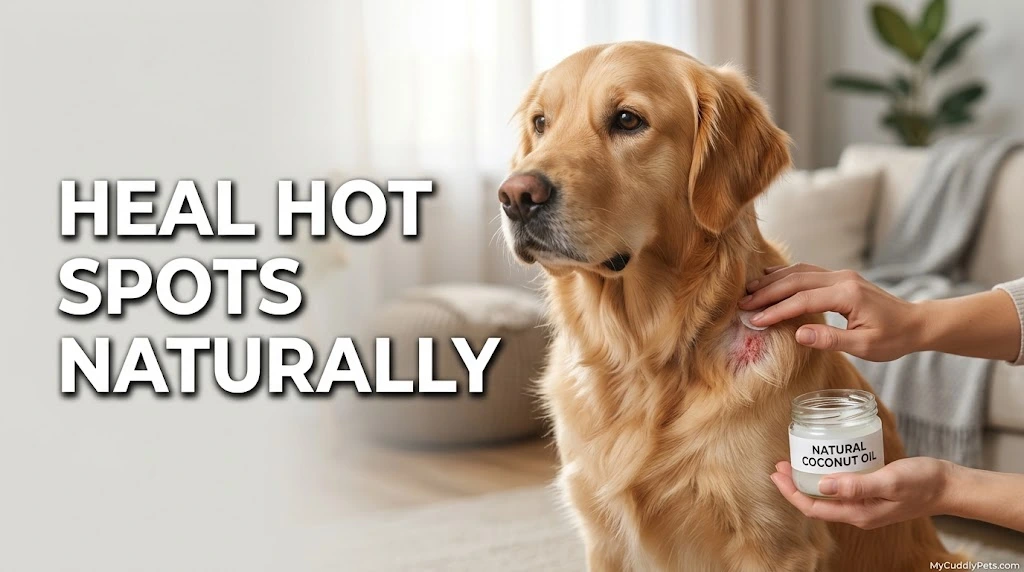
Dog hot spots coconut oil is a common search because coconut oil is sometimes promoted as a soothing home remedy. However, coconut oil should not be considered a proven treatment or cure for a hot spot. A hot spot is an irritated, often moist skin lesion that can worsen rapidly when a dog scratches, licks, or chews it. Because the underlying trigger may involve allergies, parasites, infection, ear disease, grooming problems, or another condition, veterinary guidance is often more useful than simply applying an oil.
Safety & Accuracy Note: This article provides general educational information for dog owners and does not diagnose skin disease or replace veterinary examination. Do not apply household remedies to an open, infected, painful, or rapidly worsening lesion without veterinary guidance. Dogs may lick topical products, which can create additional concerns.
Topic tags: dog hot spots, coconut oil for dogs, canine skin problems, acute moist dermatitis, dog itching, dog skin care, hot spot treatment
What Are Hot Spots on Dogs?
Hot spots, also called acute moist dermatitis or pyotraumatic dermatitis, are red, inflamed skin lesions that can appear quickly. They may look wet, raw, crusted, swollen, or irritated and can be extremely uncomfortable. Common locations include the head, neck, hips, and legs, although a hot spot can develop elsewhere.
The important point is that a hot spot is often the result of a cycle rather than a single isolated problem. Something first makes the skin itchy or uncomfortable. The dog then scratches, licks, or chews the area. That self-trauma damages the skin, and the damaged area becomes even more irritating. Continued licking and scratching can cause the lesion to enlarge surprisingly quickly.
The Hot-Spot Cycle
→
Scratching / licking
→
Skin damage
→
More irritation
Can Coconut Oil Help Dog Hot Spots?
The short answer is: coconut oil should not be relied on to treat a dog hot spot. Coconut oil is sometimes suggested because it can feel moisturizing and contains fatty acids with laboratory antimicrobial properties. However, that does not establish that applying coconut oil will treat the cause of a canine hot spot or resolve an infection.
Veterinary guidance is especially important because hot spots can involve secondary bacterial or yeast-related problems, parasites, allergies, ear disease, or another source of itching. Treatment needs to address the actual problem rather than simply making the skin feel less dry.
There is also a practical issue: a dog may immediately lick coconut oil from the affected area. Licking can continue the self-trauma that made the hot spot worse in the first place. Applying a greasy product may also be inappropriate for some irritated or moist lesions.
| Question | Practical answer |
|---|---|
| Is coconut oil a cure? | No. It should not be treated as a cure for hot spots. |
| Can it soothe some dry skin? | It may provide a moisturizing effect, but that is different from treating a hot spot. |
| Can every hot spot safely receive topical products? | No. Irritated, open, moist, painful, infected, or worsening lesions may need veterinary assessment first. |
| What if my dog keeps licking it? | Preventing access to the lesion is important because licking can perpetuate skin trauma. |
Common Signs of a Dog Hot Spot
A suspected hot spot may appear as a sharply irritated patch of skin. Owners may notice:
- Red or intensely inflamed skin
- Moist, wet, or oozing skin
- Crusting or discharge
- Hair loss or matted hair over the area
- Frequent licking, chewing, or scratching
- A noticeable odor
- Obvious discomfort when the area is touched
- A lesion that seems to enlarge quickly
These signs are not enough to determine the exact cause at home. Other skin conditions can look similar, which is one reason persistent or significant lesions deserve veterinary attention.
Why Do Hot Spots Get Worse So Quickly?
Dogs can create a self-reinforcing cycle by licking, biting, and scratching irritated skin. The physical trauma damages the skin barrier, while continued moisture and inflammation can make the area increasingly uncomfortable.
Potential triggers include flea or insect bites, allergies, ear infections, skin infections, poor grooming, matted fur, moisture after swimming, boredom-related licking, and other sources of irritation. A dog with an underlying allergy, for example, may continue scratching unless the allergy-related itch is also addressed.
Think Beyond the Skin Lesion
A hot spot may be the visible result of a deeper trigger.
- Fleas or insects: bites can trigger intense itching.
- Allergies: environmental or food-related allergies can contribute to itching.
- Ear problems: irritation around the ear can lead to scratching and nearby skin trauma.
- Infection: bacterial or yeast-related skin problems may contribute to inflammation.
- Moisture and grooming: wet or matted coats can keep irritated skin damp.
- Licking behavior: boredom, anxiety, pain, or another problem may encourage repetitive licking.
What Can You Safely Do While Waiting for Veterinary Advice?
If the area appears to be a genuine hot spot, focus on preventing further trauma rather than experimenting with multiple home remedies.
- Stop excessive licking and scratching. A properly fitted recovery cone or other veterinarian-approved barrier may help prevent access to the lesion.
- Keep the area from becoming more contaminated. Avoid letting your dog repeatedly rub the lesion against dirty surfaces.
- Do not aggressively scrub the skin. Painful lesions can be easily aggravated.
- Do not use scissors to cut away matted hair over a lesion. Damaged or inflamed skin can be difficult to distinguish from fur, creating a risk of accidental cuts.
- Contact your veterinarian when the lesion is significant, painful, open, spreading, recurrent, or worsening.
If your veterinarian has already examined the lesion and given you a specific cleaning or medication plan, follow those instructions rather than substituting coconut oil or another home remedy.
When Should a Veterinarian Treat a Dog Hot Spot?
Veterinary Attention Checklist
Raw or broken skin deserves careful assessment.
Marked discomfort may indicate a more significant problem.
A lesion that expands quickly should not be ignored.
These can occur with infection or significant inflammation.
Recurring lesions call for investigation of the underlying trigger.
Persistent irritation should be reassessed rather than treated indefinitely at home.
Veterinarians can examine the lesion and determine whether additional testing or treatment is appropriate. Depending on the cause and severity, treatment may involve clipping surrounding hair, carefully cleansing the area, controlling itching and inflammation, addressing parasites, or treating an underlying bacterial or yeast-related problem. In more serious cases, prescription medication may be necessary.
How Veterinarians May Treat Hot Spots
| Treatment approach | Why it may be used |
|---|---|
| Hair clipping around the lesion | Helps expose the skin and allows appropriate cleaning and treatment. |
| Veterinary-directed cleansing | Helps remove contamination and support appropriate skin care. |
| Anti-itch or anti-inflammatory treatment | May reduce the urge to scratch and interrupt self-trauma. |
| Treatment for infection | Used when a veterinarian identifies a bacterial or other secondary infection requiring treatment. |
| Parasite control | Important when fleas, mites, or other parasites are contributing to itching. |
| Treatment of the underlying condition | Reduces the chance of repeated self-trauma and recurring hot spots. |
Coconut Oil vs. Veterinary Hot Spot Treatment
It is useful to separate a home remedy from a treatment plan. Coconut oil may be discussed as a moisturizing topical ingredient, but a veterinary treatment plan is designed around the suspected cause, the condition of the skin, and the dog’s overall needs.
| Coconut oil | Veterinary-directed care |
|---|---|
| May provide a moisturizing or soothing feel on some skin. | Targets the specific skin problem and its likely cause. |
| Does not establish that an infection has been treated. | Can include appropriate medication when infection or inflammation requires it. |
| May be licked off by the dog. | Can include strategies such as an e-collar to limit self-trauma. |
| Not appropriate for every irritated or open lesion. | Can be adapted to the appearance, severity, and cause of the lesion. |
Common Mistakes Dog Owners Should Avoid
- Assuming every red patch is a hot spot. Several skin conditions can cause redness, itching, hair loss, crusting, or sores.
- Using multiple home remedies at once. More products can make it harder to determine what is irritating the skin.
- Applying coconut oil to an open lesion without guidance. A moist or damaged area may require a different approach.
- Ignoring persistent licking. Continued self-trauma can keep the lesion from improving.
- Cutting matted hair with scissors over irritated skin. This can result in accidental injury.
- Treating only the visible sore. Recurring hot spots may indicate an underlying problem that needs attention.
A Simple Decision Path for Dog Owners
1. Is the area red, moist, raw, painful, or rapidly changing?
If yes, avoid assuming that coconut oil is the answer.
2. Is your dog licking, chewing, or scratching it repeatedly?
Preventing further access to the area can be important while arranging appropriate care.
3. Is the lesion open, spreading, recurrent, very painful, smelly, or producing discharge?
Contact your veterinarian rather than relying on home treatment.
4. Has your veterinarian already provided a treatment plan?
Follow that plan instead of replacing prescribed care with coconut oil.
How to Help Prevent Future Hot Spots
Preventing another hot spot usually means addressing whatever causes the initial itching or skin irritation. Regular grooming can help prevent mats, while appropriate parasite prevention can reduce flea-related irritation. Dogs that frequently develop hot spots may also need evaluation for allergies, ear disease, skin infections, or behavioral causes of repetitive licking.
After swimming or bathing, keeping the coat appropriately clean and dry may also help reduce moisture-related problems. Long-haired and dense-coated dogs may need more consistent grooming, especially during warm or humid periods.
Internal Linking Suggestions for MyCuddlyPets
For topical SEO and topical-authority building, consider adding contextual internal links to relevant MyCuddlyPets articles using natural anchor text such as:
- Dog yeast infection on paws — useful when discussing licking, yeast-related skin problems, or paw irritation.
- Hyperkeratosis in dogs — useful for readers comparing different causes of abnormal or irritated skin.
- Dog ringworm — useful when explaining why not every red or hairless skin lesion is a hot spot.
- Dog skin allergies — useful when discussing recurrent itching and underlying triggers.
- Dog flea allergy dermatitis — useful when explaining parasite-related itching and self-trauma.
Use the actual published MyCuddlyPets URLs when these articles are live rather than creating placeholder links.
Frequently Asked Questions
Can I put coconut oil on my dog’s hot spot?
Coconut oil should not be treated as a standard cure for hot spots. Because hot spots can be open, moist, infected, or worsened by licking, ask your veterinarian before applying coconut oil or another topical product to an active lesion.
Does coconut oil cure hot spots in dogs?
No. There is not a basis for presenting coconut oil as a cure for canine hot spots. Treatment depends on the condition of the lesion and the underlying reason the dog is itching, scratching, or licking.
Why does my dog’s hot spot keep getting bigger?
Repeated scratching, licking, and chewing can cause additional skin trauma and create a cycle of worsening irritation. An underlying trigger such as allergies, fleas, infection, or another source of itching may also remain active.
What should I do if my dog keeps licking a hot spot?
Preventing access to the lesion is important because continued licking can perpetuate self-trauma. A veterinarian-approved recovery cone or similar barrier may help, while the underlying cause should be assessed when the lesion is significant or persistent.
When should I take my dog to the vet for a hot spot?
Seek veterinary advice when the lesion is open, painful, spreading, producing discharge or odor, repeatedly returning, or getting worse. Veterinary assessment is also appropriate when your dog is persistently scratching or licking an abnormal area of skin.
Can coconut oil make a hot spot worse?
It may not be appropriate for every lesion. A dog may lick an applied product, and continued licking can worsen self-trauma. For that reason, do not assume that coconut oil is suitable for an open, moist, painful, or infected-looking lesion without veterinary guidance.
How can I help prevent hot spots from coming back?
Work with your veterinarian to identify and manage the underlying trigger. Regular grooming, appropriate parasite prevention, keeping the coat clean and appropriately dry, and addressing allergies, ear problems, or repetitive licking can all be part of prevention.
Final Thoughts
When dog owners search for dog hot spots coconut oil, they are usually looking for a simple way to soothe an uncomfortable skin problem. Coconut oil may have moisturizing properties, but it should not be presented as a cure for hot spots or as a substitute for veterinary treatment.
The safest approach is to focus first on stopping the licking and scratching, avoiding potentially irritating home remedies, and recognizing when professional care is needed. Open, painful, spreading, recurring, or worsening lesions deserve veterinary attention because the visible hot spot may be only the result of an underlying problem.
