
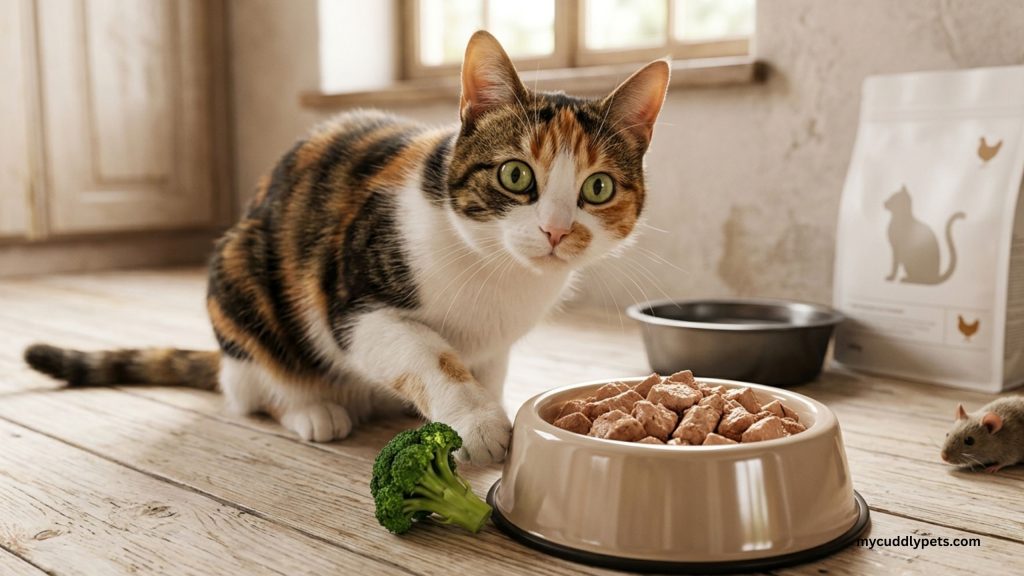
My cat, Luna, is a bit of a weirdo. If I drop a piece of broccoli on the floor, she rushes over like it’s a gourmet treat. She sniffs it, bats it around, and looks at me with wide eyes. But does she eat it? Nope. She walks away, waiting for her bowl of chicken pâté. It made me wonder: are cats omnivores, or is she just curious?
As cat owners, we want the best for our furry friends. We see dogs happily munching on carrots or rice, and it’s easy to assume cats are the same. But the biology of our feline companions tells a very different story.
In this guide, I’m going to break down exactly what your cat needs to eat. We’ll look at the science behind their “obligate carnivore” status, why meat is non-negotiable, and if there’s any room for veggies in their bowl. Let’s dive into the fascinating world of feline nutrition.
Are Cats Obligate Carnivores or Omnivores?
This is the big question. If you look at the animal kingdom, dietary habits fall into three main buckets: herbivores (plant eaters), carnivores (meat eaters), and omnivores (eaters of both).
So, where do our house cats fit?
The short answer is: cats are obligate carnivores.
This isn’t just a fancy label. “Obligate” means “by necessity.” Unlike an omnivore (like a human, a dog, or a bear), a cat must eat meat to survive. They aren’t just choosing steak over salad because it tastes better. Their bodies literally depend on nutrients found only in animal tissue.
The Difference Between a Cat Carnivore and a Dog Omnivore
It’s easy to get confused because dogs and cats are both predators. But dogs are scavengers. Over thousands of years of living alongside humans, dogs evolved to digest starch and plant matter. They are what we call “facultative carnivores” or functional omnivores. They prefer meat, but they can survive on a mix.
Cats never made that switch. Whether it’s a lion on the savannah or your tabby on the sofa, they are strict meat-eaters. If you try to feed a cat an omnivore diet, their health will crash. Their systems just aren’t built for it.
Evolutionary Background of Cat Diets
To really get why cats need meat, we have to look back in time. Your cute little kitten is a descendant of wild desert hunters.
Wild ancestors didn’t have kibble. They caught mice, birds, and lizards. This prey-based diet shaped their entire biology. Every part of a cat is designed to hunt, kill, and process meat.
Adaptations of a Hunter
Let’s look at the gear your cat is packing:
- Teeth: Have you ever looked at a cat’s teeth? They don’t have flat molars for grinding grains or leaves. They have sharp, jagged “carnassial” teeth. These are like scissors, made for slicing through muscle and bone.
- Gut Length: Plant matter is hard to digest. It takes a long time and a long digestive tract to break down cellulose. Cows have multiple stomachs; humans have long intestines. Cats? They have very short digestive tracts. This allows them to process raw meat quickly but makes digesting plants nearly impossible.
- Instincts: Even a well-fed house cat will stalk a toy mouse. That drive is hardwired. They are programmed to seek protein and fat, not carbs.
This evolutionary path created specific cat nutritional needs. They don’t just want meat; they are biological machines fueled by meat-based feline food.
Why Cats Can’t Eat Like Omnivores
You might think, “Well, protein is protein, right?” Not exactly.
Plants have protein, sure. Soy and beans are full of it. But plant protein lacks the specific amino acid profile that cats require.
The Taurine Factor
The biggest deal-breaker is Taurine. This is an amino acid essential for heart muscle function, vision, and reproduction.
- Humans and Dogs: We can make our own Taurine in our bodies from other amino acids. We are biochemical wizards.
- Cats: They cannot make enough Taurine on their own. They must get it from their diet.
And guess where Taurine is found? Only in animal protein. There is no natural plant source of Taurine. If a cat doesn’t eat meat, they run out of Taurine. This leads to blindness and heart failure. This is the main reason why cats can’t eat vegetables like omnivores.
Vitamin A and Arachidonic Acid
The list goes on. Cats can’t convert beta-carotene (found in carrots) into Vitamin A. They need pre-formed Vitamin A, found in liver and fish oils.
They also need Arachidonic acid, a fatty acid. Dogs can make this from vegetable oils. Cats? Nope. They need to get it directly from animal fat.
Asking if cats survive on an omnivore diet is risky. Without supplements, a plant-only diet is a slow death sentence for a cat. Their bodies just don’t have the tools to unlock nutrients from plants.
Risks of Feeding Cats Plant-Based Diets
I get it. Many of us are trying to eat less meat for the planet or for animal welfare. It’s a noble goal. But projecting that lifestyle onto a cat is dangerous.
Here is what happens when we ignore their animal dietary categories:

Nutritional Deficiencies
We talked about Taurine, but protein deficiency is also a risk. Cats need a high protein intake just to maintain their blood sugar. If they don’t get enough, their body will start breaking down its own muscle tissue for fuel.
Eye and Heart Problems
A lack of Taurine causes a condition called Dilated Cardiomyopathy (DCM). This is where the heart muscle becomes thin and weak. It can be fatal. Retinal degeneration is another side effect that can lead to irreversible blindness.
Urinary Tract Issues
Cats have a low thirst drive. In the wild, they get water from their prey. Plant-based diets (especially dry ones) often mess with the pH balance of their urine. This can lead to painful crystals or stones forming in the bladder.
If you love your cat, respect their biology. An omnivore-style diet isn’t kind; it’s malnutrition.
How to Feed Cats Safely
So, we know meat is the star of the show. But how do you make sure you are doing it right?
There are a few ways to handle meat-based feline food:
Commercial Cat Food
This is the easiest route. High-quality wet food or kibble is formulated to meet all those tricky nutritional needs.
- Look for an AAFCO statement on the label. This ensures the food is complete and balanced.
- Read the ingredients. The first item should be a named meat (like “Chicken” or “Salmon,” not “Meat by-product”).
Raw or Homemade Diets
Some people swear by raw feeding. It mimics what they would eat in the wild.
- Warning: This is hard to get right. You can’t just throw a chicken breast in a bowl. They need bone, organ meat, and supplements to balance calcium and phosphorus.
- Bacteria Risk: Raw meat carries Salmonella and E. coli. Safe handling is key.
- Talk to a Vet: Never start a homemade diet without a recipe from a veterinary nutritionist.
Can Cats Have “Some” Plants?
Okay, back to Luna and her broccoli. Can she eat it?
Yes, in tiny amounts.
While cats are obligate carnivores, small amounts of safe veggies won’t hurt them.
- Safe snacks: Steamed pumpkin (great for fiber), peas, or green beans.
- Why bother? Fiber helps with digestion and hairballs. But it should be a treat, not a meal.
My Experience with Diet Change
A few years ago, Luna’s coat looked dull. She was eating a cheap kibble that had a lot of corn filler. I switched her to a high-protein wet food.
The change was wild. Within weeks, her fur was shiny. She had more energy to chase her toys. It really hit home for me: food is fuel. When you give them the right fuel, they thrive.
FAQs
Are cats omnivores or obligate carnivores?
Cats are obligate carnivores. This means they biologically require nutrients found only in animal tissue to survive.
Can cats survive on a vegetarian or omnivore diet?
No, not naturally. A strict vegetarian diet lacks essential nutrients like Taurine, Vitamin A, and Arachidonic acid. Without careful synthetic supplementation, a cat will become very sick, go blind, or suffer heart failure.
Why do cats need meat for taurine and other nutrients?
Unlike humans and dogs, cats cannot manufacture Taurine in their own bodies. It must be consumed. Since Taurine is only found in meat, meat is essential.
Can cats eat small amounts of vegetables?
Yes, small amounts of safe vegetables (like pumpkin or peas) are fine. They can provide fiber. However, vegetables should never replace meat in a diet.
Is it safe to feed cats plant-based commercial foods?
Generally, vets advise against it. While some “vegan cat foods” exist with synthetic supplements, they are risky. It is very difficult to match the bioavailability of nutrients found in meat.
How do cat nutritional needs differ from those of dogs?
Dogs are facultative carnivores (or functional omnivores) and can adapt to lower protein diets with more plant matter. Cats have higher protein requirements and cannot process plant-based nutrients effectively.
Final Thoughts
At the end of the day, nature knows best. We might want our pets to be like us, but cats are obligate carnivores. It is written in their DNA.
Feeding them a meat-rich, balanced diet is the best way to say “I love you.” It keeps their eyes bright, their hearts strong, and their coats soft.
If you are ever unsure about what to feed your feline friend, don’t guess. Consult a vet. They can help you pick the perfect food for your cat’s age and health.
Your cat gives you purrs and head-butts. Give them the nutrition they need in return.