
If you’ve ever woken up to the sound of your cat retching at 3 AM, you know the struggle is real. Finding the best cat food for sensitive stomach issues on Amazon can feel like searching for a needle in a haystack. But don’t worry—I’ve been there with my own finicky felines, and I’m here to help you navigate the options so your kitty can get back to happy purrs and healthy digestion.
Understanding Sensitive Stomachs in Cats
Cats are famous for their iron wills, but their stomachs? Not so much. Just like us, our feline friends can suffer from digestive upset that turns mealtime into a stressful event.
Common causes of sensitive stomachs
It’s not always just “bad food.” Sometimes, a sensitive stomach is a sign of a food intolerance or allergy to a specific protein, like chicken or beef. Other times, it might be hairballs irritating the gut lining. In my experience, even stress—like a new pet or moving house—can throw a sensitive kitty’s digestion off balance.
Symptoms to watch out for
You know your cat best. Watch for the classic signs: chronic vomiting (more than just the occasional hairball), diarrhea, or soft stools. You might also notice them losing weight or having a dull, messy coat because they don’t feel well enough to groom. If your cat is lethargic or refuses to eat, that’s a red flag to call your vet immediately.
The role of diet in managing the condition
Food is medicine. The right diet can be a game-changer. Veterinary nutritionists often recommend highly digestible ingredients, prebiotic fibers, and sometimes novel proteins to calm the gut. Switching to a formula designed for sensitive digestion can soothe inflammation and help your cat absorb the nutrients they need to thrive.
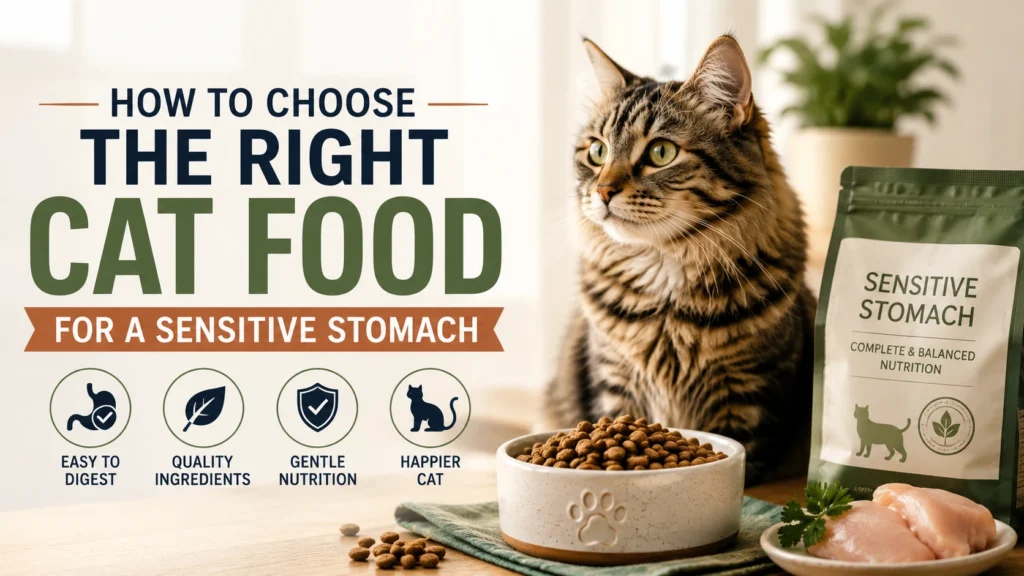
How to Choose the Right Cat Food for a Sensitive Stomach

Choosing cat food for a sensitive stomach is about more than picking a bag labeled “sensitive.” The ingredients, protein source, food type, and your cat’s individual reaction all matter. A good starting point is a formula that is easy to digest and provides balanced nutrition without unnecessary ingredients that may upset your cat.
What Ingredients Should You Look For?
Look for formulas built around highly digestible protein sources and ingredients that are gentle on the digestive system. Prebiotic fibers can also help support healthy gut bacteria, while some cats may benefit from a limited-ingredient or novel-protein formula when a specific food sensitivity is suspected.
The most important thing is to focus on how your individual cat responds rather than assuming one ingredient is automatically “bad” for every cat.
Limited Ingredient vs. Sensitive Stomach Food
These two types of food are related, but they are not exactly the same.
A sensitive-stomach formula is generally designed to be easier to digest and support normal digestive function. A limited-ingredient diet (LID) uses a simpler ingredient list and may be useful when you are trying to identify a potential food trigger.
If your cat has recurring digestive problems or you suspect a true food allergy, changing foods repeatedly on your own may not be the best approach. A veterinarian can help determine whether a structured elimination diet or another diet is more appropriate.
Wet Food or Dry Food: Which Is Better?
There is no single answer for every sensitive-stomach cat.
Wet food provides more moisture and can be a useful option for cats that do not drink much water. Dry food is convenient, easy to portion, and some cats tolerate it very well. Some owners also use a combination of wet and dry food.
Rather than choosing based only on the format, pay attention to digestibility, nutritional balance, ingredient suitability, and how your cat responds after eating.
What Foods Should You Avoid?
If your cat has digestive issues, avoid constantly changing foods or adding lots of different treats while you are trying to determine what is causing the problem. Multiple new foods at once can make it difficult to identify a trigger.
Be especially careful with treats and extras. Even when the main diet is carefully selected, additional foods can complicate a food trial or contribute to digestive upset.
Food Allergy vs. Food Intolerance
Food allergies and food intolerances are not necessarily the same thing. A suspected food allergy may involve a reaction to a particular ingredient or protein, while digestive intolerance can present mainly as gastrointestinal upset.
Common signs that deserve attention include repeated vomiting, diarrhea, soft stools, appetite changes, or weight loss. Persistent symptoms should not automatically be blamed on food alone because gastrointestinal problems can have other causes.
Do Probiotics and Prebiotics Help?
Prebiotics provide fuel for beneficial bacteria in the gut, while probiotics contain live microorganisms intended to support the digestive microbiome. Some cat foods include prebiotic fibers specifically to support digestive health.
However, more is not always better. A food with a sensible, balanced formula is usually a better starting point than choosing a product simply because it advertises probiotics or digestive supplements.
A Simple Way to Choose
When comparing sensitive-stomach cat foods, consider these five things:
1. Digestibility: Is the formula designed to be easy to digest?
2. Protein source: Does your cat tolerate the primary protein well?
3. Ingredient profile: Does the formula fit your cat’s individual needs?
4. Food type: Does your cat do better with wet food, dry food, or a combination?
5. Your cat’s response: Are vomiting, loose stools, appetite issues, or other digestive symptoms improving?
The right food is ultimately the one that provides complete nutrition while being well tolerated by your individual cat. If digestive symptoms continue, become severe, or are accompanied by weight loss or refusal to eat, speak with your veterinarian rather than relying on food changes alone.
Top Cat Food Brands for Sensitive Stomachs
I’ve spent hours scouring labels and reading reviews so you don’t have to. Here are three top contenders available on Amazon that often come highly recommended by vets and pet parents alike.
Royal Canin Sensitive Digestion
Royal Canin is a heavyweight in the pet food world for a reason. Their Feline Care Nutrition Sensitive Digestion Dry Cat Food is specifically formulated for adult cats with digestive tract sensitivities.
Key ingredients and benefits
This formula focuses on “L.I.P.” proteins, which stands for Low Indigestible Proteins. Basically, they are extremely easy for your cat’s body to break down and absorb (Royal Canin claims 99% digestibility for wheat gluten). It also includes prebiotics (FOS) to support a balanced intestinal flora, which is crucial for good poop quality.
Pros and cons
- Pros: High energy density means smaller meal sizes (less work for the tummy), unique kibble shapes appeal to picky eaters, and it has a high 4.7-star rating from pet owners.
- Cons: It contains by-product meals and grains like corn and wheat, which some owners prefer to avoid, though these are often safe for non-allergic cats. It is also on the pricier side.
Hill’s Science Diet Sensitive Stomach & Skin
This is a staple in many vet clinics. Hill’s Science Diet Adult Sensitive Stomach & Skin Chicken & Rice Recipe is a dual-action food, targeting both gut health and coat quality.
Key ingredients and benefits
The star here is the prebiotic fiber (FOS) derived from beet pulp, which fuels good gut bacteria. It’s fortified with Vitamin E and Omega-6 fatty acids to help nourish the skin. The main protein is chicken, paired with brewers rice and egg product for easy digestion.
Pros and cons
- Pros: Veterinarian-Recommended brand in the U.S., clinically proven antioxidants, and specifically avoids artificial colours and preservatives. It’s widely available on Amazon.
- Cons: Like Royal Canin, it uses grains (corn, corn gluten meal), which might not suit every cat. Some recent reviews mention a change in kibble size that threw off some picky eaters.
Blue Buffalo Tastefuls Sensitive Stomach
Formerly known as the “Healthy Living” line, the Blue Buffalo Tastefuls Sensitive Stomach Chicken & Brown Rice Recipe is a popular natural option.
Key ingredients and benefits
Blue Buffalo prides itself on real meat as the first ingredient—in this case, deboned chicken. It features their exclusive “LifeSource Bits,” which are cold-formed nuggets rich in antioxidants, vitamins, and minerals. It also includes FOS prebiotics to support digestive health.
Pros and cons
- Pros: No chicken (or poultry) by-product meals, no corn, wheat, or soy, and no artificial flavors. It’s a great choice if you are trying to avoid common fillers.
- Cons: It is not a prescription diet, so it may not be strong enough for severe medical cases. The “LifeSource Bits” are sometimes left behind by picky cats who eat around them.
Comparison Table
Here is a quick snapshot to help you decide which bag to add to your cart.
|
Feature |
Royal Canin Sensitive Digestion |
Hill’s Science Diet Sensitive Stomach |
Blue Buffalo Tastefuls Sensitive Stomach |
|---|---|---|---|
|
Main Protein |
Chicken By-Product Meal |
Chicken |
Deboned Chicken |
|
Grain Status |
Grain-Inclusive (Corn, Wheat) |
Grain-Inclusive (Rice, Corn) |
Grain-Inclusive (Brown Rice, Oatmeal) |
|
Key Benefit |
L.I.P. Proteins (99% digestible) |
Prebiotic Fiber + Skin/Coat Health |
No Corn/Wheat/Soy + LifeSource Bits |
|
Amazon Rating |
4.7 / 5 (Check Here) |
4.2 / 5 (Check Here) |
4.7 / 5 (Check Here) |
|
Best For |
Picky eaters need small meals |
Cats with dull coats & tummy issues |
Owners seeking natural ingredients |
Reader Experiences
Data is great, but real stories matter more. Here is what actual pet parents are saying about these foods.
A Total Turnaround
One user, Jasper kitty mom, shared that her cat was struggling with Science Diet due to boredom, but thrived after switching to Royal Canin. She noted, “I slowly transitioned him over… he is doing well, and he likes the taste.”
Finally, No Vomit!
For Hill’s Science Diet, a reviewer named Trixie said, “My 3 yo female cat kept vomiting & losing weight… We put her on Hill’s Sensitive & she’s eating like a champ & gaining weight! No vomiting!”
Happy Tummies
A Blue Buffalo user, Willowsmama, raved: “My cat absolutely loves this food. She has a sensitive tummy… this formula has never bothered her. It took her a little while to warm up to it, but now she gobbles it down.”
Vet Recommendations
I always tell my friends: Dr Google is not a substitute for your actual vet. Veterinarians generally agree that chronic vomiting is not normal. According to experts at VCA Hospitals, if your cat vomits more than once a month, it’s time for a check-up. They often suggest a “bland diet” or a specialised sensitive-stomach formula as a first-line defence.
Dr. Sarah Wilson from the Canadian Academy of Veterinary Nutrition notes that for true allergies, an elimination diet is the gold standard. This might mean using a prescription hydrolyzed protein food (where proteins are broken down so small the body doesn’t recognize them) for at least 8 weeks. If you suspect a serious allergy, store-bought “sensitive” foods might not cut it—ask your vet about prescription options.
Transitioning to a New Food
You bought the bag—now what? Don’t just dump it in the bowl!
Go Slow:
Cats hate change. VCA Hospitals recommends a gradual transition over 7 to 14 days.
- Days 1-2: 90% old food, 10% new food.
- Days 3-4: 75% old food, 25% new food.
- Days 5-7: 50% / 50% mix.
- Days 8-10: 25% old food, 75% new food.
- Day 14: 100% new food.
Watch for Reaction:
If you see loose stools, vomiting, or refusal to eat during this time, slow down. Go back to the previous mix where they were stable and wait a few more days before increasing the new food again.
Other Considerations
Food is huge, but it’s part of a bigger picture.
The importance of fresh water
Digestion needs hydration. Cats with sensitive stomachs often lose water through diarrhea or vomiting. Ensure they have access to fresh, cool water at all times. Some cats prefer running water, so a fountain might encourage them to drink more.
Avoiding potential allergens and irritants
Keep an eye on treats! You might be feeding a perfect hypoallergenic dinner, but if you give them a cheap, colored treat with lunch, you could trigger a flare-up. Stick to single-ingredient freeze-dried treats during your food trial.
Consulting with a veterinarian
If you switch foods and don’t see improvement after 2-4 weeks, or if symptoms get worse, please go back to the vet. It could be something more serious like IBD (Inflammatory Bowel Disease) or a parasite that food alone can’t fix.
FAQs
What is the most common food allergy in cats?
Surprisingly, it’s usually the protein! Beef, fish, and chicken are the most common allergens. Grains are actually much less common triggers for cats than marketing would have you believe.
Can wet food help with sensitive stomachs?
Yes! Wet food has a higher moisture content, which is easier to digest and helps keep the kidneys healthy. Many brands, including the ones mentioned above, offer wet versions of their sensitive stomach formulas.
How long does it take for a cat’s stomach to settle on new food?
It usually takes about 2 to 4 weeks to see the full benefits of a new diet for digestive issues, though you should see the vomiting or diarrhea stop sooner. For skin issues, it can take up to 12 weeks.
Conclusion
Finding the best cat food for sensitive stomach issues doesn’t have to be a nightmare. Whether you choose the science-backed digestibility of Royal Canin, the skin-and-stomach support of Hill’s, or the natural ingredient list of Blue Buffalo, you are taking a huge step toward your cat’s comfort.
Remember, every cat is unique. What works for my tabby might not work for your Siamese. Be patient, transition slowly, and keep your vet in the loop. Here’s to quiet nights and clean litter boxes!