
Website: mycuddlypets.com | Author: Michael Hayes | Category: Nutrition/Feeding
PART 1: LSI KEYWORDS
Core Topic Keywords
beef dog food, beef flavored dog food, best beef dog food, dog food with beef, beef-based dog food, beef recipe dog food, beef dog food for adult dogs
Informational Intent Keywords
is beef good for dogs, why do dogs like beef dog food, what is beef dog food made of, how much beef dog food should I feed my dog, can dogs eat beef dog food every day, should I switch my dog to beef dog food, is beef dog food better than chicken, guide to feeding beef dog food
Problem-Based Keywords
dog allergic to beef dog food, dog won’t eat beef dog food, beef dog food upset stomach, too much protein in beef dog food, beef dog food causing diarrhea, picky eater and beef dog food, signs beef doesn’t agree with your dog
Technical / Detail Keywords
beef dog food protein percentage, beef dog food calorie content, beef dog food ingredient list, life-stage beef dog food requirements, beef vs chicken dog food nutrients, grain-free beef dog food, AAFCO beef dog food standards
Use Case Keywords
beef dog food for puppies, beef dog food for senior dogs, beef dog food for large breed dogs, beef dog food for sensitive stomachs, daily feeding routine with beef dog food, beef dog food for multi-dog households, beef dog food while traveling
Beginner + Advanced Variations
beef dog food basics for new owners, advanced guide to beef protein sources, beef vs chicken dog food comparison, is beef dog food necessary, how often should I feed beef dog food
Question-Based Keywords
how is beef dog food made, why is beef used in dog food, what nutrients does beef dog food provide, when should I introduce beef dog food, does beef dog food cause allergies, can puppies eat beef dog food, should senior dogs eat beef dog food
PART 2: SEO OUTLINE
H1: Beef Dog Foods: A Complete Feeding Guide for Every Life Stage
- Quick Answer (Featured Snippet Target)
- H2: What Is Beef Dog Food, Exactly? (Basic Explanation)
- H2: Why Beef Is a Popular Protein Choice for Dogs (Why It Matters)
- H2: What’s Actually Inside Beef Dog Food (How It Works — nutrients, protein %, calories)
- H2: How to Switch Your Dog to Beef Dog Food Step by Step
- H3: Days 1–3, 4–6, 7–10 transition schedule
- H2: Common Problems With Beef Dog Food and How to Fix Them
- H3: Beef Allergies vs. Normal Adjustment (table)
- H3: Picky Eaters and Beef Dog Food
- H3: Upset Stomach After Switching
- H2: Common Mistakes Owners Make With Beef Dog Food
- H2: Beef vs. Chicken Dog Food: What’s the Difference? (comparison table)
- H2: Pro Tips for Feeding Beef Dog Food
- H2: Frequently Asked Questions
- H2: Conclusion
Tables used: (1) Beef allergy signs vs. normal adjustment signs, (2) Beef vs. chicken dog food comparison
PART 3: FULL HTML ARTICLE (WordPress-Ready)
<h1>Beef Dog Foods: A Complete Feeding Guide for Every Life Stage</h1>

<p><strong>Quick Answer:</strong> Beef dog food is a protein-rich diet made primarily from beef meat, meal, or by-products, offering high protein, iron, and B vitamins. It suits most healthy adult dogs but should be introduced gradually, since beef is also a common allergen for sensitive dogs.</p>

<p>Beef is one of the most popular proteins on pet store shelves. Dogs love the smell. Dogs love the taste. But is it actually good for them? I'm Michael Hayes, and I've spent years helping dog owners figure out feeding routines that actually work in real life, not just on paper. Beef dog food sounds simple. It isn't always. Let's break down what it really offers, where owners go wrong, and how to feed it the right way.</p>

<h2>What Is Beef Dog Food, Exactly?</h2>
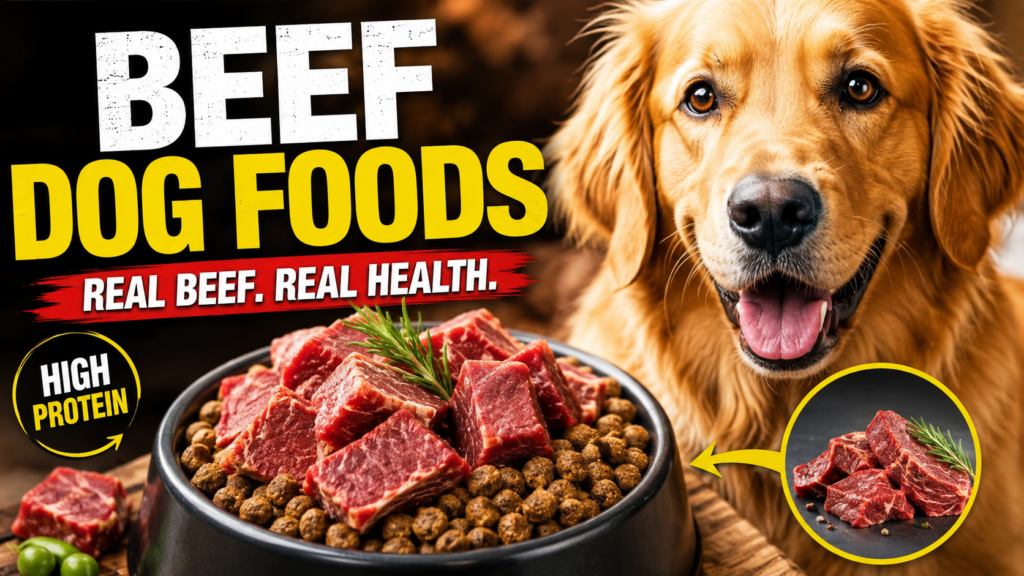
<p>Beef dog food is any commercial dog food formulated with beef as a primary ingredient. This can come as fresh beef, beef meal, or dehydrated beef protein. It's available in dry kibble, wet food, and freeze-dried formats.</p>
<p>Not all "beef dog food" is created equal. Some recipes list beef as the first ingredient. Others use it as flavoring on top of a different base protein. Reading the ingredient panel matters more than the front-of-bag marketing.</p>

<h2>Why Beef Is a Popular Protein Choice for Dogs</h2>
<p>Beef offers a strong amino acid profile, which supports muscle maintenance and repair. It's also naturally rich in iron, zinc, and B vitamins like B12, which support energy metabolism and healthy blood cells.</p>
<p>Most dogs also find beef highly palatable. If you've ever watched a picky eater suddenly clean their bowl after a beef switch, this is why. That strong smell and rich flavor tend to work well on dogs that turn their nose up at leaner proteins.</p>

<h2>What's Actually Inside Beef Dog Food</h2>
<p>A quality beef dog food should list a named beef source (like "beef" or "beef meal") within the first two or three ingredients. Look for:</p>
<ul>
  <li>Protein content typically between 22–32% for dry food</li>
  <li>Named fat sources for energy and coat health</li>
  <li>Added vitamins and minerals to meet complete nutrition standards</li>
  <li>Life-stage labeling — puppy, adult, senior, or all life stages</li>
</ul>
<p>Reputable brands formulate to meet <a href="https://www.aafco.org/" target="_blank" rel="noopener">AAFCO nutrient profiles</a>, which set minimum standards for complete and balanced dog food.</p>

<h2>How to Switch Your Dog to Beef Dog Food Step by Step</h2>
<p>Sudden food changes are one of the most common causes of stomach upset in dogs. A slow transition protects their digestive system.</p>
<ul>
  <li><strong>Days 1–3:</strong> Mix 25% new beef food with 75% old food.</li>
  <li><strong>Days 4–6:</strong> Move to a 50/50 mix.</li>
  <li><strong>Days 7–9:</strong> Shift to 75% new food, 25% old food.</li>
  <li><strong>Day 10:</strong> Feed 100% beef dog food, watching stool and energy for a few more days.</li>
</ul>

<h2>Common Problems With Beef Dog Food and How to Fix Them</h2>

<h3>Beef Allergies vs. Normal Adjustment</h3>
<table>
  <tr><th>Sign</th><th>Likely Adjustment Period</th><th>Possible Beef Allergy</th></tr>
  <tr><td>Loose stool</td><td>Resolves within 5–7 days</td><td>Persists past 2 weeks</td></tr>
  <tr><td>Itchy skin</td><td>Not typically related</td><td>Ongoing itching, especially paws and ears</td></tr>
  <tr><td>Gas</td><td>Mild, temporary</td><td>Frequent, paired with digestive upset</td></tr>
  <tr><td>Ear infections</td><td>Not typically related</td><td>Recurring infections</td></tr>
</table>
<p>If symptoms continue beyond two weeks, this is a good time to talk to your veterinarian about a possible protein sensitivity.</p>

<h3>Picky Eaters and Beef Dog Food</h3>
<p>Some dogs get bored of beef quickly, especially if it's fed as the only protein for long stretches. Rotating between two or three quality proteins can help maintain interest without upsetting their stomach, as long as transitions stay slow.</p>

<h3>Upset Stomach After Switching</h3>
<p>This is usually tied to switching too fast, not the beef itself. If you followed a gradual transition and still see ongoing issues, it may point to a sensitivity rather than a normal adjustment.</p>

<h2>Common Mistakes Owners Make With Beef Dog Food</h2>
<ul>
  <li>Switching foods overnight instead of gradually</li>
  <li>Assuming "beef flavor" means beef is the main ingredient</li>
  <li>Ignoring life-stage labeling (feeding puppy food to a senior dog, or vice versa)</li>
  <li>Not monitoring weight after switching to a higher-calorie beef formula</li>
  <li>Dismissing ongoing itching or ear infections as "just allergies" without vet input</li>
</ul>

<h2>Beef vs. Chicken Dog Food: What's the Difference?</h2>
<table>
  <tr><th>Factor</th><th>Beef Dog Food</th><th>Chicken Dog Food</th></tr>
  <tr><td>Allergy Risk</td><td>Common allergen</td><td>Common allergen</td></tr>
  <tr><td>Fat Content</td><td>Generally higher</td><td>Generally leaner</td></tr>
  <tr><td>Palatability</td><td>Very high, strong smell</td><td>High, milder smell</td></tr>
  <tr><td>Iron Content</td><td>Higher</td><td>Lower</td></tr>
  <tr><td>Best For</td><td>Active dogs, picky eaters</td><td>Dogs needing leaner protein</td></tr>
</table>
<p>Neither protein is universally "better." The right choice depends on your dog's activity level, weight goals, and any known sensitivities.</p>

<h2>Pro Tips for Feeding Beef Dog Food</h2>
<ul>
  <li>Always check the guaranteed analysis panel, not just the marketing claims on the bag</li>
  <li>Match calorie content to your dog's activity level to avoid weight gain</li>
  <li>Store beef-based wet food properly — refrigerate opened cans and use within a few days</li>
  <li>Reintroduce beef slowly if your dog has been off it for a long time</li>
  <li>Keep feeding portions consistent with your dog's current life stage and weight</li>
</ul>
<p>For general nutrition guidance, resources like <a href="https://www.petmd.com/" target="_blank" rel="noopener">PetMD</a> and <a href="https://www.akc.org/" target="_blank" rel="noopener">the American Kennel Club</a> offer helpful, vet-reviewed background information.</p>

<h2>Frequently Asked Questions</h2>

<h3>Is beef good for dogs?</h3>
<p>Yes, for most healthy dogs. Beef offers high-quality protein, iron, and B vitamins, though some dogs are sensitive to it.</p>

<h3>Can puppies eat beef dog food?</h3>
<p>Yes, as long as it's labeled for puppy or all-life-stage nutrition, since puppies have different calorie and nutrient needs than adult dogs.</p>

<h3>How much beef dog food should I feed my dog?</h3>
<p>Feeding amounts depend on your dog's weight, age, and activity level. Follow the feeding chart on the packaging as a starting point, then adjust based on body condition.</p>

<h3>Why does my dog get an upset stomach on beef dog food?</h3>
<p>This is usually caused by switching foods too quickly rather than the beef itself. A gradual transition over 7–10 days can prevent most digestive issues.</p>

<h3>Is beef dog food better than chicken dog food?</h3>
<p>Neither is objectively better. Beef tends to be richer and higher in iron, while chicken is often leaner. The right choice depends on your dog's individual needs.</p>

<h3>How do I know if my dog is allergic to beef?</h3>
<p>Watch for ongoing itching, ear infections, or digestive upset that doesn't resolve after the adjustment period. A veterinarian can help confirm a true food allergy.</p>

<h3>Can senior dogs eat beef dog food?</h3>
<p>Yes, as long as it's appropriate for their calorie needs and any health conditions. Senior dogs often benefit from formulas with controlled fat content.</p>

<h2>Conclusion</h2>
<p>Beef dog food can be a great fit for many dogs, offering strong protein content and a flavor most dogs genuinely enjoy. The key is reading labels carefully, transitioning slowly, and watching how your individual dog responds. If anything seems off beyond the normal adjustment window, a quick check-in with your vet is always the safest next step.</p>
PART 4: FAQ JSON-LD SCHEMA
<script type="application/ld+json">
{
  "@context": "https://schema.org",
  "@type": "FAQPage",
  "mainEntity": [
    {
      "@type": "Question",
      "name": "Is beef good for dogs?",
      "acceptedAnswer": {
        "@type": "Answer",
        "text": "Yes, for most healthy dogs. Beef offers high-quality protein, iron, and B vitamins, though some dogs are sensitive to it."
      }
    },
    {
      "@type": "Question",
      "name": "Can puppies eat beef dog food?",
      "acceptedAnswer": {
        "@type": "Answer",
        "text": "Yes, as long as it's labeled for puppy or all-life-stage nutrition, since puppies have different calorie and nutrient needs than adult dogs."
      }
    },
    {
      "@type": "Question",
      "name": "How much beef dog food should I feed my dog?",
      "acceptedAnswer": {
        "@type": "Answer",
        "text": "Feeding amounts depend on your dog's weight, age, and activity level. Follow the feeding chart on the packaging as a starting point, then adjust based on body condition."
      }
    },
    {
      "@type": "Question",
      "name": "Why does my dog get an upset stomach on beef dog food?",
      "acceptedAnswer": {
        "@type": "Answer",
        "text": "This is usually caused by switching foods too quickly rather than the beef itself. A gradual transition over 7-10 days can prevent most digestive issues."
      }
    },
    {
      "@type": "Question",
      "name": "Is beef dog food better than chicken dog food?",
      "acceptedAnswer": {
        "@type": "Answer",
        "text": "Neither is objectively better. Beef tends to be richer and higher in iron, while chicken is often leaner. The right choice depends on your dog's individual needs."
      }
    },
    {
      "@type": "Question",
      "name": "How do I know if my dog is allergic to beef?",
      "acceptedAnswer": {
        "@type": "Answer",
        "text": "Watch for ongoing itching, ear infections, or digestive upset that doesn't resolve after the adjustment period. A veterinarian can help confirm a true food allergy."
      }
    },
    {
      "@type": "Question",
      "name": "Can senior dogs eat beef dog food?",
      "acceptedAnswer": {
        "@type": "Answer",
        "text": "Yes, as long as it's appropriate for their calorie needs and any health conditions. Senior dogs often benefit from formulas with controlled fat content."
      }
    }
  ]
}
</script>
PART 5: TITLES, META DESCRIPTIONS & IMAGE PROMPTS
Titles
- Title 1: Beef Dog Foods: The Honest Guide to Benefits, Risks & Feeding
- Title 2: Beef Dog Foods: Real Signs Your Dog’s Protein Isn’t Working
- Title 3: Beef Dog Foods: A Simple, Complete Feeding Guide for Owners
Meta Descriptions
- Meta 1: Is beef dog food right for your pup? See the real benefits, common mistakes, and how to switch safely without stomach issues.
- Meta 2: Struggling with picky eating or tummy trouble? Beef dog foods can help — here’s how to choose and feed it the right way.
Feature Image Prompt (16:9)
A happy golden retriever eating beef-based kibble from a stainless steel bowl in a warm, sunlit kitchen, owner’s hand visible pouring food in the background, ultra realistic, 4k, sharp focus, shallow depth of field, soft natural morning light, warm color tones, candid moment, no text, no logo.
Content Image Prompts (16:9)
Image 1: A close-up of a dog owner reading the ingredient label on a bag of beef dog food in a bright pet store aisle, natural light, soft shadows, candid moment, realistic pet-photography style, no text, no logo.
Image 2: A senior Labrador calmly eating from a ceramic bowl in a cozy living room, soft afternoon light streaming through a window, home environment, warm and gentle mood, ultra realistic, shallow depth of field, no text, no logo.
