
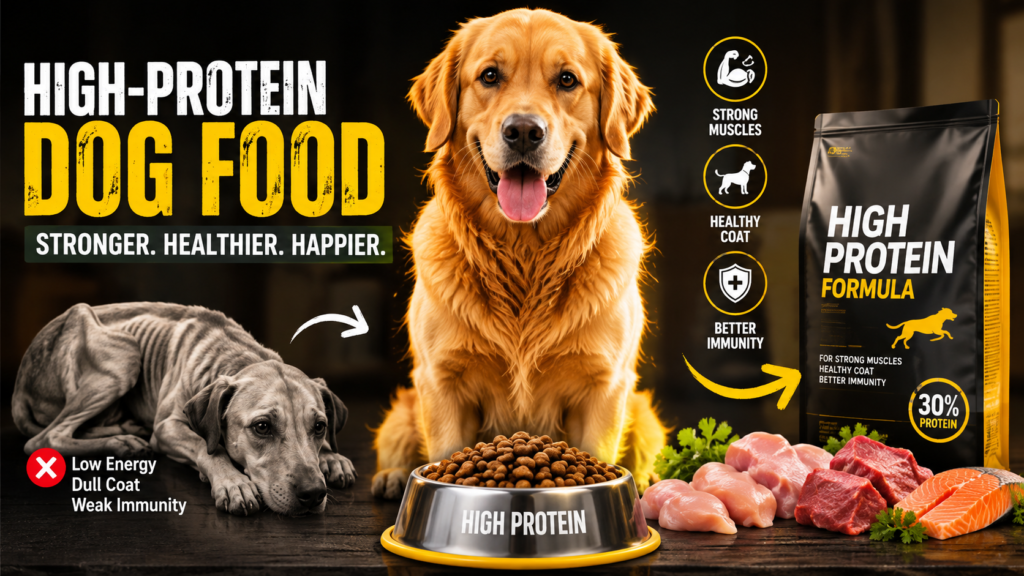
Quick Answer: High-protein dog food typically contains 25% or more protein on a dry matter basis, supporting muscle, energy, and coat health. It’s ideal for active, working, or muscle-building dogs, but portion size and protein source quality matter more than the number on the bag.
New to high-protein diets? You’re not alone. A lot of owners see “high-protein” on a bag and assume more is automatically better. It isn’t always that simple. I’m Michael Hayes, and I’ve spent years helping dogs transition onto higher-protein diets — some thrived, some didn’t need the extra protein at all. Let’s break down exactly what high-protein dog food means, who benefits from it, and how to avoid common feeding mistakes.
What Does High-Protein Dog Food Mean?
High-protein dog food generally refers to formulas with a protein content of 25% or higher on a dry matter basis, compared to standard adult formulas that usually sit between 18–25%. The protein can come from muscle meat, organ meat, fish, eggs, or in some cases, plant-based sources like legumes.
Not all high-protein labels are equal. The source and digestibility of the protein matter just as much as the percentage listed on the guaranteed analysis panel.
Why It Matters
Protein isn’t just about muscle. It supports:
- Lean muscle maintenance and repair
- Healthy skin and coat
- Immune system function
- Sustained energy for active dogs
Dogs that are working, highly active, growing, or recovering from illness or surgery often need more protein than a couch-loving senior dog with a slower metabolism.
How High-Protein Diets Work in a Dog’s Body
Dogs break protein down into amino acids, which are used to build and repair tissue. Excess protein beyond what the body needs is typically used for energy or excreted — it isn’t automatically stored as muscle, contrary to a common myth. This is why simply switching to a higher-protein food doesn’t guarantee a more muscular or energetic dog unless activity level and calorie needs also line up.
Which Dogs Benefit Most From High-Protein Food?
| Dog Type | Why Higher Protein Helps |
|---|---|
| Working or sporting dogs | High energy output and muscle repair needs |
| Active adult dogs | Supports lean muscle and endurance |
| Underweight or recovering dogs | Helps rebuild muscle mass |
| Growing puppies (with vet guidance) | Supports development, but must be life-stage appropriate |
Senior dogs, dogs with kidney concerns, or mostly sedentary dogs don’t always need a high-protein formula, and in some cases it isn’t recommended. This is where a quick check-in with your vet helps.
Common Mistakes Owners Make With High-Protein Diets
- Assuming higher percentage always means better quality — a cheap 30% protein food can still use low-digestibility filler protein.
- Overfeeding because the dog seems hungrier during the transition.
- Switching too fast, which can cause loose stools or stomach upset.
- Ignoring life stage needs — puppies, seniors, and adults process protein differently.
- Not adjusting calories when protein content goes up, leading to unwanted weight gain.
How to Switch to High-Protein Dog Food Step by Step
- Check your dog’s current activity and body condition. A vet or the body condition score chart from AKC can help confirm if a higher protein diet fits.
- Transition gradually over 7–10 days, mixing increasing amounts of the new food with the old.
- Watch stool consistency and energy levels during the switch.
- Adjust portions based on calorie density, not just cup measurements.
- Reassess after 4–6 weeks — coat condition, muscle tone, and energy are good indicators of how well the diet is working.
High-Protein vs. Standard Protein Dog Food: What’s the Difference?
| Feature | High-Protein Food | Standard Protein Food |
|---|---|---|
| Typical Protein % | 25%+ (dry matter) | 18–25% |
| Best For | Active, working, muscle-building dogs | Average adult dogs, less active dogs |
| Calorie Density | Often higher | Moderate |
| Risk If Misused | Weight gain, strain on some dogs with kidney issues | Lower muscle support for very active dogs |
Pro Tips From Real Feeding Experience
- Look at the first 3 ingredients — real meat should lead the list, not “meat meal” fillers alone.
- Match protein level to activity, not age or breed size alone.
- Recheck body condition monthly, not just weight on a scale.
- If your dog seems overly thirsty or lethargic after switching, mention it to your vet — this could relate to kidney load in sensitive dogs.
FAQ: High-Protein Dog Food
Is high-protein dog food good for all dogs?
No. It’s best suited for active, working, or muscle-building dogs. Sedentary dogs, some seniors, and dogs with certain kidney conditions may need a more moderate protein level — always check with your vet first.
How much protein should be in a healthy dog’s diet?
Most healthy adult dogs do well with 18–25% protein, while active or working dogs may benefit from 25–35% depending on their energy needs.
Can too much protein hurt my dog?
For healthy dogs, excess protein is usually processed and excreted without harm. However, dogs with existing kidney disease may need protein restriction, so veterinary guidance matters here.
Does high-protein dog food cause weight gain?
It can, if the food is also calorie-dense and portions aren’t adjusted. Weight gain comes from excess calories overall, not protein alone.
Is high-protein food the same as grain-free food?
No. Protein percentage and grain content are separate things. A food can be high-protein and still contain grains, or be grain-free with only moderate protein.
How do I know if my dog needs more protein?
Signs like poor muscle tone, low energy despite good health, or a dull coat can sometimes point to insufficient protein — but these symptoms can also indicate other issues, so a vet check is the safest first step.
Is it safe to switch a puppy to high-protein food?
Puppies have specific life-stage nutritional needs. Only switch to a high-protein formula if it’s labeled appropriate for growth, and ideally with your vet’s input.
Conclusion
High-protein dog food can be a great fit for active, working, or muscle-building dogs — but it’s not a one-size-fits-all upgrade. The right choice depends on your dog’s activity level, life stage, and overall health. When in doubt, a quick conversation with your vet will help you feed with confidence, not guesswork.
Helpful references: American Kennel Club – Dog Nutrition, ASPCA – Dog Nutrition Tips, and PetMD – Dog Nutrition.
