
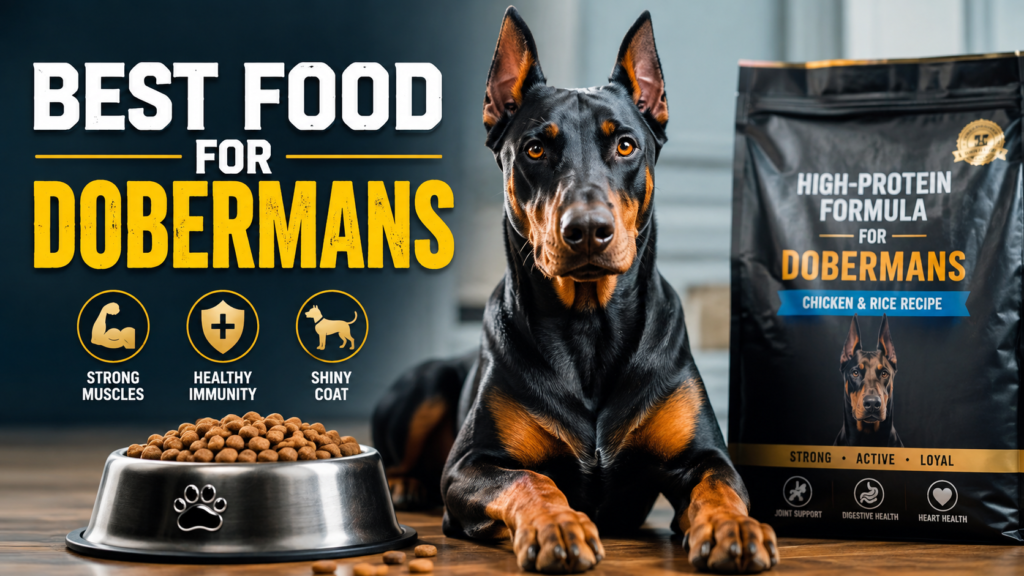
Quick Answer: The best dog food for Dobermans is a high-quality, high-protein formula (25–32% protein) with moderate fat, added taurine and L-carnitine for heart health, and life-stage-specific portions — large-breed puppy food for growth, and controlled calories for adults to avoid joint strain and bloat risk.
Dobermans are lean, athletic, and built for speed. That build comes with real nutritional needs. Get the food wrong, and you’ll see it in their coat, energy, or worse, their heart. I’m Milo Hartwell, and I’ve spent years working hands-on with high-energy, deep-chested breeds like this one — helping owners figure out feeding plans that actually match how their dog is built. Let’s get into what your Doberman really needs on their plate.
What Does “Best Dog Food for Dobermans” Actually Mean?
It doesn’t mean the most expensive bag on the shelf. It means a food that matches this breed’s specific build: lean muscle mass, a deep chest, a fast metabolism, and a known sensitivity to heart conditions. A good Doberman diet supports muscle tone, joint health, and cardiac function — not just “complete and balanced” on a label.
Why Diet Matters So Much for This Breed
Dobermans are prone to a few specific health issues where nutrition plays a direct role. Dilated cardiomyopathy (DCM) has been linked in some dogs to certain grain-free, boutique, or exotic-ingredient diets low in taurine. Their deep chest also puts them at higher risk for bloat (gastric dilatation-volvulus), which feeding habits can influence. Getting the fundamentals right isn’t optional for this breed — it’s protective.
How a Doberman’s Body Uses Nutrients
Protein and Lean Muscle
Dobermans carry very little body fat and a lot of working muscle. Most adults do well on food with 25–32% protein from real animal sources like chicken, beef, or fish — not fillers or by-product meal stacked high on the ingredient list.
Taurine, Carnitine, and Heart Health
This is the big one for this breed specifically. Look for foods that include or support adequate taurine and L-carnitine levels, and lean toward recipes built around whole-grain or mixed protein sources rather than heavily legume-based recipes, which have been associated with lower taurine levels in some studies.
Fat and Energy Needs
Active Dobermans need real energy, but fat should stay moderate (12–18% for most adults) rather than high, since excess weight puts more strain on joints and the heart alike.
Life-Stage Feeding Guide
Puppy
Use a large-breed puppy formula specifically. Regular puppy food often has calcium and calorie levels that grow a Doberman puppy too fast, raising the risk of joint and bone problems later. Slow, steady growth is the goal, not rapid growth.
Adult
Adult Dobermans generally do best on two measured meals a day rather than free-feeding, which also lowers bloat risk. Portion by activity level, not just weight — a working or highly active dog needs meaningfully more than a couch companion.
Senior
Older Dobermans often need slightly lower calories, added joint support (glucosamine/chondroitin), and easily digestible protein to help maintain muscle mass as activity naturally slows.
| Life Stage | Protein | Fat | Key Focus |
|---|---|---|---|
| Puppy (large breed) | 26–30% | 12–16% | Controlled growth, joint protection |
| Adult | 25–32% | 12–18% | Lean muscle, heart health, weight control |
| Senior | 22–28% | 10–15% | Joint support, muscle maintenance |
Common Feeding Mistakes Owners Make
- Feeding standard puppy food instead of a large-breed formula
- Free-feeding instead of set mealtimes (raises bloat risk)
- Choosing grain-free food without checking taurine/protein sourcing
- Overfeeding treats on top of full portions
- Switching foods too quickly, causing digestive upset
- Exercising heavily right after a large meal
Common Problems & Fixes
| Symptom | Likely Cause | Fix |
|---|---|---|
| Dull coat, flaking skin | Insufficient fat/omega intake | Add a food with balanced omega-3/6 or ask your vet about supplementing |
| Sudden weight gain | Overfeeding or too many treats | Recalculate portions by activity level, cut back treats |
| Loose stool after food switch | Too-fast transition | Transition over 7–10 days, mixing old and new food gradually |
| Picky eating | Free-feeding or too many treats | Set mealtimes, remove food after 15–20 minutes uneaten |
Dry vs. Wet Food for Dobermans: What’s the Difference?
Dry food (kibble) is more calorie-dense, convenient, and better for dental wear. Wet food is more hydrating and often more palatable for picky eaters or seniors with dental issues. Many owners do a mix — dry as the base, a small amount of wet mixed in for variety — as long as total calories stay in the right range for the dog’s size and activity level.
Pro Tips / Best Practices
- Feed two measured meals a day rather than one large one, to help lower bloat risk
- Recheck portions every few months — activity level and metabolism shift with age
- Introduce any new food gradually over a week or more
- Keep treats under 10% of total daily calories
- Ask your vet about a taurine/cardiac screening if you’re feeding grain-free long-term
Frequently Asked Questions
How much food does a Doberman need daily?
Most adult Dobermans need roughly 1,700–2,500 calories a day depending on activity level, split into two meals. Exact amounts vary by individual dog, so check with your vet for a tailored number.
Why do Dobermans need high-protein food?
Their lean, muscular build requires more protein to maintain muscle mass and energy than lower-activity breeds.
What is the best food for Doberman puppies?
A large-breed puppy formula that controls calcium and calorie levels to support slow, steady growth rather than a rapid growth spurt.
When should I switch my Doberman to adult food?
Most Dobermans can transition to adult food around 12–18 months, once growth has mostly leveled off. Your vet can confirm the right timing for your dog.
Does food affect Doberman heart disease risk?
Yes — some grain-free and boutique diets have been linked to lower taurine levels and a higher incidence of DCM in certain dogs. It’s worth discussing your dog’s specific diet with your vet.
Can Dobermans eat homemade food safely?
Yes, but only with a recipe formulated by a veterinary nutritionist to ensure it’s complete and balanced — homemade diets are easy to get wrong nutritionally.
Should I free-feed my Doberman?
Generally no. Set mealtimes are safer for this breed given the higher bloat risk associated with deep-chested dogs.
Conclusion
Feeding a Doberman well comes down to a few fundamentals: real protein, the right fat balance, taurine-conscious ingredients, and portions matched to life stage and activity. Get those right, and you’re supporting not just their energy and coat, but their long-term heart and joint health too. If anything about your dog’s diet, weight, or energy feels off, it’s always worth a quick check-in with your vet.
References: American Kennel Club – Nutrition, ASPCA – Dog Nutrition Tips, AVMA – Nutrition and Food
