
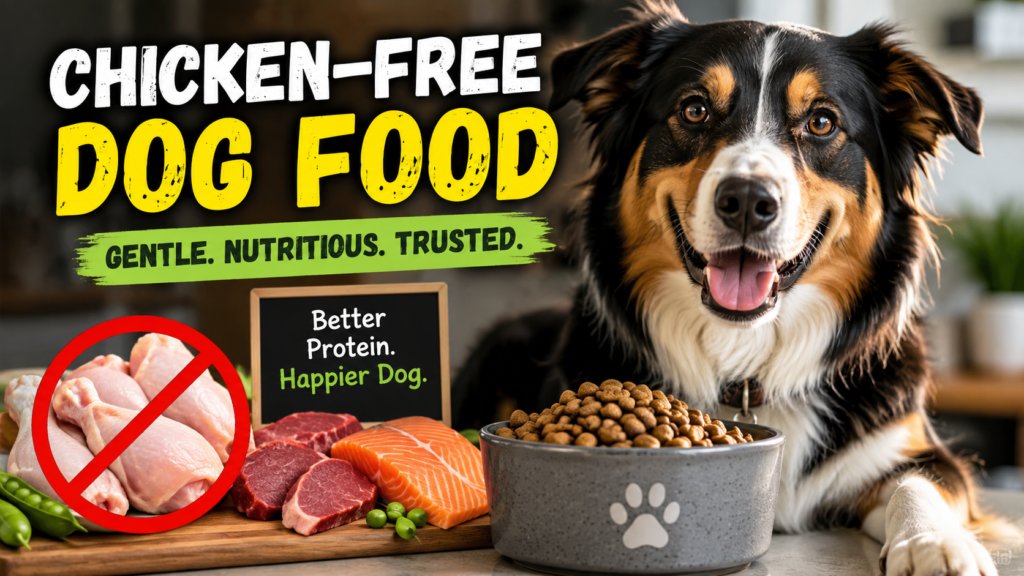
Quick Answer: Chicken-free dog food replaces chicken with an alternative protein like turkey, salmon, duck, or lamb. It’s typically used for dogs with a chicken allergy or sensitivity, showing up as itchy skin, ear infections, or an upset stomach. Switching gradually over 7–10 days helps avoid digestive issues.
If your dog keeps scratching, has red ears, or has an upset stomach that won’t go away, chicken could be the reason. It’s one of the most common protein sensitivities in dogs. I’m Michael Hayes, and I’ve spent years helping owners figure out feeding issues just like this one. In this guide, I’ll walk you through what chicken-free dog food actually means, how to tell if your dog needs it, and how to make the switch without stress.
What Does “Chicken-Free Dog Food” Mean?
Chicken-free dog food is exactly what it sounds like: a formula that leaves out chicken and chicken by-products entirely. Instead, the main protein comes from something like turkey, duck, salmon, lamb, or a plant-based source. It’s not the same as “grain-free,” and the two labels get mixed up constantly. A food can be chicken-free and still contain wheat, rice, or oats. Grain has nothing to do with the protein source.
Most owners reach for chicken-free food for one of two reasons: their dog has a diagnosed chicken allergy, or their vet suspects a chicken sensitivity and wants to test it through an elimination diet.
Why Chicken Allergies Happen in Dogs
Food allergies in dogs are almost always a reaction to a protein the immune system starts treating as a threat. Chicken shows up in so many commercial dog foods that it’s one of the most common triggers simply because dogs are exposed to it so often, starting from puppyhood. The immune system can develop a sensitivity to a protein over years of repeated exposure, which is why a dog can eat chicken fine for most of its life and then suddenly react to it.
Common Signs of a Chicken Sensitivity
- Constant scratching or licking, especially around the paws and belly
- Recurring ear infections or head shaking
- Red, inflamed, or scabby skin
- Chronic soft stool or gas
- Excessive shedding tied to skin irritation
| Symptom | Likely Cause |
|---|---|
| Itchy paws and belly | Food allergy (protein-related) |
| Recurring ear infections | Food sensitivity affecting skin/ear tissue |
| Chronic soft stool | Digestive intolerance to a specific protein |
| Sudden vomiting after meals | Acute food intolerance |
| Hot spots or hair loss patches | Ongoing allergic skin reaction |
These symptoms overlap with several other conditions, including environmental allergies and parasites, so a proper diagnosis matters. The AVMA notes that food allergies typically need a structured elimination trial to confirm, not just guesswork.
How to Switch Your Dog to Chicken-Free Food (Step-by-Step)
Switching cold turkey almost always causes stomach upset, even with a food that’s right for your dog. Here’s the routine I use with every dog I help transition:
- Days 1–2: Mix 25% new chicken-free food with 75% current food.
- Days 3–4: Move to a 50/50 mix.
- Days 5–6: Shift to 75% new food, 25% old food.
- Days 7 onward: Feed 100% of the new chicken-free formula.
- Watch closely: Track stool quality, energy, and skin condition throughout the switch.
If you suspect a true allergy, your vet may recommend a stricter elimination diet using a single novel protein for 8–12 weeks, with no treats or table scraps that could interfere with the results.
Common Problems & Fixes When Switching Diets
- Loose stool during transition: Slow the switch down further, stretching it over 10–14 days instead of 7.
- Dog refuses the new food: Warm it slightly or mix in a small amount of low-sodium broth to make it more appealing.
- Symptoms don’t improve: The trigger may not be chicken at all. Talk to your vet about a full elimination trial rather than guessing at different proteins one by one.
- Hidden chicken in treats: Check every treat and supplement, not just the main food. Chicken fat and chicken meal hide in ingredient lists.
Common Mistakes Owners Make
- Switching foods too quickly and blaming the new food for stomach upset that was really caused by the fast transition
- Assuming “grain-free” means “chicken-free”
- Not checking treats, dental chews, or supplements for hidden chicken ingredients
- Giving up on a new food after only a few days instead of the full 8–12 week trial needed to see real results
Chicken-Free vs. Grain-Free: What’s the Difference?
| Chicken-Free | Grain-Free |
|---|---|
| Removes chicken and chicken by-products | Removes wheat, corn, rice, oats, and other grains |
| Targets a protein allergy or sensitivity | Targets a grain intolerance (less common than protein allergies) |
| Can still contain grains | Can still contain chicken |
| Common alternative proteins: turkey, duck, salmon, lamb | Common alternative carbs: potato, peas, chickpeas |
According to PetMD, grain allergies are actually far less common in dogs than protein allergies, which is why chicken-free options tend to be the more targeted fix for skin and digestive issues.
Pro Tips for Choosing the Right Alternative Protein
- Pick a novel protein your dog hasn’t eaten regularly before, such as duck, venison, or rabbit, for the clearest results in an elimination trial
- Read the full ingredient list, not just the front label — “chicken-free” claims can still include chicken fat or flavoring in some products
- Introduce one new protein at a time so you know exactly what’s working
- Keep a simple symptom log during the first month so you can track real progress instead of relying on memory
For breed-specific dietary guidance, the AKC’s nutrition resources are a solid starting point when comparing protein sources.
Frequently Asked Questions
Does chicken-free dog food mean grain-free too?
No. Chicken-free only refers to the protein source. A food can be chicken-free and still contain wheat, rice, or oats.
How long does it take to see improvement after switching?
Skin and coat improvements typically take 6–12 weeks of consistent feeding, since it takes time for the old protein to fully clear the dog’s system.
Can a dog be allergic to chicken but fine with turkey?
Yes. Poultry proteins aren’t identical, and many dogs tolerate turkey or duck fine even with a confirmed chicken allergy.
Is chicken-free food necessary for every dog?
No. It’s only recommended for dogs showing signs of a chicken sensitivity or those under a vet’s elimination diet plan. Healthy dogs with no symptoms don’t need to avoid chicken.
What are the best alternative proteins to chicken?
Turkey, duck, salmon, lamb, venison, and rabbit are the most common substitutes used in chicken-free formulas.
Can puppies eat chicken-free dog food?
Yes, as long as the formula is labeled complete and balanced for their life stage. Puppies can develop chicken sensitivities too, though it’s less common than in adult dogs.
Should I consult a vet before switching my dog’s food?
Yes, especially if you suspect a true allergy. A vet can confirm whether it’s a food allergy, environmental allergy, or something else entirely before you commit to a new diet.
Conclusion
Chicken-free dog food isn’t a trend — it’s a practical fix for dogs dealing with a real protein sensitivity. The key is switching gradually, reading labels carefully, and giving the new diet enough time to actually work. If your dog’s symptoms don’t improve after a few weeks, loop in your vet. A proper elimination trial will get you a real answer faster than trial and error ever will.
