
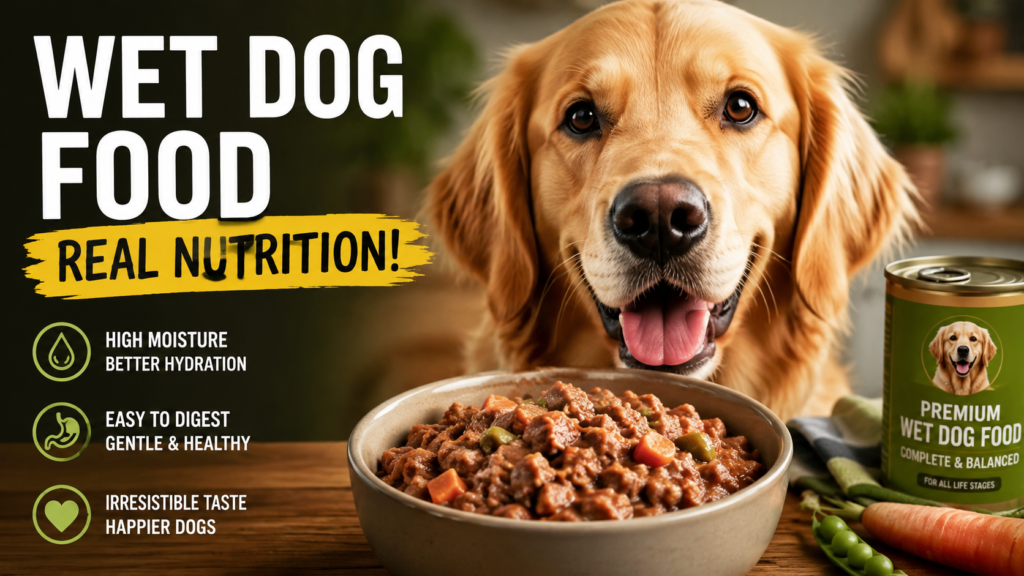
Quick Answer: Wet dog food is a canned or pouched diet with roughly 70–80% moisture, making it great for hydration, picky eaters, seniors, and dogs with dental issues. It’s not “better” than dry food overall — the right choice depends on your dog’s health, budget, and lifestyle.
Mealtime shouldn’t be stressful. But if your dog turns up their nose at the bowl, or you’re just trying to figure out what “wet food” even means for their health, it’s easy to feel stuck. I’m Michael Hayes, and I’ve spent years helping dogs — including my own fussy eaters — get the nutrition they need without the guesswork. In this guide, I’ll walk you through exactly what wet dog food is, when it makes sense, and how to avoid the mistakes most new owners make.
What Is Wet Dog Food?
Wet dog food is a complete or complementary diet packed in cans, pouches, or trays. It’s cooked, sealed, and sterilized to stay shelf-stable until opened, which is why it doesn’t need the preservatives that dry kibble relies on.
Compared to kibble, wet food usually has:
- Higher moisture content (around 70–80%, versus roughly 10% in dry food)
- A softer, chunkier or pâté-style texture
- A stronger aroma, which makes it more appealing to picky or sick dogs
- Fewer carbohydrates per serving, since water takes up more of the can
Why It Matters: The Real Benefits of Wet Dog Food
Wet food isn’t just a treat topper. For the right dog, it solves real problems.
- Hydration support: Dogs who don’t drink enough water, or live in hot climates, get extra fluid intake from every meal.
- Easier chewing: Ideal for puppies still teething, seniors with fewer teeth, or dogs recovering from dental work.
- Better palatability: The stronger smell and taste can coax sick, stressed, or picky dogs to actually eat.
- Weight management: Because it’s more filling per calorie, wet food can help dogs feel satisfied on appropriate portions.
Veterinary sources note that quality wet food can be just as nutritionally complete as dry food when it’s formulated to meet AAFCO nutrient standards for your dog’s life stage.
Wet vs. Dry Dog Food: What’s the Difference?
| Factor | Wet Food | Dry Food |
|---|---|---|
| Moisture content | ~70–80% | ~10% |
| Shelf life after opening | 2–3 days refrigerated | 4–6 weeks in a sealed container |
| Cost per meal | Generally higher | Generally lower |
| Dental benefit | Minimal, unless VOHC-approved | Some formulas help reduce plaque |
| Best for | Picky eaters, seniors, low water intake | Budget feeding, puzzle toys, bulk storage |
Many owners land on a mix of both — using wet food as a topper on dry kibble to get the benefits of each. If you do this, adjust total portions so your dog isn’t overfed.
How Much Wet Dog Food Should You Feed?
Portions depend on your dog’s weight, age, and activity level, and every brand’s calorie density is different. As a general starting point, many adult dogs need roughly ¾ of a standard can per 15 lbs of body weight per day, split across two meals — but always check the feeding guide on your specific product first.
Feeding by Life Stage
| Life Stage | Feeding Focus |
|---|---|
| Puppy | Frequent small meals, higher calorie and protein density for growth |
| Adult | Balanced maintenance formula, portioned to activity level |
| Senior | Softer texture, often lower calorie, joint-support formulas |
Common Mistakes Owners Make With Wet Dog Food
- Leaving it out too long. Wet food spoils fast at room temperature — pick it up after 30–60 minutes.
- Overfeeding when mixing with kibble. Wet food adds calories on top of dry food unless you reduce the dry portion.
- Ignoring the label. “Complete and balanced” foods differ from “complementary” or topper foods, which aren’t meant to be a full diet.
- Switching diets too fast. Sudden changes can upset digestion — transition over 5–7 days by blending old and new food.
- Storing opened cans wrong. Refrigerate opened wet food and use it within 2–3 days.
Common Problems and Fixes
| Problem | Likely Cause | Fix |
|---|---|---|
| Dog won’t touch wet food | New texture, warmed too much, food too cold | Serve at room temperature, try a different protein or texture |
| Loose stool after switching | Too-fast diet transition | Slow transition over 5–7 days, blending old and new food |
| Food dries out in bowl | Left out too long | Serve smaller portions, pick up uneaten food within an hour |
| Weight gain | Overfeeding relative to activity level | Recalculate portions and consult your vet on target weight |
Pro Tips for Feeding Wet Dog Food
- Warm refrigerated food slightly to boost aroma for picky eaters — a few seconds is usually enough.
- Use a washable mat under the bowl to make cleanup easier.
- Rotate proteins occasionally to prevent boredom and reduce the chance of developing a sensitivity to one ingredient.
- Check the label for a life-stage statement (puppy, adult, senior, or all life stages) before buying.
- If your dog has kidney, urinary, or dental issues, ask your vet whether wet food should make up more of their diet.
Frequently Asked Questions
Is wet dog food healthier than dry food?
Neither is automatically healthier — both can be complete and balanced. Wet food offers more moisture and palatability; dry food is more economical and convenient.
Can I feed my dog only wet food?
Yes, as long as the product is labeled “complete and balanced” for your dog’s life stage. Complementary or topper foods should not be fed as the sole diet.
How long can wet dog food sit out?
No more than 30–60 minutes at room temperature before bacteria growth becomes a concern. Refrigerate leftovers right after your dog finishes eating.
Does wet dog food cause tooth decay?
There’s little evidence that wet food alone increases dental disease risk compared to dry food. Regular brushing and vet dental checkups matter more than food texture.
Can puppies eat wet dog food?
Yes, as long as it’s formulated for puppies or all life stages. Puppies often do well with wet food during teething, when chewing kibble is uncomfortable.
How do I switch my dog to wet food without stomach upset?
Transition gradually over 5–7 days, mixing increasing amounts of the new food with the old food until the switch is complete.
Is it okay to mix wet and dry dog food?
Yes, this is common and safe for most healthy dogs. Just adjust total portions so you’re not overfeeding calories.
For more on canine nutrition needs, the American Veterinary Medical Association and ASPCA both offer general feeding guidance worth reviewing alongside your vet’s advice.
Conclusion
Wet dog food isn’t a trend — it’s a genuinely useful tool for hydration, picky eaters, seniors, and dogs who need extra encouragement at mealtime. The key is matching the right formula to your dog’s life stage and checking in with your vet if you’re managing a health condition. Start small, watch how your dog responds, and adjust from there.
