
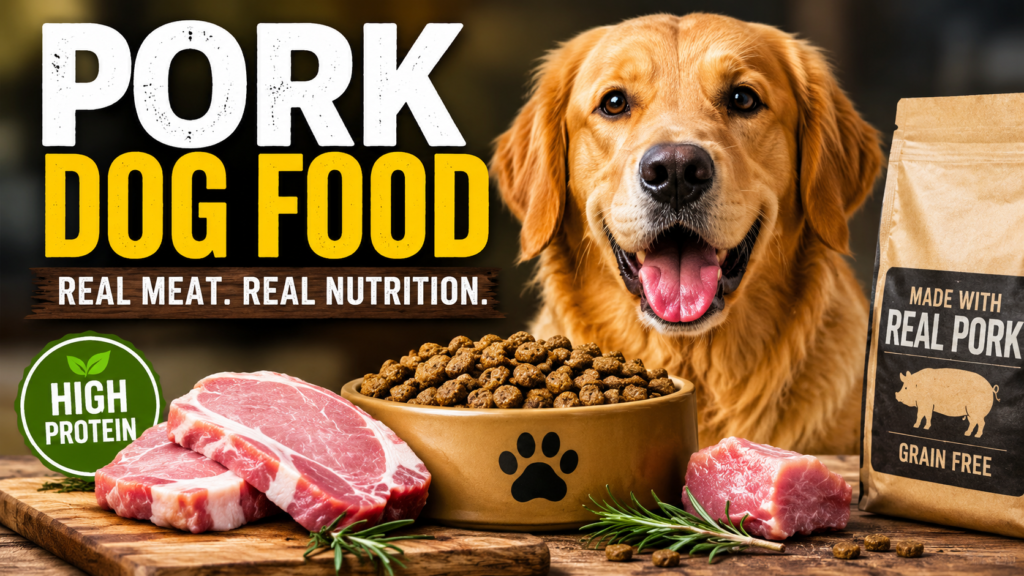
Quick Answer: Pork dog food is a safe, high-protein option for most dogs when it’s fully cooked and free of added seasoning, salt, or fat trimmings. It’s often used as a novel protein for dogs with chicken or beef allergies, but it should always be introduced gradually to avoid stomach upset.
New to pork-based dog food? You’re not alone. A lot of owners land here after their vet suggests a “novel protein,” or after their dog’s regular kibble stopped agreeing with them. I’m Michael Hayes, and I’ve spent years helping dogs — including my own — transition through different protein sources for allergies and sensitive stomachs. Pork gets overlooked a lot, but it’s actually a solid option once you understand how to feed it right. Let’s get into it.
What Is Pork Dog Food?
Pork dog food is any commercial or homemade dog food that uses pork — fresh pork, pork meal, or pork by-product meal — as its primary protein source instead of the more common chicken, beef, or fish. You’ll find it in dry kibble, wet food, and limited-ingredient formulas.
Pork meal (dehydrated, ground pork) is more calorie- and protein-dense than fresh pork, which is mostly water weight. Most quality pork dog foods list pork or pork meal as the first ingredient.
Why Pet Owners Choose Pork Dog Food
Pork isn’t usually the first protein people think of for dogs, but it has a few practical advantages:
- Novel protein for allergies — many dogs have never eaten pork before, which makes it useful for identifying food allergies
- Highly digestible — lean, well-cooked pork is gentle on the digestive tract for most dogs
- Rich in essential nutrients — pork naturally contains thiamine, B vitamins, and amino acids dogs need
- Good taste appeal — pork’s flavor often works well for picky eaters who’ve gone off chicken-based food
Is Pork Good for Dogs? How It Works Nutritionally
Plain, cooked, unseasoned pork is a complete protein containing all the essential amino acids dogs need for muscle maintenance and energy. It’s also naturally rich in thiamine (vitamin B1), which supports nerve function.
The concern with pork isn’t the meat itself — it’s what’s often attached to it. Raw pork carries a risk of trichinella parasites, and fatty cuts or seasoned pork (bacon, ham, sausage) can trigger pancreatitis in sensitive dogs. Commercial pork dog food avoids these issues because the pork is cooked and formulated without the seasonings or fat content found in table scraps. For more on safe feeding practices, the American Veterinary Medical Association has general nutrition guidance worth reviewing.
Pork vs Chicken vs Beef Dog Food: What’s the Difference?
| Factor | Pork | Chicken | Beef |
|---|---|---|---|
| Allergy risk | Low (less common allergen) | Higher (very common allergen) | Higher (very common allergen) |
| Fat content | Moderate to high, depends on cut | Low to moderate | Moderate to high |
| Digestibility | Good when lean and cooked | Very good | Good |
| Availability in dog food | Less common, specialty formulas | Very common | Very common |
| Best for | Dogs with chicken/beef allergies | General everyday feeding | General everyday feeding |
How to Switch Your Dog to Pork Dog Food Step by Step
- Check with your vet first — especially if you’re switching due to suspected allergies or a sensitive stomach.
- Start the transition slowly — mix 25% new pork food with 75% old food for the first 2–3 days.
- Increase gradually — move to a 50/50 mix for another 2–3 days.
- Shift to mostly new food — 75% pork food, 25% old food for a few more days.
- Complete the switch — by day 7–10, your dog should be fully on the pork-based diet.
- Watch stool and energy — loose stools, excessive gas, or lethargy are signs to slow the transition down.
Common Problems With Pork Dog Food and Fixes
| Problem | Likely Cause | Fix |
|---|---|---|
| Loose stools | Switched too fast, or food is high-fat | Slow the transition; choose a leaner pork formula |
| Excessive gas | Digestive adjustment period | Usually resolves in 1–2 weeks; monitor |
| Itchy skin or ear infections | Possible pork sensitivity (rare, but possible) | Stop feeding and consult your vet about an elimination diet |
| Dog won’t eat it | Texture or smell difference from previous food | Mix with a small amount of warm water to boost aroma |
Common Mistakes Owners Make With Pork Dog Food
- Feeding raw or undercooked pork instead of a commercially formulated product
- Giving fatty pork scraps (bacon, sausage) as treats alongside a pork-based diet
- Switching foods too quickly and blaming pork for stomach upset caused by the rapid change
- Assuming pork is automatically hypoallergenic — it reduces allergy risk, but doesn’t eliminate it entirely
- Not checking calorie content, since pork formulas can run richer than chicken-based ones
Pro Tips for Choosing Quality Pork Dog Food
- Look for “pork” or “pork meal” as the first ingredient, not “pork by-product meal” alone
- Choose a formula matched to your dog’s life stage (puppy, adult, senior)
- If your goal is identifying allergies, pick a limited-ingredient formula with minimal additional proteins
- Check for AAFCO nutritional adequacy statements on the packaging
- Introduce any new food gradually, even if it’s marketed as “sensitive stomach” friendly
Frequently Asked Questions
Is pork dog food safe for all dogs?
Pork dog food is safe for most healthy dogs when it’s a properly formulated commercial product. Dogs with a known pork sensitivity or pancreatitis history should avoid high-fat pork formulas.
Why is pork used as a novel protein for allergies?
Most commercial dog foods use chicken or beef, so many dogs haven’t been exposed to pork before. This makes it a useful option for elimination diets aimed at identifying food allergies.
Can pork dog food cause diarrhea?
It can, usually from switching foods too quickly or from a formula that’s higher in fat than your dog is used to. A slow transition over 7–10 days helps prevent this.
Is pork meal the same as fresh pork in dog food?
No. Pork meal is dehydrated and concentrated, making it higher in protein by weight than fresh pork, which contains more water. Both can appear in quality dog food formulas.
How do I know if my dog is allergic to pork?
Signs include itchy skin, recurring ear infections, digestive upset, or excessive licking after starting a pork-based diet. If you notice these, talk to your vet about an elimination diet trial.
Should I feed pork dog food to a puppy?
Yes, as long as it’s a formula specifically labeled for puppies or all life stages, since puppies have different calorie and nutrient needs than adult dogs.
Is pork dog food more expensive than chicken or beef options?
It can be, since pork is less commonly used in mainstream dog food and often appears in specialty or limited-ingredient formulas.
Conclusion
Pork dog food isn’t as widely used as chicken or beef, but it’s a genuinely solid option — especially for dogs dealing with allergies or sensitive stomachs. The key is choosing a well-formulated product, introducing it slowly, and watching how your dog responds. When in doubt, loop in your vet before making the switch. For additional guidance on pet nutrition, the ASPCA and PetMD are both reliable resources worth bookmarking.
