
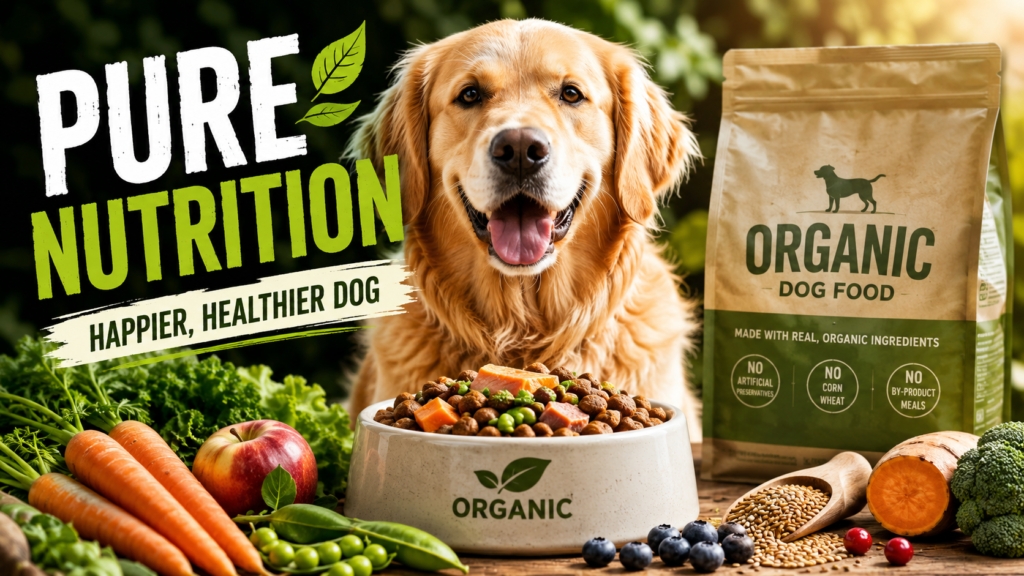
Quick Answer: Organic dog food is made with ingredients grown or raised without synthetic pesticides, hormones, or antibiotics, and it must meet USDA organic standards to carry the label. It isn’t automatically “healthier” than conventional food, but it can help dogs with sensitivities and appeals to owners who want fewer synthetic additives.
Dog food labels are confusing. “Organic.” “Natural.” “Grain-free.” They all sound healthy. They don’t all mean the same thing. I’m Michael Hayes, and I’ve spent years helping dog owners figure out what’s actually in the bag versus what’s just clever marketing. This guide breaks down what organic dog food really means, when it’s worth it, and how to switch your dog over without upsetting their stomach.
What Does “Organic Dog Food” Actually Mean?
Organic dog food is made from ingredients grown without synthetic pesticides or fertilizers, and from animals raised without added hormones or routine antibiotics. In the U.S., any food labeled “organic” has to follow USDA rules, the same ones that apply to organic food for people.
USDA Organic Certification Basics
For a dog food to legally use the USDA organic seal, at least 95% of its ingredients (by weight, excluding water and salt) must be certified organic. Products with less organic content can say “made with organic ingredients” but can’t use the official seal.
Organic vs. “Natural” vs. “Grain-Free” — Not the Same Thing
This trips up a lot of new owners. “Natural” just means no artificial flavors, colors, or preservatives — it says nothing about how the ingredients were grown. “Grain-free” simply means no grains, organic or not. Only “organic” refers to farming and sourcing standards.
Why Some Owners Choose Organic Dog Food
The appeal usually comes down to two things: fewer synthetic inputs, and a gentler option for dogs with food sensitivities.
Fewer Synthetic Additives and Pesticides
Organic farming avoids synthetic pesticides and fertilizers. Some owners prefer this simply to reduce their dog’s overall exposure to synthetic chemicals, even without a specific health issue driving the choice.
Easier on Sensitive Stomachs and Allergies
Dogs with food sensitivities sometimes do better on simpler, minimally processed organic formulas with fewer fillers and additives. This isn’t guaranteed — allergies are usually about a specific protein or ingredient, not the “organic” label itself — but it’s a common reason owners try it.
Organic vs. Conventional Dog Food: What’s the Difference?
| Factor | Organic Dog Food | Conventional Dog Food |
|---|---|---|
| Ingredient sourcing | Certified organic farms, no synthetic pesticides/hormones | Standard farming practices |
| Regulation | USDA organic certification required for the seal | AAFCO nutritional adequacy standards only |
| Price | Typically higher | Wide price range, generally lower |
| Nutritional completeness | Varies by brand — check for AAFCO statement | Varies by brand — check for AAFCO statement |
| Best for | Owners prioritizing sourcing, some sensitive dogs | Most healthy dogs with no specific sensitivities |
How to Read an Organic Dog Food Label
What “100% Organic,” “Organic,” and “Made With Organic” Mean
- 100% Organic: All ingredients are certified organic.
- Organic: At least 95% of ingredients are certified organic; can carry the USDA seal.
- Made With Organic Ingredients: At least 70% organic; cannot use the USDA seal.
Red Flags on the Packaging
Watch for vague marketing words like “natural” or “premium” used to imply organic status without certification. A genuine organic product will show the USDA organic seal or list a specific certifying body — not just the word “organic” in the product name.
Common Mistakes Owners Make When Switching to Organic
Switching Too Fast
Swapping foods overnight is the number one reason dogs get an upset stomach during a diet change. The gut needs time to adjust to new ingredients.
Assuming “Organic” Means “Complete Nutrition”
Organic status is about sourcing, not nutritional balance. Always check that the food carries an AAFCO statement confirming it’s complete and balanced for your dog’s life stage.
How to Transition Your Dog to Organic Food Step by Step
- Days 1–2: Mix 75% old food with 25% new organic food.
- Days 3–4: Move to a 50/50 mix.
- Days 5–6: Shift to 25% old food and 75% new food.
- Day 7: Feed 100% organic food, watching stool and energy levels.
- Ongoing: If you see loose stool, vomiting, or appetite loss at any stage, slow the transition down or pause and check with your vet.
Is Organic Dog Food Worth the Extra Cost?
Who Benefits Most From Organic Food
Dogs with food sensitivities, owners who prioritize ingredient sourcing, and households already committed to an organic lifestyle tend to get the most value from the switch.
When a Conventional Diet Is Perfectly Fine
If your dog is healthy, maintaining a good weight, and doing well on their current food, there’s no strict requirement to switch. A high-quality, AAFCO-complete conventional food can absolutely meet your dog’s needs.
Pro Tips for Choosing a Quality Organic Dog Food
- Look for the USDA organic seal, not just the word “organic” on the front.
- Check the AAFCO statement for life-stage suitability (puppy, adult, senior, or all life stages).
- Introduce any new food gradually, organic or not.
- Match calorie content to your dog’s size and activity level — organic doesn’t mean unlimited portions.
- Keep an eye on stool quality and coat condition in the first few weeks after switching.
Feeding Organic Food by Life Stage
| Life Stage | General Feeding Notes |
|---|---|
| Puppy | Needs a formula labeled for growth; higher calorie and protein needs than adults |
| Adult | Formula for maintenance; portion based on weight and activity level |
| Senior | Often benefits from lower-calorie formulas; watch weight and joint support needs |
FAQ Section
Is organic dog food actually better for dogs?
Not automatically. It reduces exposure to synthetic pesticides and hormones, but nutritional quality still depends on the specific formula and whether it’s AAFCO-complete.
Can puppies eat organic dog food?
Yes, as long as the formula is specifically labeled for puppy growth or all life stages, since puppies have higher calorie and nutrient needs than adult dogs.
Does organic dog food help with allergies?
It can help some dogs by removing synthetic additives, but true food allergies are usually tied to a specific protein or ingredient, not the organic label itself.
Why is organic dog food so expensive?
Organic farming and certification cost more, and those costs get passed on through pricing.
How do I know if a dog food is really organic?
Check for the USDA organic seal or a named certifying agency on the packaging, not just the word “organic” in the marketing copy.
Should I switch my dog to organic food all at once?
No. Transition gradually over about 7 days to avoid stomach upset.
Is grain-free the same as organic?
No. Grain-free only refers to the absence of grains; organic refers to how ingredients were farmed and sourced.
Conclusion
Organic dog food isn’t a magic upgrade, but it’s a legitimate option worth understanding. The label tells you about sourcing, not automatically about nutritional quality — so check the AAFCO statement, transition slowly, and choose based on what actually fits your dog. If you’re ever unsure whether a diet change is right for your dog’s specific needs, a quick check-in with your vet is always a good move.
Learn more from these trusted resources:
