
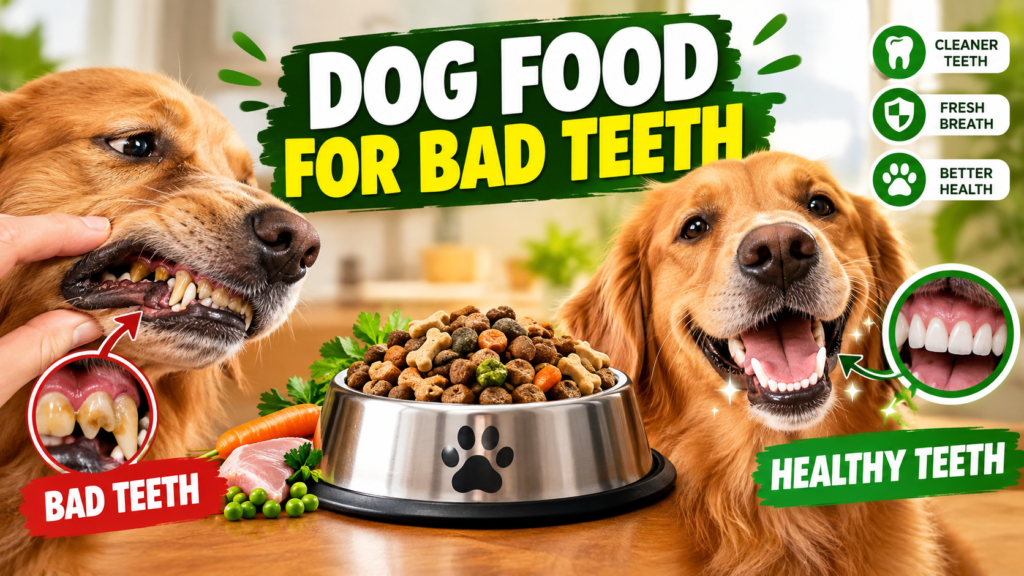
Quick Answer: Dogs with bad teeth generally do best on softened kibble, canned food, or a food specifically formulated for dental issues. Look for smaller pieces, higher moisture, and easy-to-chew textures. Always ask your vet before switching, especially if there’s pain, weight loss, or bleeding gums.
Watching your dog turn away from a full bowl is hard. It’s harder when you know it’s because chewing hurts. I’ve spent years helping dogs eat comfortably again after dental problems, and I’m Milo Hartwell. This guide walks through exactly what to feed, what to avoid, and how to make mealtime easy on your dog’s mouth.
What Does “Bad Teeth” Mean for a Dog’s Diet?
“Bad teeth” usually covers a range of issues: tartar buildup, gum disease, loose or missing teeth, cracked teeth, or pain after a dental extraction. Each of these changes how much pressure a dog’s mouth can handle. A food that was fine a year ago might now be genuinely painful to eat.
The goal isn’t just picking a “soft” food. It’s matching the texture and size of the food to what your dog’s mouth can actually manage right now.
Why Dental Problems Change What Your Dog Should Eat
Dogs in pain eat less, chew on one side of their mouth, or swallow kibble whole without chewing at all. Over time, this leads to weight loss, nutrient gaps, and even more strain on the teeth that are still healthy. Getting the food right isn’t cosmetic — it directly affects how well your dog is eating and feeling day to day.
Signs Your Dog’s Current Food Isn’t Working
| Sign | Likely Cause |
|---|---|
| Dropping kibble after picking it up | Pain when biting down |
| Chewing only on one side | Localized tooth or gum pain |
| Swallowing food whole | Avoiding chewing altogether |
| Approaching bowl, then walking away | Anticipated pain |
| Weight loss over several weeks | Reduced food intake |
| Bad breath with red or bleeding gums | Active gum disease |
How to Choose Dog Food for Bad Teeth
Texture and Kibble Size
Smaller, softer kibble is easier to manage than large, hard pieces. Some owners keep dry food but crush it lightly; others move to a soft-textured formula entirely. The right choice depends on how sensitive your dog’s mouth currently is.
Moisture Content
Higher-moisture foods, like canned or gently rehydrated kibble, require far less chewing pressure. This is often the simplest first change to try.
Nutrient Needs
Softer or wet food shouldn’t mean lower quality. Check that the food still meets complete and balanced nutrition standards for your dog’s life stage, and don’t reduce calories just because the texture changed.
Wet vs. Dry Food for Dogs with Bad Teeth
| Factor | Wet Food | Dry Food |
|---|---|---|
| Ease of chewing | Easier — soft texture | Harder unless softened |
| Moisture content | High | Low, unless water is added |
| Dental tartar control | Minimal | Some formulas designed for this |
| Shelf life once opened | Short | Longer |
Many owners land somewhere in between: dry kibble softened with warm water, mixed with a spoonful of wet food. This keeps nutrition consistent while easing the strain on a sore mouth.
How to Transition Your Dog’s Food Step by Step
- Start by adding warm water to your dog’s current kibble and letting it sit for 5–10 minutes before serving.
- Watch how your dog handles the softer texture over 2–3 meals.
- If chewing still looks uncomfortable, introduce a canned or soft-formula food gradually, mixing it in over 5–7 days.
- Keep meals smaller and more frequent if your dog seems to tire out mid-meal.
- Check in with your vet if the discomfort continues past a few days.
Common Mistakes Owners Make
- Switching foods without asking a vet first, especially after an extraction
- Assuming smaller kibble alone solves a pain-related eating problem
- Cutting portion sizes when switching to wet food, leading to weight loss
- Ignoring ongoing bad breath as “just a dog thing” instead of a dental symptom
Pro Tips for Feeding a Dog with Dental Issues
- Serve food at room temperature — cold food can be more sensitive on sore gums
- Use a shallow bowl so your dog doesn’t have to tilt their head awkwardly
- Keep a feeding log for a week after any diet change to track appetite and weight
- Revisit your dog’s diet again after any dental cleaning or extraction, since needs often change
For general dental health guidance, the American Veterinary Medical Association has useful background on canine dental disease. The Veterinary Oral Health Council also maintains a list of products accepted for dental benefit. The American Kennel Club covers everyday dental care basics as well.
FAQ
What is the best type of dog food for a dog with bad teeth?
Softened kibble or canned food is usually easiest, but the “best” choice depends on how severe the dental issue is. Ask your vet if pain or weight loss is involved.
Can dogs with no teeth still eat dry kibble?
Some can, especially if it’s soaked until soft. Many toothless dogs do better on wet or well-softened food that doesn’t require biting at all.
Is wet food bad for a dog’s teeth long term?
Wet food doesn’t scrub the teeth the way some dry formulas can, but it’s not inherently harmful. Dental care through brushing or vet cleanings still matters regardless of food type.
Should I switch my dog’s food after a dental cleaning or extraction?
Often yes, at least temporarily. Softer food gives healing gums time to recover before returning to a regular diet.
What are signs my dog needs a different food because of dental disease?
Dropping food, chewing on one side, swallowing without chewing, bad breath, and weight loss are common signs worth watching for.
Can changing food alone fix bad teeth?
No. Diet changes make eating more comfortable, but existing dental disease usually needs veterinary treatment, not just a food switch.
Conclusion
Feeding a dog with bad teeth comes down to one thing: reducing pain at mealtime while keeping nutrition on track. Softening food, watching for warning signs, and checking in with your vet after any dental change go a long way. If something feels off, don’t wait it out — a quick vet visit can save your dog a lot of discomfort.
