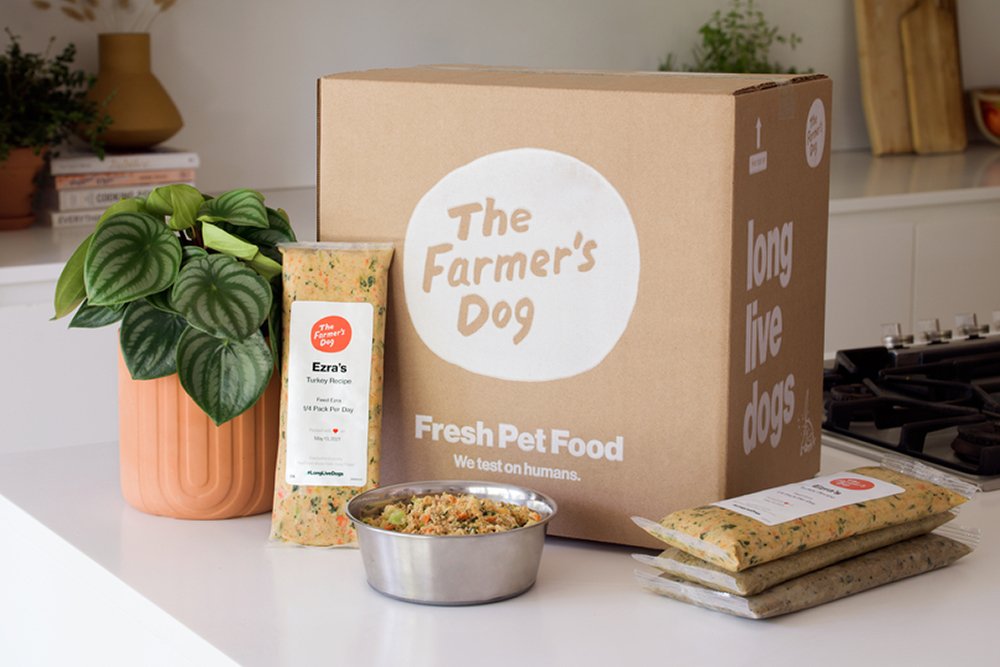
Farmer’s Dog Review: Is The Farmer’s Dog Fresh Food Worth It?
The Farmer’s Dog is a premium fresh dog food service that can be a strong option for U.S. dog owners who value gently cooked, human-grade ingredients and personalized portions, but its higher cost, refrigeration requirements, and delivery model may not suit every household.
For dog owners in the United States, choosing between kibble, canned food, homemade meals, and fresh delivered food often comes down to nutrition, convenience, cost, and how well a particular diet works for an individual dog. The Farmer’s Dog takes the fresh-food approach by preparing complete and balanced meals with whole ingredients and delivering them directly to customers.
The Farmer’s Dog states that its recipes are formulated by board-certified veterinary nutritionists to meet AAFCO standards. The company offers fresh recipes using proteins such as beef, chicken, turkey, and pork, along with vegetables, vitamins, and minerals. It also now offers an Instant Fresh format that is shelf-stable until prepared with water.
Based on current product information and independent review material available in October 2026, The Farmer’s Dog has several meaningful strengths, particularly ingredient quality, personalization, palatability, and convenience. However, claims about better long-term health should not be treated as guaranteed outcomes for every dog. Individual nutritional needs vary, and dogs with medical conditions should have their diet discussed with a veterinarian.
The Farmer’s Dog is a direct-to-consumer dog food company that makes personalized meals for dogs and ships them to customers. Its original product line consists of gently cooked fresh food rather than conventional extruded kibble.
The company says its recipes use human-grade ingredients and are formulated by on-staff board-certified veterinary nutritionists to be complete and balanced according to AAFCO standards. The available recipes include different animal proteins and vegetable combinations, with both grain-inclusive and grain-free options available.
The basic service begins with a questionnaire about the dog. Information such as age, weight, breed, activity level, and body condition helps determine a feeding plan and portion recommendation.
Source: hellobark.com
Food format
The original meals are fresh, gently cooked, portioned, and delivered chilled or frozen.
Meal planning
Portions are personalized according to information about the individual dog rather than using one generic feeding amount.
Nutritional formulation
The company states that its recipes are formulated to meet AAFCO nutritional standards and include the required vitamins and minerals.
Delivery model
The food is delivered directly to customers instead of being primarily distributed through traditional retail shelves.
How The Farmer’s Dog Works
You begin by creating a profile for your dog and providing information about age, size, activity, breed, and other relevant characteristics. The service then recommends a meal plan and portion size.
After ordering, fresh meals are shipped to your home. Because the original food contains substantial moisture and does not rely on conventional shelf-stabilizing processing, proper refrigeration or freezing is part of the feeding routine.
The system is designed to reduce the work involved in buying ingredients, calculating portions, cooking meals, and balancing nutrients yourself.
Step 1
Enter your dog’s information and nutritional details.
Step 2
Review the recommended recipes, portions, and plan options.
Step 3
Receive the prepared food through scheduled delivery.
Step 4
Store the food correctly and follow the recommended feeding portions.
The Farmer’s Dog Ingredients and Nutrition
Ingredient quality is one of the main reasons people consider The Farmer’s Dog. The company emphasizes whole animal proteins, vegetables, and added vitamins and minerals rather than relying on the ingredient profile typical of highly processed kibble.
The Farmer’s Dog currently describes its recipes as human-grade and says the ingredients and production processes follow applicable human-food safety standards. Human-grade does not mean that the food is automatically healthier for every dog; it describes the quality and handling standards associated with the ingredients and manufacturing process.
The nutritional profile also needs to be considered separately from the ingredient list. A food can contain recognizable whole ingredients and still be inappropriate for a particular dog if its calorie density, fat level, protein sources, or mineral balance does not match that dog’s needs.
Source: caninebible.com
Animal proteins
Recipes feature named proteins such as beef, chicken, turkey, and pork.
Vegetables
Recipes use whole vegetables as sources of nutrients and dietary fiber.
Added nutrients
Vitamins and minerals are included to help make the recipes nutritionally complete.
Moisture
Fresh food contains substantially more water than dry kibble, which changes both feeding volume and calorie concentration.
Is The Farmer’s Dog Complete and Balanced?
The company states that its recipes are 100% complete and balanced according to AAFCO standards and are formulated by board-certified veterinary nutritionists. The Farmer’s Dog has also reported conducting AAFCO feeding trials on multiple recipes and participating in longer-term feeding research.
That is more meaningful than judging a food only from its ingredient list. For a long-term diet, nutritional adequacy matters because dogs require appropriate amounts and ratios of protein, fat, essential amino acids, fatty acids, vitamins, and minerals.
Owners should still check the specific nutritional adequacy statement and recipe recommended for their dog. A food formulated for a healthy adult dog is not necessarily interchangeable with a therapeutic veterinary diet designed for a diagnosed medical condition.
What the evidence supports
The company provides documentation that its recipes are formulated to meet AAFCO nutritional standards and that multiple recipes have undergone feeding trials.
What it does not prove
Meeting nutritional standards does not prove that one food will produce better health outcomes than every other complete and balanced food for every dog.
The Farmer’s Dog Recipe Options
The Farmer’s Dog offers several fresh recipes built around different animal proteins. The available selection can change, so dog owners should check the current meal-plan questionnaire rather than assuming every recipe is available for every dog.
Protein variety can be useful for households with multiple dogs or dogs that have strong food preferences. However, rotating proteins is not automatically necessary. If a dog thrives on one nutritionally complete recipe, there may be little reason to change it without a specific dietary objective.
The company also offers grain-inclusive and grain-free options. Grain-free should not automatically be interpreted as healthier, and owners should not remove grains from a dog’s diet solely because the phrase sounds more natural or premium.
Source: My Subscription Addiction
Beef
A beef-based option that can appeal to dogs that prefer a beef flavor profile.
Chicken
A chicken-based recipe that provides a familiar poultry protein.
Turkey
A poultry-based alternative that may be useful when owners want a different protein source.
Pork
A pork-based recipe that provides another animal protein option and may be useful for dogs that do well with less commonly used proteins.
Fresh Versus Instant Fresh
The Farmer’s Dog now has two distinct serving formats. The original Fresh food is refrigerated or frozen and ready to serve after appropriate thawing. Instant Fresh is a newer shelf-stable format that is dry in the package and prepared by adding water.
Instant Fresh may be more convenient for households with limited refrigerator or freezer space, frequent travel, or a preference for simpler storage. It should not be assumed to be nutritionally identical to every original Fresh recipe because the specific formulation and serving instructions matter.
Fresh
Refrigerated or frozen, moist, gently cooked food that is ready to serve.
Instant Fresh
Shelf-stable food that is prepared by adding water before serving.
How Much Does The Farmer’s Dog Cost?
The Farmer’s Dog is generally more expensive than conventional dry dog food because the service uses fresh ingredients, customized portions, refrigerated or frozen delivery, and direct-to-consumer fulfillment.
There is no single price that applies to every dog. The company says pricing depends on factors such as the dog’s size, age, activity level, recipe, and nutritional requirements. Independent review data also demonstrates a substantial difference between the cost of feeding a small dog and a large dog.
As a practical example, a small dog may require only a modest daily amount of food, while a large, active dog can consume considerably more. Therefore, comparing the subscription price without considering calories or daily feeding amounts can give a misleading impression of value.
Source: www.youtube.com > Canine Bible
Small dogs
Usually require less food per day, so their total plan cost can be considerably lower than that of large dogs.
Large dogs
Can require substantially more food, making the monthly cost more noticeable.
Recipe selection
The recommended recipe and feeding plan can affect the final price.
Promotions
Introductory offers may reduce the initial cost, but owners should evaluate the regular recurring price before committing.
Is The Farmer’s Dog Worth the Money?
Whether The Farmer’s Dog is worth the money depends on what you value. If your priority is fresh, portioned food delivered to your home, the additional expense may be reasonable. If your main priority is minimizing the cost of feeding a healthy dog, a nutritionally complete dry or canned food may provide a lower-cost solution.
A fair comparison should include nutritional adequacy, calories per day, ingredient preferences, storage requirements, preparation time, delivery convenience, and the dog’s willingness to eat the food. Price alone does not determine value.
Potentially good value
For owners who want fresh food but do not want to shop for ingredients, cook meals, calculate nutrients, or portion every meal themselves.
Potentially poor value
For households with several large dogs, strict food budgets, limited cold-storage space, or little interest in fresh food.
The strongest argument for The Farmer’s Dog is its combination of fresh preparation, personalized feeding plans, and professionally formulated recipes. The biggest drawbacks are cost, storage requirements, and the ongoing commitment involved with a delivered fresh-food subscription.
Looking at both sides is important because a premium ingredient list does not automatically make a food the right choice for every dog or every household.
Source: honestbrandreviews.com
Fresh whole-food ingredients
The recipes emphasize recognizable proteins and vegetables instead of relying on a conventional dry-kibble format.
Personalized portions
Feeding recommendations are adjusted according to information about the individual dog.
Veterinary nutrition formulation
The company says its recipes are formulated by board-certified veterinary nutritionists and designed to meet AAFCO standards.
Potentially appealing to picky eaters
The moist texture and fresh-food aroma may make the meals attractive to some dogs.
Higher ongoing cost
Fresh delivered food typically costs more than feeding conventional dry food.
Cold storage required
Original Fresh meals need appropriate refrigeration or freezing and careful handling after thawing.
Delivery dependence
Owners need to plan around deliveries and maintain enough food between shipments.
Who May Like The Farmer’s Dog?
The service may make sense for U.S. dog owners who want fresh food, appreciate portion guidance, and are comfortable paying a premium for convenience. It can also be attractive to owners whose dogs are enthusiastic about moist, fresh meals rather than dry kibble.
It can be particularly convenient for people who do not want to formulate homemade diets. Preparing a homemade diet that is nutritionally complete requires more than combining meat and vegetables, so a professionally formulated commercial diet can reduce that burden.
Fresh-food preference
A good fit for owners who specifically want a gently cooked fresh diet.
Busy households
Useful when convenience matters and the household can manage refrigerated or frozen food.
Picky dogs
Worth considering if a dog consistently prefers moist, aromatic food, although acceptance cannot be guaranteed.
Who May Want an Alternative?
The Farmer’s Dog may be less attractive for owners who need the lowest possible feeding cost, have limited freezer or refrigerator capacity, travel frequently without reliable cold storage, or prefer food that can remain at room temperature after opening.
It may also be inappropriate to choose a standard commercial recipe without veterinary guidance when a dog has a diagnosed medical condition requiring a therapeutic diet.
Strict budget
Conventional complete and balanced foods can be substantially less expensive.
Limited storage
Fresh meals require more storage planning than ordinary dry food.
Therapeutic nutrition
Dogs with certain diseases may need a veterinary therapeutic diet rather than a standard commercial recipe.
How to Transition Your Dog to The Farmer’s Dog
A gradual transition is usually preferable to abruptly replacing a dog’s existing food with a new diet. Sudden changes can cause digestive upset even when the new food itself is nutritionally appropriate.
A commonly used transition approach is to begin with a small proportion of the new food and increase it over several days while reducing the old food. The exact pace should be adjusted if the dog develops vomiting, significant diarrhea, refuses food, or otherwise becomes unwell.
Dogs with a history of digestive disease or other medical problems may need a slower transition and veterinary guidance.
Source: hellobark.com
Start gradually
Mix a smaller amount of the new food with the current diet rather than making an immediate full switch.
Watch stool quality
Changes in stool consistency can provide an early indication that the transition is moving too quickly or that the diet is not agreeing with the dog.
Monitor appetite
A new food should be accepted willingly, but a sudden refusal to eat should not be ignored if it persists.
Adjust when necessary
If significant digestive problems occur, pause the transition and contact a veterinarian when appropriate.
Signs the Transition Is Going Well
A successful transition generally means the dog continues eating normally, maintains an appropriate body condition, and produces reasonably consistent stools without persistent vomiting or diarrhea.
Long-term assessment should go beyond whether the bowl is empty. Body weight, body condition, stool quality, appetite, energy, and any existing medical issues are more useful indicators of whether a diet is working for an individual dog.
Normal appetite
The dog willingly eats the new food without persistent refusal.
Stable digestion
Stool remains reasonably well formed without ongoing digestive upset.
Appropriate body condition
The dog maintains a healthy body weight rather than steadily gaining or losing excessive weight.
Storage, Handling, and Safety
The original Farmer’s Dog Fresh food needs more careful storage than dry kibble. Because it is a moist, perishable product, owners should follow the company’s storage and handling instructions rather than treating it like shelf-stable dog food.
The company states that its Fresh food should be refrigerated or frozen. Independent review material reports that once a package has been defrosted and opened, it should be kept refrigerated and used within the recommended time window. Always follow the current package instructions because storage guidance can vary by product.
Good food-handling habits also matter. Wash hands after handling pet food, clean food-contact surfaces and bowls regularly, and do not leave perishable food sitting out for extended periods.
Source: housepetscare.com
Refrigerate or freeze
Keep original Fresh meals properly chilled according to the current product instructions.
Use opened food promptly
Once food is opened and thawed, follow the package’s stated refrigerated-use period.
Plan freezer space
Large or multi-dog households may need meaningful refrigerator or freezer capacity.
Handle like perishable food
Use clean bowls and utensils and avoid leaving moist food at room temperature for unnecessarily long periods.
A diet change should not be used as a substitute for veterinary diagnosis. Contact your veterinarian if your dog develops persistent vomiting, severe or ongoing diarrhea, marked lethargy, refusal to eat, unexplained weight loss, or other concerning symptoms.
Veterinary guidance is especially important for dogs with diagnosed kidney disease, liver disease, pancreatitis, diabetes, urinary disorders, significant food allergies, or other conditions that can require carefully controlled nutrient intake.
Persistent digestive symptoms
Ongoing vomiting or diarrhea warrants professional evaluation rather than repeated food changes.
Medical conditions
Dogs with diagnosed diseases may need a specific therapeutic nutritional strategy.
Unexpected weight changes
Unexplained weight gain or loss should be discussed with a veterinarian.
The Farmer’s Dog vs. Traditional Kibble
The biggest difference between The Farmer’s Dog and traditional kibble is processing, moisture, storage, and feeding format. Kibble is generally dry, shelf-stable, calorie-dense, and easy to store. The Farmer’s Dog Fresh meals contain substantially more moisture and require refrigeration or freezing.
Neither format is automatically appropriate for every dog simply because of how it is processed. A properly formulated complete and balanced diet can support a healthy dog regardless of whether it is fresh, canned, or dry. The individual formulation and the dog’s nutritional needs matter more than marketing language alone.
Source: storage.googleapis.com
Processing
The Farmer’s Dog Fresh food is gently cooked, while conventional kibble is produced through a dry-food manufacturing process.
Moisture
Fresh food contains substantially more water than dry kibble.
Storage
Fresh food needs refrigeration or freezing, while unopened kibble is normally shelf-stable.
Convenience
Kibble is usually easier to store and transport, while The Farmer’s Dog provides pre-portioned fresh meals through delivery.
Cost
Fresh delivered food generally costs more than conventional dry food.
Does Fresh Dog Food Automatically Mean Better Dog Food?
No. Freshness and ingredient appearance are useful characteristics, but they are not enough to determine nutritional quality. A dog food should be evaluated based on whether it is complete and balanced for the intended life stage, whether it fits the individual dog’s needs, and whether the dog maintains good health and body condition while eating it.
The Farmer’s Dog has a meaningful advantage in transparency around its fresh-food preparation and veterinary nutrition formulation, but that should not be turned into a universal claim that every fresh diet is healthier than every kibble.
Look beyond marketing
Evaluate nutritional adequacy, formulation, calories, ingredients, storage, and suitability for the individual dog.
Consider the whole diet
The complete nutrient profile matters more than whether individual ingredients look familiar.
Frequently Asked Questions
Q
Is The Farmer’s Dog actually good for dogs?
The Farmer’s Dog can be a nutritionally sound option for many healthy dogs because the company states that its recipes are complete and balanced according to AAFCO standards and formulated by board-certified veterinary nutritionists. Whether it is a good choice for a particular dog depends on that dog’s nutritional needs, health status, tolerance, preferences, and the owner’s budget.
Q
Is The Farmer’s Dog worth the price?
It can be worth the price for owners who value fresh food, personalized portions, and home delivery and are comfortable with a premium food budget. It may not be worth the additional expense for owners primarily seeking the lowest cost per day or those who prefer the storage simplicity of dry food.
Q
Does The Farmer’s Dog need to be refrigerated?
The original Fresh meals require refrigeration or freezing because they are perishable fresh food. Once opened or thawed, owners should follow the current package instructions for refrigerated storage and use.
Q
Is The Farmer’s Dog suitable for puppies?
The company states that it offers recipes formulated to be complete and balanced for growing puppies, including appropriate plans based on the puppy’s age. Because puppies have specific growth requirements, owners should use the recipe and feeding plan intended for the puppy rather than assuming an adult formulation is interchangeable.
Q
Can The Farmer’s Dog help a picky eater?
It may. Fresh, moist food can be more appealing to some dogs than dry kibble, and independent reviews include reports from owners whose picky dogs preferred The Farmer’s Dog. However, individual preferences vary, so no food can guarantee that every picky eater will accept it.
Q
Is The Farmer’s Dog grain-free?
The company offers both grain-free and grain-inclusive options. Grain-free is not automatically healthier, so the appropriate choice should depend on the dog’s nutritional needs and any veterinary recommendation rather than the label alone.
✦ Wrapping Up
Conclusion
This Farmer’s Dog review finds a strong case for the service when the goal is a convenient, professionally formulated fresh-food diet rather than the cheapest possible feeding option. The company emphasizes whole ingredients, personalized portions, veterinary nutrition formulation, and AAFCO nutritional adequacy, while its fresh format provides substantially more moisture than conventional kibble.
The trade-offs are equally clear. The original Fresh meals require cold storage and careful handling, and the service can cost considerably more than traditional dry food. Those factors become especially important for large dogs, multi-dog households, people with limited refrigerator or freezer space, and owners working with a tight food budget.
For a healthy U.S. dog whose owner wants fresh delivered food and is comfortable with the ongoing cost and storage requirements, The Farmer’s Dog is a reasonable option to consider. For dogs with medical conditions or specialized nutritional requirements, the decision should be made with a veterinarian rather than based solely on a general product review.
💡 Key Takeaway
Before ordering, compare the regular daily and monthly cost of your dog’s personalized plan with your current food, confirm that you have enough refrigerated or frozen storage, review the specific recipe and nutritional adequacy information, and consult your veterinarian if your dog has a medical condition or special dietary requirement.
James Walker is a dog care and nutrition expert with over 10 years of hands-on experience in canine care, nutrition, grooming, and everyday pet wellness. He researches and reviews dog food, treats, supplements, grooming products, and essential pet-care solutions to help dog owners make informed decisions. At MyCuddlyPets.com, James shares practical, honest, and easy-to-follow advice to help dog owners better understand their pets’ needs and provide them with a happy, healthy, and comfortable life.