If you’ve ever laughed—and then felt a little guilty—watching cats jumping from cucumbers viral videos, you’re not alone. I asked myself the same thing you probably did: Why Are Cats Afraid of Cucumbers? Is it fear, instinct, or just a prank gone wrong that triggers the cat startle reflex?
After years of living with cats and watching their reactions up close, I’ve learned this isn’t about hate or drama—it’s about feline neophobia and deep survival instincts, the same reason cats scared of snakes react so fast. In this article, I’ll break down the real science, share what I’ve seen firsthand, and explain why scaring cats with cucumbers can be more harmful than funny—so you can understand your cat, not stress them out.
The Viral Cucumber Prank — What’s Really Going On?
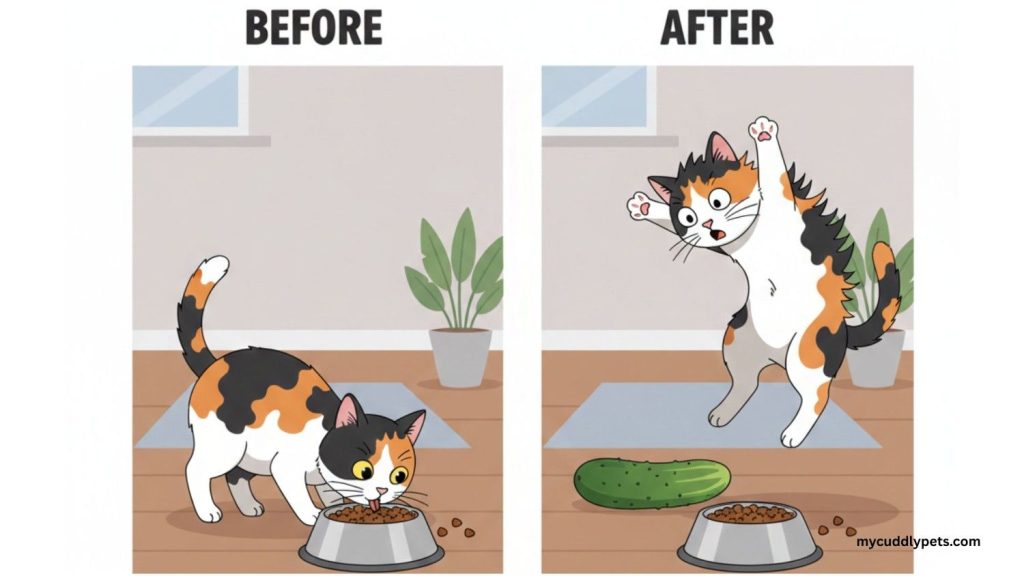
The whole cucumber prank cats trend started quietly, with people placing a cucumber behind a cat while it was eating. The goal was simple: catch the reaction on camera. Once a few clips showed cats leaping straight into the air, the internet did what it always does—copied it, amplified it, and turned it into one of the most shared cats jumping from cucumbers viral videos trends ever.
These videos spread fast because they hit three buttons at once: shock, humor, and surprise. To humans, it looks silly and harmless. To the cat, it’s a sudden threat appearing out of nowhere. That gap between what we find funny and what cats actually feel is where most people misunderstand feline behavior.
The first time I saw one of these clips, I laughed—and then I paused. I’d seen that exact jump before in real life, not from cucumbers, but from loud noises or sudden movements. That wasn’t comedy. That was pure fear. Once you’ve lived with cats long enough, you start recognizing the difference instantly.
Feline Psychology Explained Simply
Feline Neophobia — Fear of the Unknown
Feline neophobia is just a fancy way of saying cats don’t like new, unexpected things. Anything unfamiliar—a random object, a new smell, or a sudden change—can flip a stress switch in their brain. I’ve watched calm, confident cats freeze just because a new box showed up in the room. That reaction isn’t stubbornness; it’s one of the biggest pet anxiety triggers built into how cats survive.
This fear goes way beyond cucumbers. A bag left on the floor, a moved chair, even a new pair of shoes can cause the same tension. Cats rely on predictability. When that breaks, their body reacts before their mind catches up.
Natural Survival Instincts in Domestic Cats
Even indoor cats carry the instincts of wild hunters. Food bowls and soft couches don’t erase thousands of years of survival wiring. When something appears without warning, logic shuts off and instinct takes over—fast.
I’ve seen this play out with cats who never stepped outside once. A sudden noise or movement still sends them into alert mode. That’s why fear responses look dramatic. Their body is built to escape first and ask questions later.
Why Do Cats Jump When Seeing Cucumbers?
People often ask me, why do cats jump when seeing cucumbers like they’ve stepped on a spring. The answer is simple and fast, just like the reaction itself. It’s the cat startle reflex doing exactly what it was designed to do—protect first, think later. I’ve seen this jump many times, even without cucumbers, and it always follows the same pattern.
First comes detection. The cat notices something new in its space, usually behind them. That’s key. Cats rely on sight for safety, so when an object appears where there was nothing before, their brain goes on high alert.
Next is the startle. This happens in a split second. The body reacts before logic has time to step in. I’ve watched a calm cat launch into the air just because a towel slipped off a chair. Same response, same wiring.
Then comes the flight response. Jumping isn’t drama—it’s defense. Leaping away creates distance from a possible threat. In the wild, that one move could mean survival. Indoors, it just looks extreme on camera.
Body position and space make it worse. When a cat is eating or cornered, they feel exposed. Add a sudden object behind them, and panic spikes. That’s why these reactions look so intense in videos. It’s not the cucumber. It’s the setup.
Do All Cats Hate Cucumbers?
Short answer? No. Do all cats hate cucumbers? Not even close. Cats aren’t robots. Just like people, they react based on personality, memory, and mood. I’ve seen one cat bolt like a rocket, while another barely blinked and went back to eating.
Personality plays a huge role. Nervous or alert cats react fast to anything new. Confident, laid-back cats often don’t care. Past experiences matter too. A cat that’s been startled before is more likely to react again. Environment counts as well. A quiet home creates calmer cats than a loud, unpredictable one.
I’ve lived with two cats who proved this perfectly. One jumped at shadows. The other slept through thunderstorms. When a new object appeared, their reactions were worlds apart. That taught me an important lesson: fear isn’t universal. It’s personal. Understanding that helps us treat cats with empathy instead of assumptions.
My Personal Take — What I’ve Learned From Real Cats
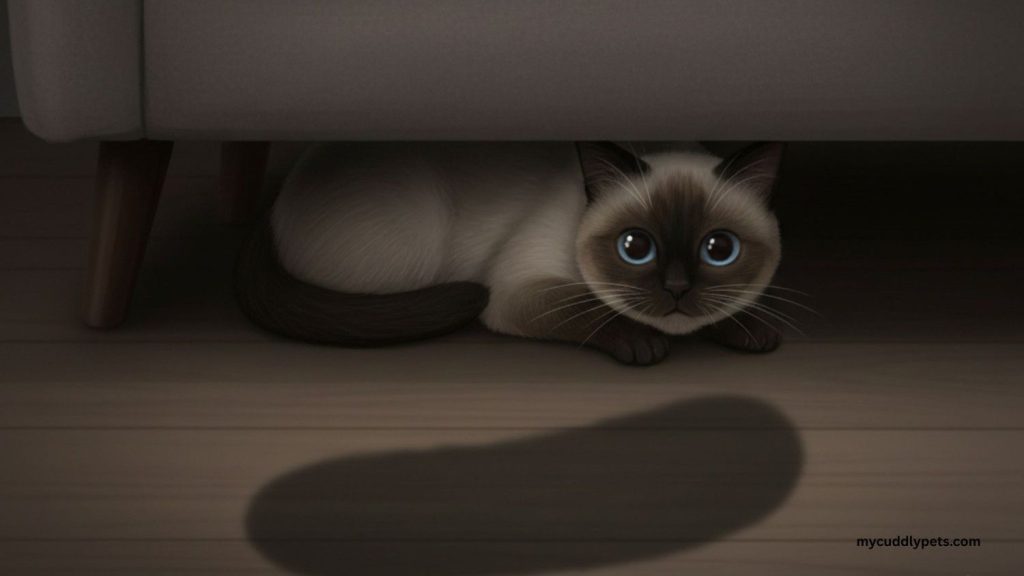
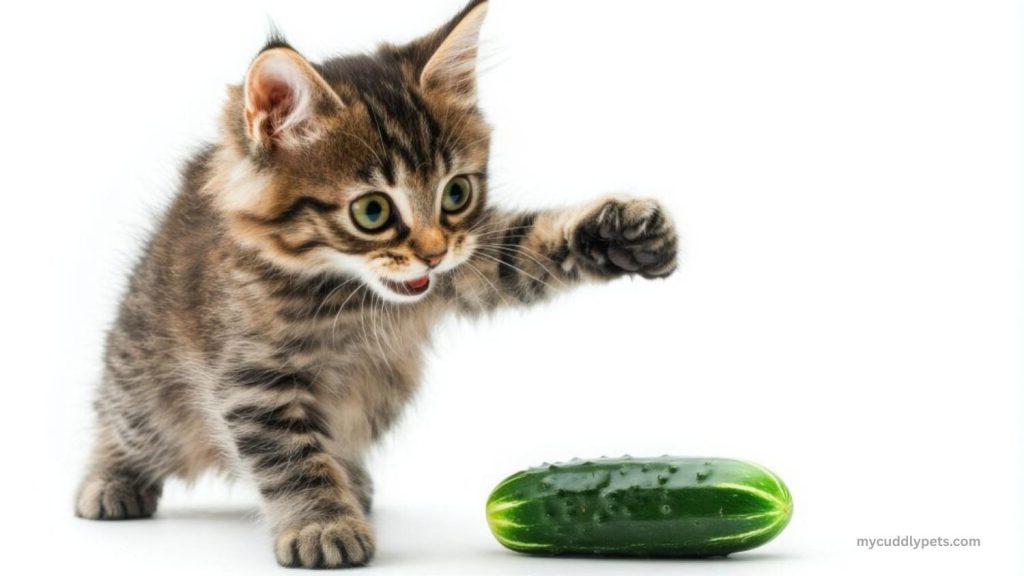
Living with cats for years has taught me one thing: their reactions aren’t random—they’re honest. I’ve watched my own cats spring into the air at a cucumber, freeze at a new box, or cautiously circle a bag left on the floor. Each reaction tells a story about their personality, their past experiences, and how much they trust their environment.
The biggest lesson? Empathy matters more than entertainment. It’s tempting to laugh at a viral cucumber prank, but to the cat, it’s a real threat. I’ve learned to step back, watch, and let them explore at their own pace. When you treat fear with understanding instead of amusement, cats start to feel safer—and that trust is priceless.
Over time, I’ve realized that cats don’t need us to teach them bravery—they just need us to respect their instincts. Observing these subtle cues has helped me anticipate stress, prevent anxiety, and even strengthen the bond I have with my pets. If you take one thing from this, let it be this: patience and empathy always beat a viral laugh.
FAQs About Cats and Cucumbers
Why do cats freak out over cucumbers behind them?
Cats rely heavily on sight to feel safe. When something appears suddenly behind them, the cat startle reflex kicks in. That leap isn’t about cucumbers—it’s about surprise and perceived danger. Even familiar environments can trigger this reaction if the timing is unexpected.
Do cats actually think cucumbers are snakes?
Not exactly. The shape and color may trigger an instinctual comparison to snakes, but it’s more about rapid survival wiring than logic. Cats scared of snakes react immediately to potential threats; cucumbers just happen to mimic the visual cue for a split second.
Can cucumber pranks cause long-term anxiety in cats?
Yes. Repeated scares can make cats more cautious, hide more, or develop new phobias. It’s not just temporary fear—these experiences can reshape how safe a cat feels in their own home.
Are there safe ways to test a cat’s fear response?
Absolutely. Avoid pranks. Instead, introduce new objects slowly and from a distance. Let your cat approach at their own pace. Observing without interference helps build confidence instead of panic.
Should cucumbers ever be used around cats?
It’s best to avoid them as “pranks.” There’s no benefit to causing fear, and the stress outweighs any amusement. Use cucumbers or other objects only in calm, controlled ways if you’re enriching your cat’s environment.
Final Verdict
Fear isn’t funny—it’s biology. When we laugh at cats jumping from cucumbers, we’re seeing instinct, not humor. Respecting their instincts and creating a predictable, safe environment helps cats feel secure and reduces pet anxiety triggers.
Over the years, I’ve learned that observation, patience, and empathy build stronger bonds than any viral clip ever could. So next time you see a cucumber on the floor, think twice: your cat’s trust is far more valuable than a laugh.

Hi, I’m a lifelong pet lover and the person behind MyCuddlyPets.com. I’ve spent over 5 years caring for cats, dogs, and even birds, so I know how tricky (and fun!) pet parenting can be. I started this site to share everything I’ve learned from honest product reviews and helpful tips to heartwarming pet stories, so you can give your furry friends the best life possible. So, let’s make pet parenting easier and more fun — one cuddle at a time!