
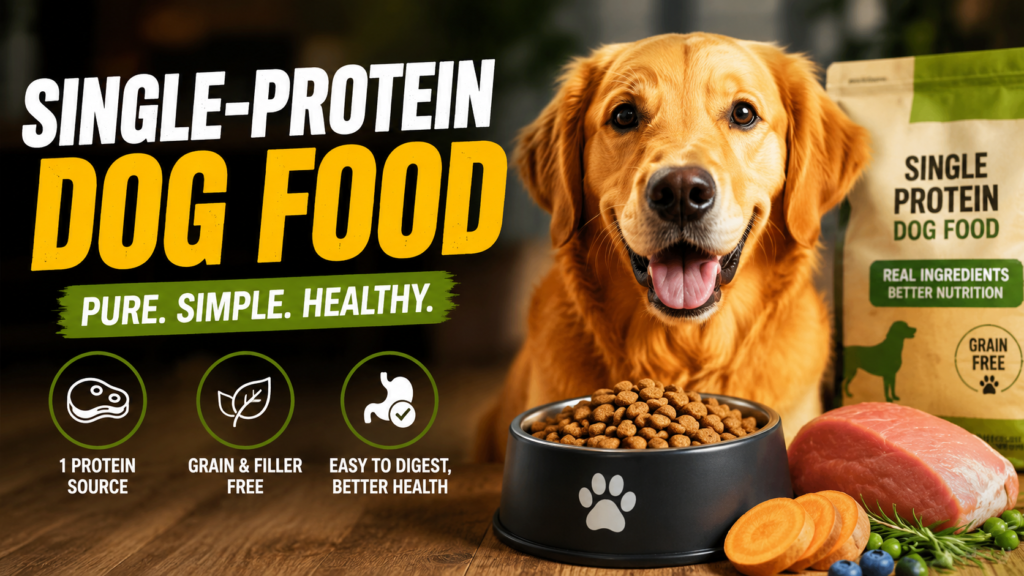
Quick Answer: Single-protein dog food contains only one animal protein source, like chicken, lamb, or salmon, with no mixing. It’s used to simplify digestion and pinpoint food allergies. It’s not required for every dog, but it’s a smart choice for dogs with itching, ear infections, or upset stomachs tied to their diet.
Your dog won’t stop scratching. You’ve switched foods twice already, and nothing’s changed. I’ve been there with my own dogs, and it’s frustrating.
My name is Michael Hayes, and I’ve spent years working through feeding trials, ingredient labels, and elimination diets with dogs who just couldn’t tolerate a normal bag of kibble. Single-protein dog food is one of the simplest tools for solving that mystery.
Here’s everything you need to know before you make the switch.
What Is Single-Protein Dog Food?
Single-protein dog food uses one animal protein source instead of blending several. A bag might list chicken as the only meat ingredient, rather than chicken, beef, and fish combined.
This matters because most commercial dog foods use multiple proteins. That’s fine for most dogs, but it makes it nearly impossible to figure out which ingredient is causing a reaction if your dog has food sensitivities.
Why Single-Protein Dog Food Matters
Dogs can develop sensitivities to a protein they’ve eaten for years. It’s not always a new ingredient that causes problems, it’s often repeated exposure to the same one.
A single-protein diet gives you control. You know exactly what’s going into your dog’s body, which makes it easier to spot patterns between food and symptoms.
According to the ASPCA, food allergies in dogs most often show up as skin and digestive issues rather than the sneezing or watery eyes seen in people.
How Single-Protein Diets Help With Allergies
Food allergies happen when a dog’s immune system overreacts to a specific protein. The fewer proteins in the bowl, the easier it is to find the culprit.
This is usually done through an elimination diet: feed one new protein source for several weeks, watch for improvement, then reintroduce old ingredients one at a time to see what triggers symptoms again.
Vets often recommend a “novel protein,” meaning something the dog hasn’t eaten before, like duck, venison, or rabbit, since a fresh protein is less likely to already be a trigger.
Signs Your Dog Might Need a Single-Protein Diet
| Symptom | Possible Cause |
|---|---|
| Chronic itching or licking paws | Food-related skin allergy |
| Recurring ear infections | Protein sensitivity |
| Soft stool or frequent gas | Digestive intolerance to an ingredient |
| Hair loss or hot spots | Chronic allergic reaction |
| Vomiting after specific meals | Reaction to a particular protein |
These symptoms can also point to other health issues, so it’s worth ruling those out with your vet before assuming it’s food. The American Veterinary Medical Association notes that true food allergies are less common than environmental allergies, but they still deserve a proper diagnosis.
How to Switch Your Dog to Single-Protein Food
- Pick a novel protein. Choose something your dog hasn’t eaten regularly, like duck or venison.
- Transition slowly. Mix the new food with the old over 7 to 10 days, increasing the new portion gradually.
- Stick with it. Feed only that protein for at least 8 to 12 weeks. No treats, table scraps, or flavored medications during this window.
- Track symptoms. Keep a simple log of itching, stool quality, and energy levels.
- Reintroduce old foods one at a time. If symptoms return, you’ve likely found the trigger.
Single-Protein vs. Limited-Ingredient Diet: What’s the Difference?
| Feature | Single-Protein Diet | Limited-Ingredient Diet |
|---|---|---|
| Protein sources | One only | Usually one, sometimes limited to two |
| Carb sources | Not restricted | Often limited to one or two |
| Best for | Isolating a protein allergy | General sensitive stomachs |
| Ingredient list length | Very short | Short, but slightly longer |
Both approaches simplify the ingredient list. A single-protein diet is more precise when you’re specifically hunting for a protein allergy.
Common Mistakes Owners Make
- Giving treats during the trial. Even a small treat with the wrong protein can undo weeks of progress.
- Switching too fast. A sudden change can cause stomach upset that’s mistaken for an allergic reaction.
- Not reading full labels. “Chicken meal” and “chicken fat” both count as chicken, even in a food labeled with a different main protein.
- Giving up too early. Skin and coat improvements can take 8 or more weeks to show up.
Pro Tips for Success
- Ask your vet about a true novel protein your dog has never eaten before starting.
- Check flavored medications and supplements, they can contain hidden proteins too.
- Photograph your dog’s skin and coat weekly to track subtle progress.
- Once you find a safe protein, rotate it with one or two other novel proteins long-term to reduce the odds of a new sensitivity developing.
For general nutrition guidance by life stage, PetMD’s dog nutrition resources are a solid reference to check alongside your vet’s advice.
FAQ
Is single-protein dog food good for every dog?
No. It’s most useful for dogs with suspected food allergies or sensitive stomachs. Dogs without symptoms usually do fine on a normal diet.
How long does it take to see results?
Most owners notice changes in digestion within 1 to 2 weeks, but skin and coat improvements can take 8 to 12 weeks.
Can I feed single-protein food forever?
Yes, many dogs stay on it long-term once a safe protein is identified. Some owners rotate between two or three safe proteins for variety.
What’s the difference between single-protein and novel-protein food?
Single-protein means one protein source. Novel-protein means a protein the dog hasn’t eaten before. A food can be both at once.
Do I need a vet’s help to try this?
It’s strongly recommended. A vet can rule out non-food causes and guide the elimination trial properly.
Will single-protein food cost more?
It can, since novel proteins like duck or venison are often pricier than chicken or beef.
Can puppies eat single-protein food?
Yes, as long as the formula is labeled for growth or all life stages, and it’s introduced under a vet’s guidance.
Conclusion
Single-protein dog food isn’t a trend, it’s a practical tool for dogs whose bodies are telling them something isn’t right. If your dog is itchy, gassy, or dealing with recurring ear infections, a careful single-protein trial can bring real answers.
Go slow, stay consistent, and loop in your vet along the way. Your dog’s comfort is worth the patience.
