
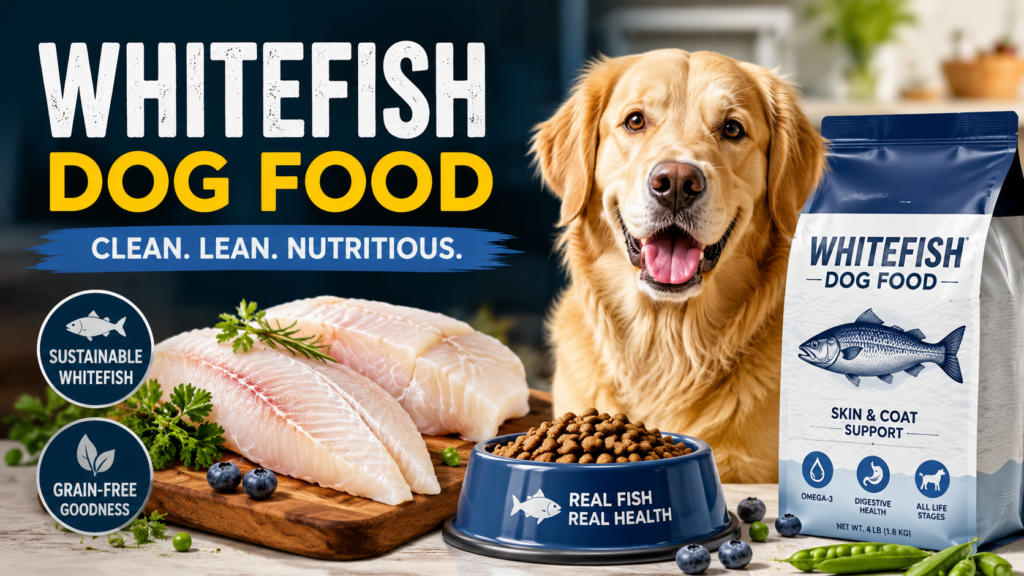
Quick Answer: Whitefish dog food is a fish-based diet made from lean, mild-flavored fish like whiting, cod, or haddock. It’s a highly digestible protein source that’s naturally rich in omega-3 fatty acids, making it a popular pick for dogs with sensitive stomachs, skin issues, or allergies to more common proteins like chicken or beef.
If you’ve been staring at a bag of dog food wondering what “whitefish” actually means, you’re not alone. It’s one of those ingredient names that sounds simple but raises a lot of questions. I’m Michael Hayes, and I’ve spent years helping dog owners sort through feeding confusion, ingredient labels, and the never-ending “what should I actually feed my dog” debate. Whitefish comes up a lot, especially with dogs who struggle on chicken-based diets. Let’s break down what it is, why it works, and how to feed it the right way.
What Is Whitefish Dog Food?
“Whitefish” isn’t one single fish. It’s a general term used for several mild, lean, light-colored fish species — commonly whiting, cod, haddock, or pollock. Pet food companies use this umbrella term because the exact fish can vary by batch depending on availability, while the nutritional profile stays fairly consistent.
What Counts as “Whitefish” in Pet Food
In most commercial dog foods, whitefish refers to ocean or lake fish that are low in fat compared to salmon, with a mild taste dogs tend to tolerate well. It’s different from “fish meal,” which is a broader, less specific category that can include a mix of fish byproducts.
Whole Whitefish vs. Whitefish Meal
Whole whitefish includes the fish before moisture is removed, so it appears higher on the ingredient list but contains a lot of water weight. Whitefish meal is already dehydrated, meaning it’s more concentrated in protein pound for pound. Neither one is automatically “better” — it depends on how the rest of the recipe is balanced.
Why Whitefish Is a Good Protein Source for Dogs
I get asked constantly whether fish-based food is just a trend or if it actually does something for dogs. In my experience, it earns its spot on the shelf for a few real reasons.
Omega-3s and Skin & Coat Health
Whitefish naturally contains omega-3 fatty acids, including EPA and DHA. These support skin barrier health and can noticeably reduce dryness, flakiness, and excessive shedding in dogs who struggle with dull coats.
Easier Digestion for Sensitive Stomachs
Whitefish is lean and low in the heavier fats that can trigger digestive upset in some dogs. That’s a big reason vets and nutritionists often suggest it for dogs who don’t do well on richer proteins.
A Solid Option for Dogs With Chicken or Beef Allergies
Food allergies in dogs are frequently tied to proteins they’ve eaten the most — usually chicken or beef. Whitefish is a “novel protein” for many dogs, meaning their immune system hasn’t built up a reaction to it yet.
Whitefish Dog Food Nutrient Snapshot
| Nutrient | Typical Range in Whitefish Formulas | Why It Matters |
|---|---|---|
| Crude Protein | 22–32% | Supports muscle maintenance and repair |
| Crude Fat | 10–16% | Energy source; lower than salmon-based formulas |
| Omega-3 Fatty Acids (EPA/DHA) | Present, varies by brand | Skin, coat, and joint support |
| Calories | ~350–400 kcal per cup (varies) | Helps with portion planning |
Always check the specific bag’s guaranteed analysis, since formulas vary by brand and life stage. For general nutrient standards, the AVMA’s pet food labeling guide is a helpful reference.
How to Switch Your Dog to Whitefish Dog Food
Switching proteins too fast is one of the most common reasons dogs get an upset stomach. Go slow, even if your dog seems excited about the new food.
- Days 1–2: Mix 25% whitefish food with 75% current food.
- Days 3–4: Move to a 50/50 mix.
- Days 5–6: Shift to 75% whitefish food, 25% old food.
- Day 7+: Feed 100% whitefish food, watching stool and energy levels.
Common Problems With Whitefish Dog Food and How to Fix Them
Dog Won’t Eat It Right Away
Some dogs are cautious around a new smell. Warm the food slightly or mix in a small amount of low-sodium broth to make it more appealing during the first few days.
Fishy Smell Turning You Off
This is normal for fish-based formulas. Storing the bag in an airtight container helps contain the smell in your kitchen or pantry.
Loose Stool or Gas After Switching
This usually means the transition happened too quickly, or the portion size needs adjusting. Slow the transition down and keep portions consistent with the feeding guide on the bag.
Suspected Fish Allergy
While rare, fish allergies do happen. Watch for itching, ear infections, or digestive issues that don’t improve after a few weeks. If you notice these signs, talk to your vet before continuing the diet.
Common Mistakes Owners Make With Whitefish Dog Food
- Switching foods cold turkey instead of transitioning gradually
- Assuming “whitefish” and “fish meal” are always the same ingredient
- Not checking the fat content for dogs who need weight management
- Skipping the guaranteed analysis and relying only on marketing claims on the front of the bag
- Feeding the same portion size as their old food without adjusting for calorie differences
Pro Tips for Feeding Whitefish Dog Food
- Store the bag sealed and in a cool, dry place to preserve freshness and reduce odor
- Pair with a consistent feeding schedule rather than free-feeding, especially during the transition period
- Keep an eye on coat condition over 4–6 weeks — omega-3 benefits build up gradually, not overnight
- If your dog has known allergies, introduce whitefish as the only new protein at a time, so it’s easier to track reactions
Whitefish vs. Chicken vs. Salmon Dog Food: What’s the Difference?
| Feature | Whitefish | Chicken | Salmon |
|---|---|---|---|
| Fat Content | Lower | Moderate | Higher |
| Common Allergen? | Less common | One of the most common | Less common |
| Omega-3 Content | Moderate | Low | High |
| Best For | Sensitive stomachs, allergy-prone dogs | Active dogs without allergies | Dogs needing extra omega-3 support |
Frequently Asked Questions
What is whitefish dog food made of?
It’s made from lean, mild fish species such as whiting, cod, haddock, or pollock, combined with other ingredients to create a complete and balanced diet.
Is whitefish good for dogs with allergies?
Yes, in many cases. Whitefish is considered a novel protein for dogs who haven’t eaten much fish before, which can reduce allergic reactions tied to chicken or beef.
How do I switch my dog to whitefish dog food?
Transition gradually over 7–10 days, mixing increasing amounts of the new food with the old food to avoid digestive upset.
Can puppies eat whitefish dog food?
Puppies can eat whitefish formulas as long as the food is specifically labeled for puppy or all-life-stage nutrition, since growing dogs have different calorie and nutrient needs.
Does whitefish dog food smell stronger than regular dog food?
Yes, fish-based formulas typically have a more noticeable smell than chicken or beef formulas. This is normal and doesn’t indicate spoiled food.
Should I choose whitefish over salmon dog food?
It depends on your dog’s needs. Whitefish tends to be lower in fat, while salmon offers a higher omega-3 content. Dogs prone to weight gain often do better on whitefish.
How often should I feed whitefish dog food?
Follow the feeding guide on the bag based on your dog’s weight and activity level, typically split into two meals a day for adult dogs.
Conclusion
Whitefish dog food isn’t just a trendy label — it’s a genuinely useful option for dogs who need a gentler, allergy-friendly protein source. The key is transitioning slowly, watching how your dog responds over the first few weeks, and checking in with your vet if anything seems off. Small, careful changes usually make the biggest difference in how well your dog adjusts.
For more general pet nutrition guidance, you can also check resources from PetMD’s dog nutrition section and the AKC’s nutrition advice hub.
