
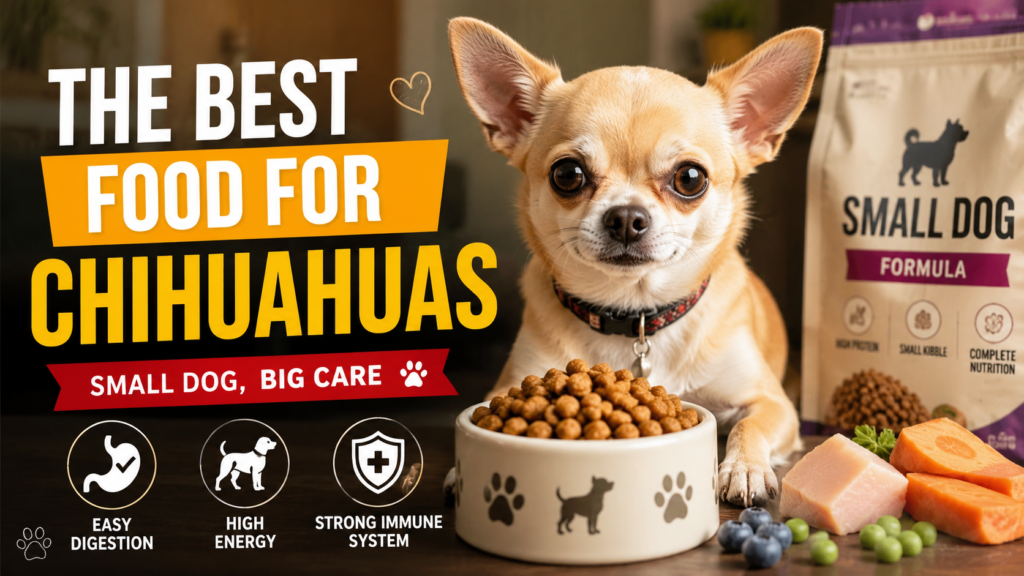
Dog Food for Chihuahuas: A Complete Feeding Guide for Owners
Quick Answer: Chihuahuas need small-breed kibble, higher calorie density per bite, and smaller, more frequent meals than bigger dogs. Most adult Chihuahuas do well on 2–4 small meals a day totaling around ¼ to ½ cup of high-quality small-breed food, adjusted for weight and activity.
Chihuahuas are tiny. But their nutrition needs aren’t small at all.
Their stomachs are little. Their metabolisms run fast. And their mouths need food shaped just right.
I’m Milo Hartwell, and I’ve spent years helping small-breed owners figure out feeding routines that actually work — not just what’s printed on a bag. If you’ve ever watched your Chihuahua sniff, walk away, and leave a full bowl behind, this guide is for you.
What Makes Chihuahuas Different When It Comes to Food?
Tiny Stomachs, Big Nutrition Needs
A Chihuahua’s stomach can only hold so much at once. That’s why they often do better with several small meals instead of one or two big ones. Despite their size, they burn energy fast, so their food needs to be calorie-dense in small servings.
Why Kibble Size Actually Matters
Chihuahuas have small jaws and delicate teeth. Regular-sized kibble can be hard to chew, which sometimes leads dogs to gulp pieces whole or avoid eating altogether. Small-breed formulas are shaped specifically to be easier to pick up and chew.
How Much Should You Feed a Chihuahua?
Portion size should match your dog’s weight, age, and activity level. Use this as a starting point, then adjust based on your vet’s guidance and your dog’s body condition.
| Weight | Daily Food Amount | Meals Per Day |
|---|---|---|
| 2–4 lbs | ¼ cup | 3–4 small meals |
| 4–6 lbs | ⅓ cup | 2–3 meals |
| 6–8 lbs | ½ cup | 2–3 meals |
These are general guidelines, not exact prescriptions. Two Chihuahuas at the same weight can need different amounts depending on activity level and metabolism.
Puppy vs Adult vs Senior Feeding Needs
| Life Stage | Feeding Frequency | Key Focus | Notes |
|---|---|---|---|
| Puppy (under 1 yr) | 3–4 meals/day | Higher protein & fat for growth | Risk of low blood sugar if meals are skipped |
| Adult | 2–3 meals/day | Balanced maintenance diet | Watch portion size — Chihuahuas gain weight easily |
| Senior (7+ yrs) | 2–3 smaller meals/day | Easier-to-digest, joint-support nutrients | Appetite may shift with age |
Wet vs Dry Food for Chihuahuas: What’s the Difference?
| Type | Pros | Cons | Best For |
|---|---|---|---|
| Dry (kibble) | Supports dental health, easy to portion, longer shelf life | Can be harder for picky eaters to enjoy | Everyday feeding |
| Wet | More aromatic, easier to chew, good for hydration | Spoils faster, less dental benefit | Picky eaters or dogs with dental issues |
Many owners mix a small amount of wet food into dry kibble to make it more appealing without losing the dental benefits.
Common Feeding Problems and Fixes
My Chihuahua Won’t Eat — What Now?
Chihuahuas can be picky, especially if food is switched suddenly. Try warming the food slightly, mixing in a small amount of wet food, or sticking to a consistent feeding schedule instead of free-feeding. If refusal lasts more than a day, check in with your vet.
Vomiting or Upset Stomach After Meals
This is sometimes linked to eating too fast, switching foods abruptly, or portions that are too large for one sitting. Smaller, more frequent meals and a gradual food transition over 5–7 days usually help.
Low Blood Sugar (Hypoglycemia) and Feeding Frequency
Because of their small size, Chihuahua puppies especially are prone to blood sugar drops if meals are skipped. Signs include weakness, shakiness, or lethargy. This is a situation where you should contact a veterinarian promptly rather than waiting it out.
Common Feeding Mistakes Owners Make
- Using regular-sized kibble instead of a small-breed formula
- Free-feeding all day, which can lead to overeating and weight gain
- Switching foods too quickly, causing stomach upset
- Skipping meals in young puppies, raising hypoglycemia risk
- Not adjusting portions as the dog ages or activity level changes
Pro Tips for Feeding Your Chihuahua
- Stick to a consistent feeding schedule rather than free-feeding
- Transition foods gradually over about a week
- Watch body condition, not just the bag’s suggested amount
- Keep treats to a small percentage of daily calories
- Always provide fresh water alongside meals
For general nutrition standards, the American Kennel Club and American Veterinary Medical Association both publish guidance on small-breed feeding basics, and PetMD is a helpful resource for feeding-related symptoms.
FAQ
How much food should a Chihuahua eat per day?
Most adult Chihuahuas need about ¼ to ½ cup of small-breed food daily, split into 2–3 meals, adjusted for weight and activity.
Why is my Chihuahua not eating?
Common reasons include a recent food switch, stress, dental discomfort, or simple pickiness. If it continues beyond a day, check with your vet.
Can Chihuahuas eat regular dog food?
They can, but small-breed formulas are easier to chew and more calorie-dense per bite, which better matches their needs.
Should Chihuahuas eat wet or dry food?
Both can work. Dry food supports dental health, while wet food is easier to chew and more appealing to picky eaters. Many owners combine the two.
When should I switch my Chihuahua’s food from puppy to adult formula?
Most Chihuahuas can transition to adult food around 9–12 months, but check with your vet since toy breeds mature at different rates.
Is grain-free food necessary for Chihuahuas?
Not unless your dog has a diagnosed grain sensitivity. Grain-free isn’t automatically healthier, and your vet is the best source for individual dietary decisions.
How do I know if my Chihuahua is being fed the right amount?
Check body condition: you should be able to feel (not see) the ribs, with a visible waist from above. If not, adjust portions and talk to your vet.
Conclusion
Feeding a Chihuahua isn’t about giving less food — it’s about giving the right food, in the right size, at the right frequency. Small, consistent meals with a quality small-breed formula go a long way. If you’re ever unsure about portions or notice feeding issues that don’t resolve, your vet is always the best next step.
