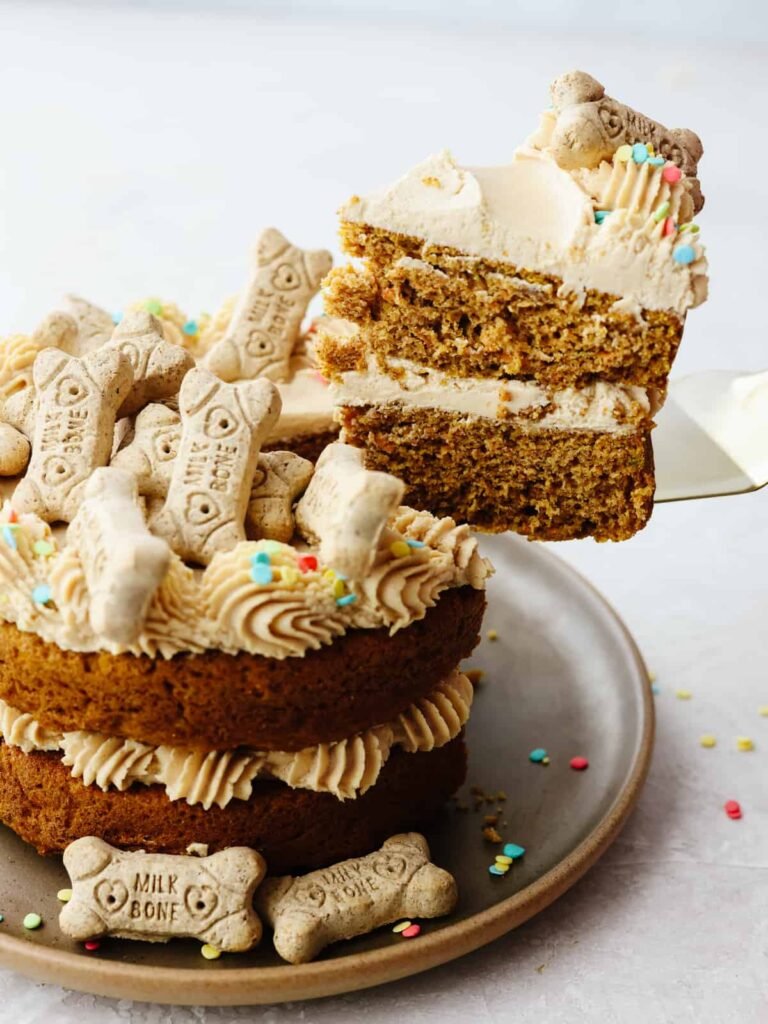
Homemade Dog Cake Recipes: 5 Easy Dog-Friendly Cakes to Bake at Home
The best homemade dog cake recipes use simple dog-friendly ingredients such as plain pumpkin, xylitol-free peanut butter, eggs, oats or whole-wheat flour, bananas, carrots, and unsweetened applesauce. Keep the portions small, avoid toxic ingredients, and let the cake cool completely before serving.
For dog owners in the United States, making a homemade cake can be an easy way to celebrate a birthday, adoption anniversary, gotcha day, or another special occasion without relying on a traditional human cake. Dogs do not need the added sugar, chocolate, rich frosting, or other ingredients commonly found in human desserts, so a dog cake should be formulated more like a special treat than a conventional dessert.
The recipes below focus on practical ingredients that are commonly available in U.S. grocery stores. Peanut butter must be confirmed to be xylitol-free, and canned pumpkin should be plain pumpkin puree rather than sweetened pumpkin pie filling. Dogs with allergies, digestive problems, diabetes, pancreatitis, or other dietary restrictions may need a different recipe or veterinary guidance before receiving homemade treats.
A dog cake is safest when it contains familiar ingredients that are appropriate for dogs and does not depend on sugar, chocolate, artificial sweeteners, or heavy human-style frosting for flavor. A simple cake can be built around a flour or oat base, an egg for structure, a moisture-rich ingredient such as pumpkin or banana, and a small amount of dog-friendly flavoring such as xylitol-free peanut butter.
The biggest safety issue is not whether an ingredient sounds natural; it is whether the ingredient is appropriate for dogs and whether the finished treat is suitable for that particular dog. Packaged ingredients should be checked every time because formulations can change.
Homemade cake should remain an occasional treat. Even dog-friendly ingredients can contribute excess calories when served in large amounts, particularly ingredients such as peanut butter and full-fat dairy.
Source: pupsgourmetkitchen.com
Use plain ingredients
Choose plain pumpkin puree, unsweetened applesauce, plain oats or appropriate flour, and unsweetened dairy products when tolerated.
Check every label
Peanut butter, yogurt, nut products, and other packaged foods should be checked for xylitol and other ingredients that may be unsafe for dogs.
Keep portions modest
A birthday cake is a treat, not a replacement for your dog’s regular complete and balanced diet.
Consider the individual dog
Dogs with allergies, obesity, diabetes, pancreatitis, food sensitivities, or medical diets may require a veterinarian-approved alternative.
Ingredients to Avoid in Dog Cake
Do not use chocolate, cocoa, grapes, raisins, macadamia nuts, onions, garlic, or xylitol in a dog cake. Xylitol deserves particular attention because it can cause dangerously low blood sugar and potentially serious liver injury in dogs.
Avoid human cake frosting and sugar-free dessert products unless every ingredient has been evaluated for canine safety. Raw yeast dough should also not be used for a homemade dog cake.
Chocolate and cocoa
These can be toxic to dogs and should not be included in cake batter, frosting, decorations, or chocolate chips.
Xylitol
This sweetener can be highly dangerous to dogs. Check labels carefully, especially on sugar-free products and some peanut butters.
Grapes and raisins
Do not use them as cake decorations, fillings, or toppings.
Macadamia nuts
These should not be used as a crunchy topping or ingredient.
This peanut butter and pumpkin cake is a practical starting point for homemade dog cake recipes because it uses familiar ingredients and does not need added sugar. Pumpkin provides moisture while peanut butter adds flavor, so the finished cake can be satisfying without traditional dessert ingredients.
For the peanut butter, choose a plain product that is confirmed to be xylitol-free. Use plain pumpkin puree rather than pumpkin pie filling, which may contain added sugar and spices that are not appropriate for a dog treat.
Source: Crazy for Crust
Ingredients
1 cup oat flour or whole-wheat flour, 1/2 cup plain pumpkin puree, 1/4 cup xylitol-free natural peanut butter, 1 large egg, 1/2 teaspoon baking powder, and 2 to 4 tablespoons water if needed for the batter.
Optional topping
Use a thin layer of plain unsweetened Greek yogurt if your dog tolerates dairy and the yogurt contains no xylitol or other unsafe sweeteners.
How to Make It
Preheat the oven to 350°F. Lightly grease a small cake pan or use parchment paper. Mix the pumpkin, peanut butter, and egg until reasonably smooth. Add the flour and baking powder, then stir just until combined. Add a little water if the mixture is too thick to spread.
Transfer the batter to a small pan and smooth the top. Bake for about 20 to 25 minutes, depending on the pan size and thickness. The cake should be set in the center. Let it cool completely before adding an optional thin yogurt topping.
For a small dog, cut the cake into several small portions rather than serving the entire cake at once. Store leftovers covered in the refrigerator and use them promptly.
Success sign
The center should be set rather than wet or liquid, and the cake should cool completely before serving.
If the batter is too thick
Add water one tablespoon at a time until it becomes easy to spread without becoming runny.
If the cake is too rich
Reduce the amount of peanut butter and use pumpkin or unsweetened applesauce for additional moisture.
Banana Oat Dog Cake for a Simple Birthday Treat
A banana oat cake is a useful option when you want a dog cake without peanut butter. Ripe banana provides moisture and flavor, while finely ground oats create a simple base. This version is particularly convenient for owners who want a small cake with a short ingredient list.
Because banana contains naturally occurring sugar and carbohydrates, it should still be treated as part of an occasional snack rather than a food that needs to be included in a dog’s everyday diet.
Source: caninecarecentral.com
Ingredients
1 cup oat flour, 1 ripe banana, 1 large egg, 1/4 cup unsweetened applesauce, and 1/2 teaspoon baking powder.
Optional topping
A small amount of plain unsweetened yogurt can be used if your dog tolerates dairy and the product contains no xylitol.
Baking Instructions
Heat the oven to 350°F and prepare a small cake pan. Mash the banana until mostly smooth, then mix it with the egg and unsweetened applesauce. Stir in the oat flour and baking powder until just combined.
Spread the batter into the prepared pan and bake for approximately 20 to 25 minutes. Start checking toward the lower end of the range because small cakes can cook quickly. Once the center is set, remove the cake and allow it to cool fully.
You can also divide the batter into small silicone molds or muffin cups to make individual pupcakes. Smaller portions can make serving easier, especially when several dogs are attending a celebration.
For smaller dogs
Bake the batter in mini molds and serve a small piece instead of giving a whole individual cake.
For larger dogs
A larger portion may be appropriate, but the total treat amount should still fit within the dog’s normal diet.
Carrot and Applesauce Dog Cake
Carrot and applesauce make a mild-flavored cake that works well for dogs who do not need peanut butter in every treat. The recipe relies on finely grated carrot and unsweetened applesauce for moisture and flavor.
Use plain unsweetened applesauce and remove any seeds, stems, or other parts of fresh produce that are not intended for your dog. Do not use sweetened applesauce or products containing artificial sweeteners.
Source: Love From The Oven
Ingredients
1 cup whole-wheat flour or oat flour, 1/2 cup finely grated carrot, 1/3 cup unsweetened applesauce, 1 large egg, 1/2 teaspoon baking powder, and 2 to 3 tablespoons water if needed.
Optional decoration
Use a few very small pieces of plain carrot or a thin layer of xylitol-free plain yogurt rather than conventional cake decorations.
Preparation and Baking
Preheat the oven to 350°F. Combine the grated carrot, applesauce, and egg in a bowl. Add the flour and baking powder and stir until the ingredients form a thick batter. Add a small amount of water if necessary.
Spoon the batter into a lightly greased small cake pan. Bake for approximately 20 to 25 minutes or until the center is set. Baking time will vary with pan size and depth, so use the appearance and texture of the cake rather than relying only on a fixed time.
Cool the cake completely before serving. If you want a festive appearance, use a very thin layer of plain yogurt as frosting and add a few small carrot pieces as decoration.
Avoid large carrot pieces
Finely grate carrots for the batter so the cake has a softer, more uniform texture.
Skip sweetened toppings
Traditional frosting is unnecessary and can add excessive sugar and fat.
Mini Sweet Potato Pupcakes for Small Portions
Mini pupcakes are useful when you want better control over portion size. Instead of baking one large cake and cutting it later, divide the batter into small muffin-size portions before baking. This approach can also make treats easier to store and serve during a dog birthday gathering.
Sweet potato should be cooked and plain, without butter, salt, sugar, garlic, onion seasoning, or dessert spices. Allow the cooked sweet potato to cool before mixing the batter.
Source: artofit.org
Ingredients
3/4 cup cooked plain mashed sweet potato, 1 cup oat flour, 1 large egg, and 1/2 teaspoon baking powder.
Optional addition
Add 1 tablespoon of xylitol-free natural peanut butter for extra flavor if your dog already tolerates peanut butter.
How to Bake Mini Pupcakes
Heat the oven to 350°F and lightly grease a mini muffin pan or use suitable silicone molds. Mix the cooled mashed sweet potato with the egg. Stir in the oat flour and baking powder until the batter is evenly combined.
Divide the batter among the molds without overfilling them. Bake for roughly 15 to 20 minutes, checking early because small cakes cook faster than a full-size cake. Remove them when the centers are set and allow them to cool completely.
Serve one small pupcake or a portion appropriate for your dog’s size and regular treat allowance. Refrigerate remaining pupcakes in a covered container.
Best use
Mini cakes work well for multi-dog celebrations because each dog can receive a controlled portion.
Storage
Refrigerate leftovers in an airtight container and discard them if they develop mold, an unusual odor, or other signs of spoilage.
How to Choose the Right Dog Cake Recipe
The best homemade dog cake recipe depends on your dog’s normal diet, food sensitivities, size, and the ingredients you already know your dog tolerates. There is no single cake that is appropriate for every dog.
For a dog that already eats peanut butter without problems, the pumpkin and peanut butter cake is an easy choice. If peanut butter is not suitable, the banana oat or carrot applesauce versions provide alternatives. For portion control, mini pupcakes are generally easier to divide than one large cake.
Source: www.pinterest.com
If your dog loves peanut butter
Choose the pumpkin and peanut butter cake, provided the peanut butter is confirmed to be xylitol-free.
If you want a peanut-free option
Choose the banana oat or carrot applesauce cake.
If portion control matters
Bake mini pupcakes so individual servings can be measured more easily.
If your dog has dietary restrictions
Do not assume a homemade recipe is automatically appropriate; ask your veterinarian about ingredients and treat quantities when a medical diet is involved.
Common Mistakes to Avoid
One common mistake is treating a dog cake like a human birthday cake. Human desserts often contain ingredients that dogs should not eat, including chocolate and potentially dangerous sugar substitutes. Another mistake is using a product because its front label looks simple without checking the full ingredient list.
It is also easy to make a cake that is unnecessarily rich. Peanut butter, cheese, cream, coconut products, and full-fat dairy can add substantial fat and calories. A small amount may be appropriate for some dogs, but more is not automatically better.
Finally, do not serve a whole cake simply because it is small. The appropriate amount depends on the dog’s size, normal diet, activity level, and health status.
Do not use human frosting
Traditional frosting can contain large amounts of sugar and fat and may contain ingredients that are unsafe for dogs.
Do not assume all peanut butter is safe
Read the ingredient list and confirm that the product does not contain xylitol.
Do not serve hot cake
Let the cake cool completely before serving or applying any topping.
Do not replace regular food
Cake should remain an occasional treat and should not displace a complete and balanced diet.
What to Do If Your Dog Eats an Unsafe Ingredient
If you discover that your dog has eaten an ingredient known to be toxic, especially xylitol, chocolate, grapes, raisins, or another hazardous food, do not wait for symptoms before seeking professional guidance. Contact your veterinarian or an appropriate animal poison-control service promptly and keep the product packaging available so the ingredients can be identified.
If your dog develops weakness, vomiting, loss of coordination, tremors, seizures, unusual lethargy, or other concerning symptoms after eating a questionable ingredient, seek urgent veterinary care.
Keep the package
The original packaging can help a veterinarian determine exactly what ingredient and approximate amount were consumed.
Do not improvise treatment
Follow veterinary or poison-control instructions rather than attempting an unverified home remedy.
Frequently Asked Questions
Q
Can dogs eat homemade cake?
Dogs can eat appropriately formulated homemade cake as an occasional treat, provided the recipe uses ingredients that are safe for dogs and is suitable for that individual dog. Homemade does not automatically mean safe, so ingredients and portion size still matter.
Q
What can I use instead of frosting for a dog cake?
A thin layer of plain unsweetened yogurt can work for dogs that tolerate dairy, provided the product contains no xylitol or other unsafe sweeteners. You can also skip frosting entirely and decorate the cake with a small amount of dog-safe fruit or vegetables.
Q
Can I use peanut butter in a dog cake?
Yes, many dog cake recipes use peanut butter, but the product must be checked carefully for xylitol. Peanut butter is also calorie-dense, so use a modest amount and consider your dog’s normal treat allowance.
Q
Can I make a dog cake without peanut butter?
Yes. Banana, pumpkin, applesauce, carrot, and plain cooked sweet potato can provide flavor and moisture without peanut butter. The banana oat and carrot applesauce recipes above are straightforward alternatives.
Q
How much homemade dog cake should I give my dog?
There is no single portion that is appropriate for every dog. Start with a small piece and consider the dog’s size, regular diet, activity level, and health status. Treats should remain a limited part of the overall diet. Dogs on therapeutic or medically prescribed diets should be checked with a veterinarian before receiving new homemade treats.
Q
Can I make dog cake ahead of time?
Yes. Bake the cake or pupcakes, allow them to cool completely, and refrigerate them in a covered container. Smaller cakes can make portioning easier. Discard leftovers if they show signs of spoilage, and avoid keeping perishable toppings at room temperature for extended periods.
✦ Wrapping Up
Conclusion
Homemade dog cake recipes can be simple, affordable, and easy to adapt. Pumpkin, banana, carrots, oats, applesauce, eggs, and carefully selected peanut butter can create flavorful treats without relying on the sugar and rich frosting used in traditional human cakes.
The most important part is ingredient safety. Check packaged foods for xylitol, avoid known toxic foods such as chocolate, grapes, raisins, macadamia nuts, onions, and garlic, and keep portions appropriate for your dog. If your dog has a medical condition, food allergy, or prescribed diet, get individualized advice from your veterinarian before introducing a new recipe.
💡 Key Takeaway
For a first homemade dog cake, choose a small recipe using ingredients your dog already tolerates, verify every packaged ingredient label, bake until the center is set, cool the cake completely, and serve a modest portion as a special treat.
James Walker is a dog care and nutrition expert with over 10 years of hands-on experience in canine care, nutrition, grooming, and everyday pet wellness. He researches and reviews dog food, treats, supplements, grooming products, and essential pet-care solutions to help dog owners make informed decisions. At MyCuddlyPets.com, James shares practical, honest, and easy-to-follow advice to help dog owners better understand their pets’ needs and provide them with a happy, healthy, and comfortable life.