
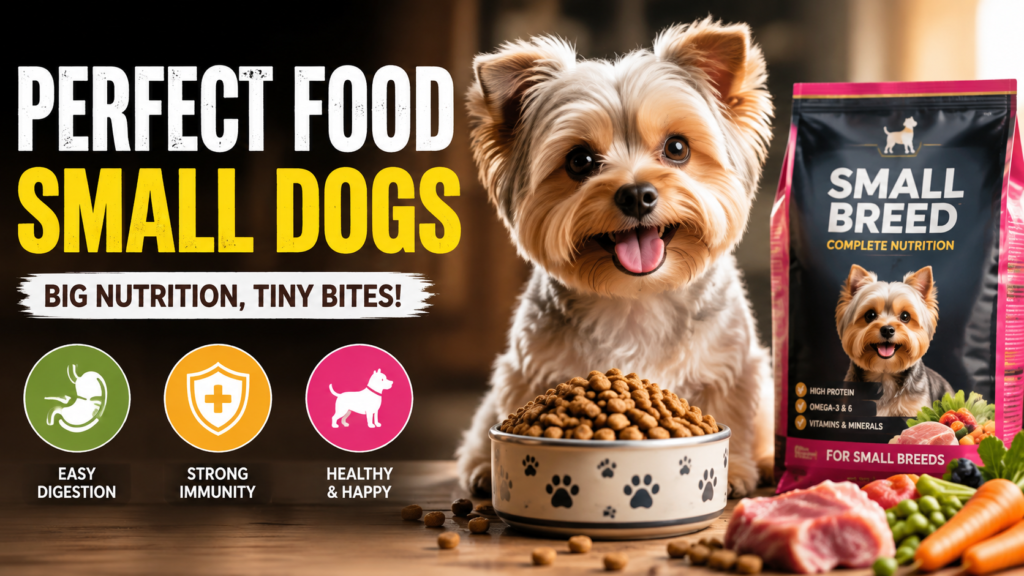
Quick Answer: Small breed dogs need food with smaller kibble pieces, higher calorie density, and nutrient levels matched to their fast metabolism. Look for a formula labeled for small or toy breeds, feed smaller portions more often, and choose real meat as the first ingredient.
Small dogs eat differently than big dogs. Their jaws are tinier. Their energy burns faster. Their tummies are more sensitive. I’m Milo Hartwell, and I’ve spent years helping small dog owners figure out feeding routines that actually work. In this guide, I’ll walk you through exactly what to look for, what mistakes to avoid, and how to build a feeding routine your small dog will thrive on.
What Does “Dog Food for Small Breeds” Actually Mean?
Small breed dog food isn’t just a marketing label. It’s a formula built around the real physical differences small dogs have compared to medium and large breeds.
Why Kibble Size Matters
Small dogs have small mouths and smaller jaw strength. Regular-sized kibble can be hard to chew, and some dogs end up swallowing pieces whole. Small breed kibble is shaped and sized to be easier to bite and safer to swallow.
Metabolism and Calorie Needs in Small Dogs
Pound for pound, small dogs burn calories faster than large dogs. That means their food needs to be more calorie-dense per bite, even though their total daily portion is much smaller.
Why Small Breeds Need a Different Diet Than Large Dogs
Faster Metabolism
A tiny dog’s body processes energy quickly. Without enough calorie density, small dogs can struggle to maintain a healthy weight and energy level throughout the day.
Smaller Jaws and Dental Sensitivity
Small breeds are also more prone to dental crowding and early tooth issues. Kibble shape and texture can play a small supporting role in day-to-day chewing comfort, alongside regular dental care.
Higher Risk of Blood Sugar Drops
Toy and small breed puppies especially are at higher risk of low blood sugar (hypoglycemia) if they go too long without eating. This is one reason small breed puppies often need more frequent, smaller meals.
How to Choose the Right Small Breed Dog Food
Reading the Ingredient Label
Look for a named animal protein (like chicken, salmon, or lamb) as the first ingredient. Avoid formulas where the first few ingredients are mostly fillers or unnamed “meat meal.”
Life Stage Formulas (Puppy, Adult, Senior)
Small breed puppies, adults, and seniors have different nutrient needs. Puppy formulas support growth and brain development. Adult formulas maintain healthy weight and energy. Senior formulas often support joints and digestion.
Protein and Fat Requirements
Small dogs generally do well on food with moderately high protein and a healthy fat content to support their energy needs, but exact levels can vary by age, activity level, and any health conditions your dog has.
Step-by-Step: Feeding Routine for a Small Breed Dog
- Choose a small breed–specific formula suited to your dog’s life stage.
- Check the feeding chart on the bag based on your dog’s current weight.
- Split daily food into 2–4 small meals instead of one large meal.
- Introduce new food gradually over 5–7 days, mixing it with the old food.
- Monitor weight and energy over the first few weeks and adjust portions if needed.
- Keep treats to a minimum since small dogs have very little calorie room to spare.
Common Feeding Mistakes Owners Make
- Feeding large breed kibble because “it’s on sale”
- Free-feeding all day instead of scheduled meals
- Overestimating portion size for a tiny body
- Switching foods too quickly, causing stomach upset
- Using too many treats, which can unbalance a small dog’s calorie intake
Common Problems and Fixes
| Problem | Likely Cause | Fix |
|---|---|---|
| Dog won’t eat kibble | Kibble too large or hard, or dog is stressed/picky | Try smaller kibble size or add warm water to soften |
| Weight gain | Overfeeding or too many treats | Re-measure portions against the feeding chart |
| Upset stomach after new food | Sudden food switch | Transition gradually over 5–7 days |
| Low energy between meals | Too few meals for a fast metabolism | Split food into more frequent small meals |
Dry vs Wet Food for Small Breeds: What’s the Difference?
| Factor | Dry Food | Wet Food |
|---|---|---|
| Kibble/texture | Crunchy, supports chewing habit | Soft, easier for weak or sensitive teeth |
| Calorie density | Generally higher per gram | Generally lower, more water content |
| Shelf life | Longer once opened | Shorter, needs refrigeration after opening |
| Best for | Everyday feeding, dental support | Picky eaters, older dogs, added hydration |
Pro Tips for Small Breed Feeding Success
- Weigh your dog monthly to catch weight changes early
- Store kibble in an airtight container to keep it fresh
- Keep feeding times consistent to support digestion
- Ask your vet before switching formulas if your dog has any health condition
For general guidance on pet nutrition standards, the American Kennel Club offers helpful nutrition resources. The ASPCA also provides useful feeding guidelines, and AVMA covers pet food safety basics.
FAQ Section
How much should I feed a small breed dog?
Follow the feeding chart on your dog’s specific food based on their weight, then adjust based on their body condition and energy level.
Why do small breeds need smaller kibble?
Smaller kibble is easier for tiny jaws to chew and reduces the risk of choking or discomfort while eating.
Can small breeds eat regular or large breed dog food?
They can occasionally, but it’s not ideal long-term since large breed formulas aren’t matched to a small dog’s calorie density needs or kibble-size comfort.
How often should small dogs eat?
Most small adult dogs do well with 2–3 meals a day, while small breed puppies often need 3–4 smaller meals to avoid blood sugar drops.
Is small breed dog food worth it?
For most small dogs, yes. It’s formulated for their faster metabolism and smaller mouths, which can support better weight management and eating comfort.
Should small dogs eat grain-free food?
Not necessarily. Grain-free isn’t automatically better, and some dogs do fine on grain-inclusive diets. Choose based on your dog’s individual needs, not trends.
What should I do if my small dog won’t eat their new food?
Slow the transition down, try warming or lightly moistening the kibble, and rule out any underlying health issue with your vet if the problem continues.
Conclusion
Feeding a small breed dog well comes down to a few simple things: the right kibble size, the right calorie density, and a consistent routine. Get those basics right, and you’ll set your small dog up for steady energy and a healthy weight for years to come. When in doubt about your dog’s specific needs, a quick check-in with your vet is always a smart move.
